10 min read
How to Find Qualified Elder Care Specialists in Less Than an Hour a Day
Why Elder Care Specialists Matter for Families Today Elder care specialists (also known as Aging Life Care Professionals or Geriatric Care Managers)...

Choosing home care for an aging parent is one of the most important — and most stressful — decisions a family can make.
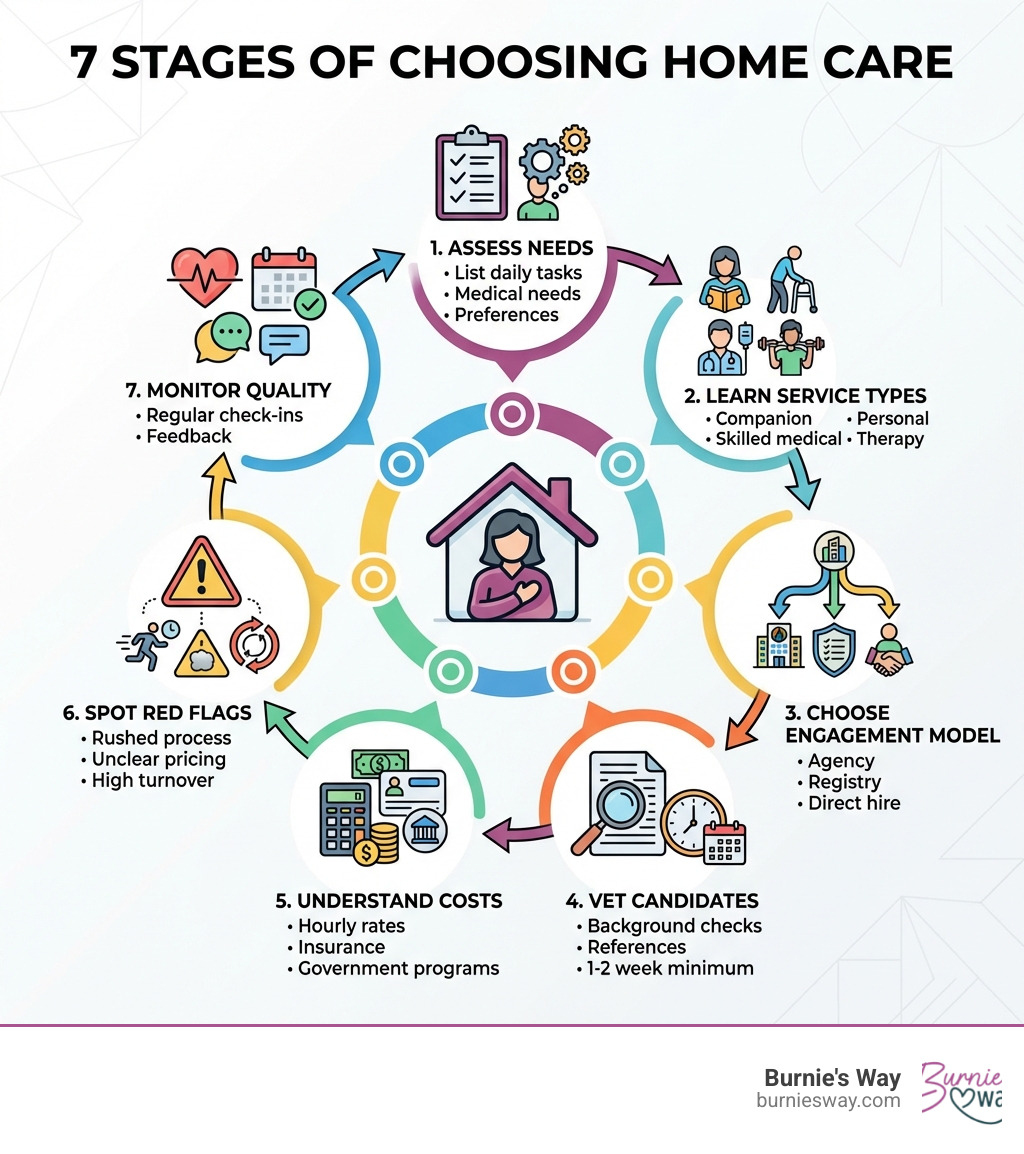
Here's a quick overview of how to do it well:
The stakes are real. Your parent's comfort, safety, and independence depend on who walks through that door. And yet, most families start this process overwhelmed, without a clear roadmap.
The good news? With the right approach, this decision becomes a lot more manageable.
This guide walks you through every step — from understanding the types of support available to asking the right questions, spotting warning signs, and building a relationship that works long-term.

Choosing home care word list:
When we talk about choosing home care, we are actually looking at a broad spectrum of services. It is not a "one size fits all" situation. Some people just need a friendly face to help with the crossword puzzle, while others require intensive medical intervention.

According to the Homecare Association, the goal of these services is to help individuals remain in the comfort of their own homes rather than moving to a facility. At Burnie's Way, we believe that staying at home is the best way to maintain dignity and joy. Understanding home care solutions begins with identifying which "bucket" of service your loved one falls into.
The biggest distinction you will encounter is between non-medical support and skilled medical care.
If you are looking for medical providers specifically, the Medicare Care Compare tool is an excellent resource to find certified agencies in your area.
Before you start making phone calls, we recommend sitting down with your family to create a comprehensive "Needs List." This ensures you don't miss anything critical when interviewing providers.
Ask yourself these questions:
Getting in home elderly help works best when the support matches the actual lifestyle of the senior. We often suggest describing a "typical day" to a potential provider to see how they would handle the specific challenges your family faces.
Once you know what you need, the next step in choosing home care is deciding how you want to hire that support. This is where many families get stuck.
There are three primary models for bringing help into the home. Each has its own set of pros and cons.
Some families choose to hire a neighbor or a private individual.
Professional agencies manage the "headaches" for you.
At Burnie's Way, we act as a personal concierge and lifestyle coordinator. While we aren't a caregiving agency, we help families navigate these models to find reliable home care that fits their unique situation.
When you are interviewing an agency or an individual for elderly inhome care, you need to be a bit of a detective. Don't be afraid to ask the tough questions!
For Agencies:
For Individuals:
Let's talk about the elephant in the room: the cost. Choosing home care is a financial commitment, and rates can vary wildly depending on where you live.
In the United States, the national median for home support is around $30 per hour. However, geography matters. In New York City, for example, rates for home health aides typically range from $24 to over $37 per hour. These prices usually reflect the caregiver’s experience and the agency’s quality standards.
Many families assume Medicare will pick up the tab. Unfortunately, that is often a misconception.
For many, private pay home care rates are the reality. This is why we focus on helping families find the most cost-effective senior home care solutions that don't sacrifice quality.
Safety is the number one priority. You are inviting a stranger into your parent’s sanctuary. You must ensure that the provider is not just competent, but trustworthy.
Industry-leading services perform rigorous vetting. A comprehensive check should take 1-2 weeks minimum. If a provider says they can have someone in the house "this afternoon" without a prior meeting or check, that is a major red flag. Vetting should include:
Choosing home care isn't a "set it and forget it" task. Once the support begins, you transition into the role of a monitor.
Watch out for a lack of transparency regarding pricing, a rushed hiring process, or if the agency has a very high staff turnover rate. If they can't provide proof of insurance or bonding, walk away. Poor communication during the initial inquiry is usually a sign of how they will behave once hired.
No. Medicare is designed for medical recovery, not long-term assistance with daily life. It covers "medically necessary" services on a short-term, intermittent basis. For long-term help with bathing, dressing, or companionship, you will likely need to look at private pay, long-term care insurance, or Medicaid.
A quality vetting process takes 1 to 2 weeks. This allows time for a deep-dive criminal background check, contacting multiple references, and verifying skills. Any service that skips these steps to place a warm body in the home quickly is compromising your loved one's safety.
Choosing home care is about more than just finding someone to help with chores; it’s about empowering your loved one to age with grace, connection, and trust. It’s about making sure the "golden years" actually feel golden.
At Burnie's Way, we understand that you want the best for your family. We don't just provide a service; we provide a partnership. Think of us as your personal concierge—a virtual companion and lifestyle coordinator who helps manage the complexities of daily life so you can focus on being a daughter, a son, or a friend again.
Whether you need help navigating the different types of support or you're looking for a dedicated partner to coordinate your loved one's independence, we are here to help. Explore our services today and see how we can bring peace of mind back to your family.
10 min read
Why Elder Care Specialists Matter for Families Today Elder care specialists (also known as Aging Life Care Professionals or Geriatric Care Managers)...
6 min read
Understanding Non-Medical Home Care: What It Is and How It Helps Non medical home care is professional support that helps older adults live...
10 min read
Why Financial Stress Shouldn't Mean Losing Your Independence Bill paying assistance is available through government programs, utility providers, and...