7 min read

Home Sweet Home: Expert Tips for Dementia Care

Home Sweet Home: Expert Tips for Dementia Care

What Dementia Care at Home Really Means (And Why It Matters)

dementia care at home

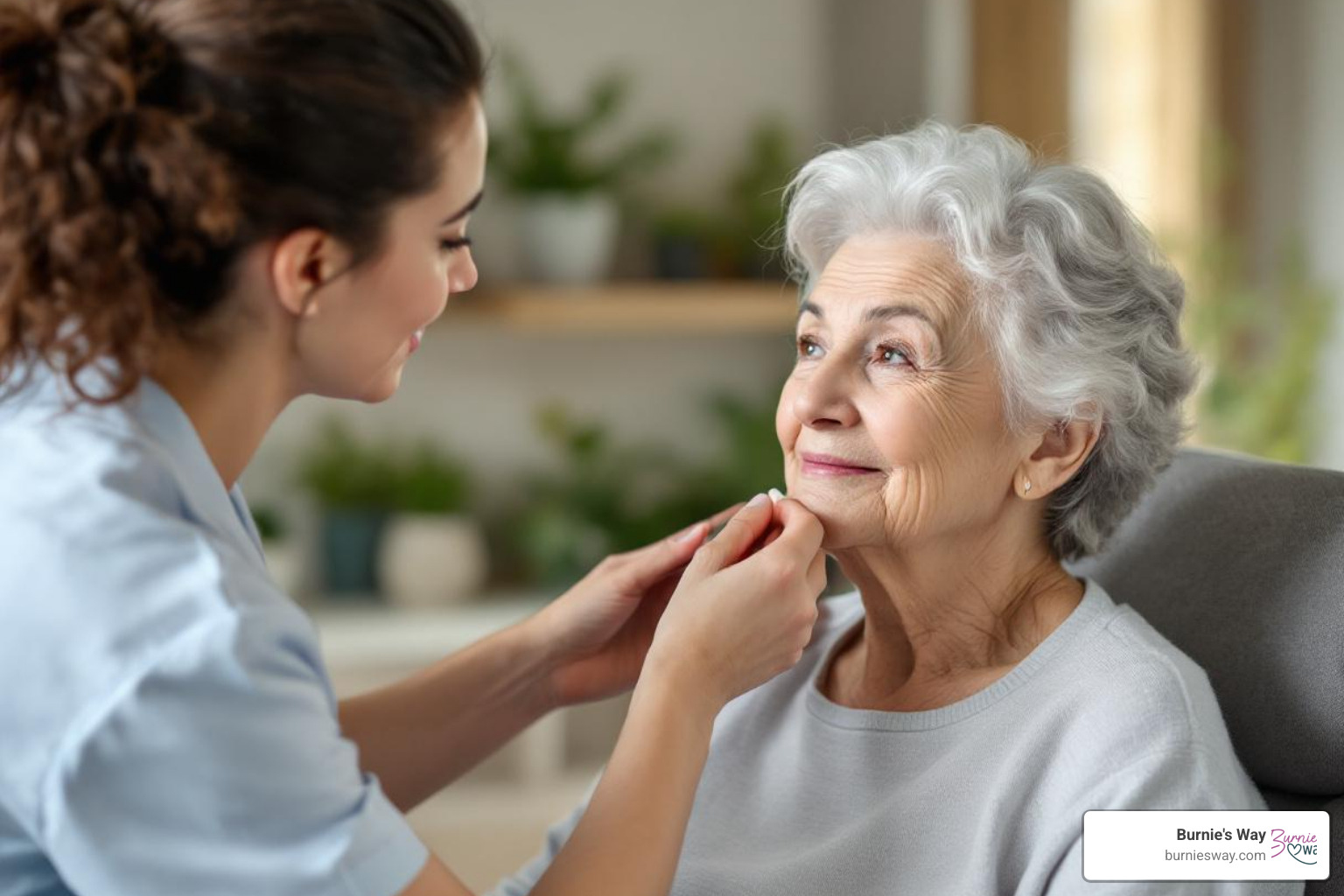
Dementia care at home is the practice of supporting a person living with dementia within their own home — rather than in a residential or nursing facility. For most families, it's the preferred path. And the numbers back that up: around 80% of people with Alzheimer's and other dementias receive care at home, most often from a family member.

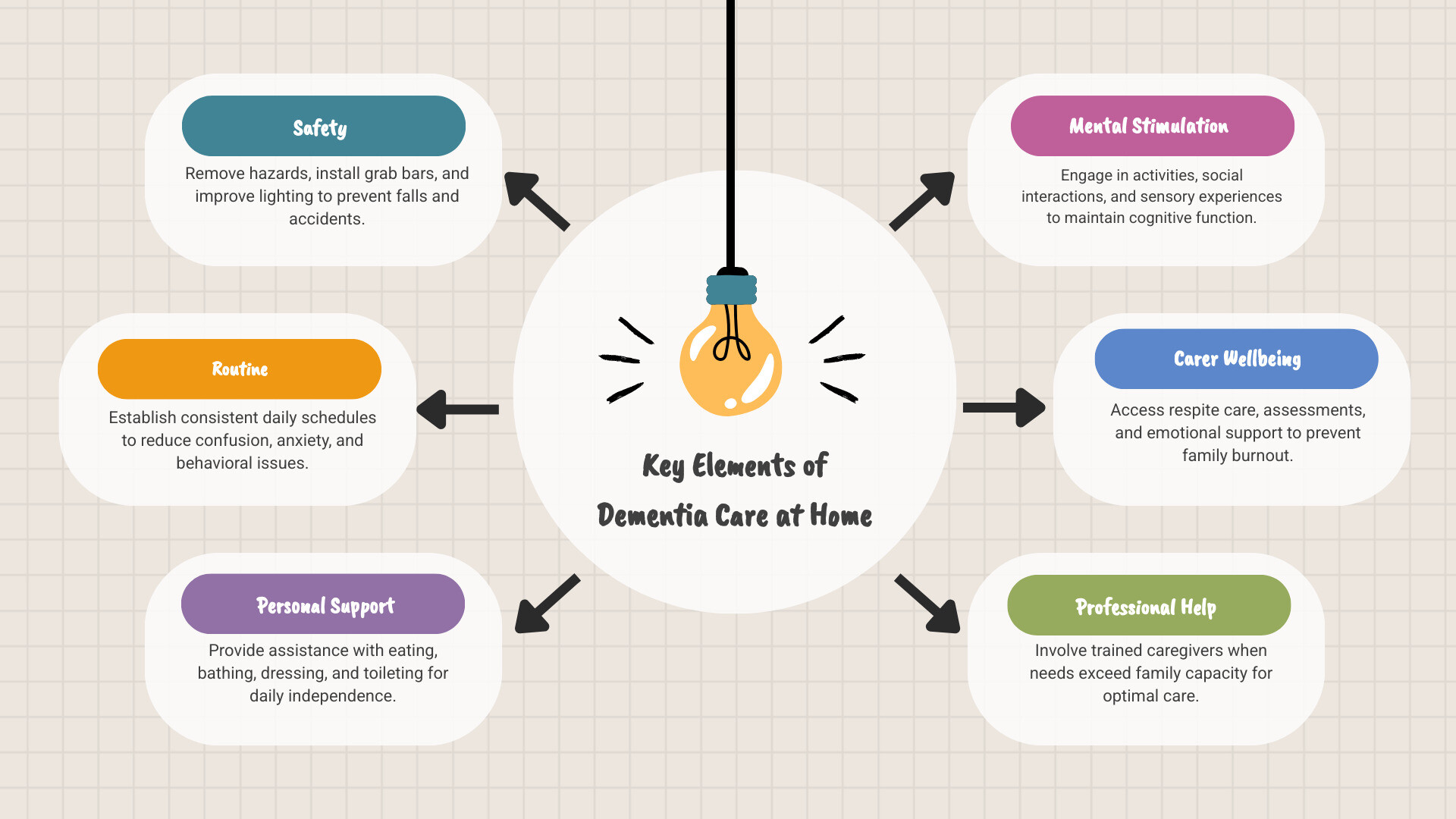
Here's a quick overview of what effective home dementia care involves:

  • Safety - removing hazards, adding grab bars, improving lighting
  • Routine - consistent daily schedules to reduce confusion and anxiety
  • Personal support - help with eating, bathing, dressing, and toileting
  • Mental stimulation - activities, social connection, and sensory engagement
  • Carer wellbeing - respite breaks, assessments, and emotional support
  • Professional help - knowing when and how to bring in trained support

Dementia is an umbrella term for a group of conditions that damage the brain over time. It affects memory, thinking, behavior, and the ability to carry out everyday tasks. It is not a normal part of aging — it is a progressive disease, meaning symptoms gradually worsen.

Common early signs include:

  • Memory loss, especially recent events
  • Confusion about time or place
  • Difficulty finding words or following conversations
  • Changes in mood or personality
  • Trouble with problem-solving or familiar tasks

If any of these sound familiar, know this: you are not alone, and there is real, practical help available.

Caring for a parent or loved one with dementia can feel overwhelming — especially when you're trying to coordinate their safety, daily wellbeing, and quality of life from a distance. The good news is that with the right knowledge and support, many people with dementia can live well at home for a long time.

This guide walks you through everything you need to know — from understanding the condition, to making the home safer, to looking after yourself as a carer.

Key elements of dementia care at home including safety, routine, stimulation, and carer support - Dementia care at home

Dementia care at home word roundup:

Understanding the Different Types of Dementia

To provide the best dementia care at home, we first need to understand the specific "flavor" of dementia a loved one is facing. While memory loss is the hallmark of the condition, different types of dementia affect the brain in unique ways.

  • Alzheimer’s Disease: This is the most common type, accounting for 60% to 80% of all cases. It involves an abnormal build-up of proteins in the brain. It affects an estimated 1 in 14 people over the age of 65.
  • Vascular Dementia: Caused by reduced blood flow to the brain (often following a stroke or series of "mini-strokes"). It affects approximately 180,000 people in the UK and many more across the US.
  • Lewy Body Dementia: This type is often associated with Parkinson’s-like movement issues, visual hallucinations, and significant fluctuations in alertness.
  • Frontotemporal Dementia (FTD): This often appears at a younger age and primarily affects personality, behavior, and language rather than just memory.

It is also important to recognize that many seniors live with "mixed dementia" or other health conditions alongside their diagnosis. Scientific research on the impact of co-morbidity on quality of life shows that managing other health issues, like diabetes or heart disease, is crucial for maintaining a high quality of life.

When we understand the specific challenges—whether it's the disorientation of Alzheimer's or the physical hurdles of Lewy body—we can better tailor our approach to Memory Care for Elderly members.

Creating a Safe and Stimulating Environment for Dementia care at home

The home environment plays a massive role in how a person with dementia feels. A cluttered, dark, or confusing house can lead to agitation and falls. On the other hand, a dementia-friendly home acts as a silent helper, guiding the person through their day.

A dementia-friendly kitchen with clearly labeled cupboards and bright lighting - Dementia care at home

Addressing Safety Hazards

Safety is our first priority. As dementia progresses, a person's spatial awareness and coordination can decline. We recommend these simple modifications:

  • Clear Walking Paths: Remove throw rugs, extension cords, and low coffee tables that could cause a trip.
  • Lighting is Everything: Ensure hallways and bathrooms are brightly lit. Use nightlights to prevent disorientation during midnight bathroom trips.
  • Bathroom Upgrades: Install grab bars in the shower and next to the toilet. A walk-in shower or a sturdy shower chair can make a world of difference.
  • Appliance Safety: Consider automatic-off switches for stoves or kettles to prevent fire hazards.

Memory Aids and Orientation

Labeling is a simple but powerful tool for dementia care at home. Placing a picture of a toilet on the bathroom door or labeling the "Socks" and "Shirts" drawers helps maintain independence. A large-face digital clock that clearly states the day of the week and whether it is "Morning" or "Night" can help combat the confusion that often sets in.

Fostering a Stimulating Environment

A home shouldn't just be safe; it should be engaging. Scientific research on sensory stimulation programs highlights that activities involving touch, sound, and smell can reduce depression and improve mood. This could be as simple as listening to favorite music, gardening in raised beds, or looking through old photo albums. For more detailed tips, check out our guide on How to Care for an Elderly Person at Home.

Practical Strategies for Daily Dementia care at home

Daily tasks that we take for granted can become mountains for someone with dementia. The key is to break things down and maintain a gentle, consistent routine.

Managing Mealtimes and Hydration

Eating can become difficult due to a loss of appetite, dental pain, or simply forgetting how to use cutlery.

  • Finger Foods: If using a fork is frustrating, offer nutritious finger foods like chicken strips, steamed broccoli florets, or fruit slices.
  • Colored Cups and Plates: Use plates that contrast with the color of the food (e.g., a blue plate for mashed potatoes). This helps the person actually see the food.
  • Hydration is Vital: People with dementia often lose their sense of thirst, leading to UTIs and increased confusion. Offer fluids in easy-to-hold, brightly colored cups throughout the day.
  • Dental Health: Ensure regular check-ups, as mouth pain is a common (and often silent) cause of refusal to eat.

For more specialized advice, you can Find out more information on eating and drinking from Alzheimer’s Society and explore our resources on Personal Care for Elderly at Home.

Supporting Personal Hygiene and Sleep Patterns

Bathing and dressing can be sources of high anxiety. A person might be afraid of the "noisy rush" of the shower or feel vulnerable undressing.

  • Bathing Tips: Keep the room warm, use plenty of towels for modesty, and always explain what you are doing before you do it. "I'm just going to wash your arm now" goes a long way.
  • Toilet Routines: Watch for non-verbal cues like fidgeting or tugging at clothes. Put a clear sign on the toilet door and keep the door slightly ajar. Find out more information on toilet problems from Alzheimer's Society.
  • Managing the "Body Clock": Dementia often disrupts sleep patterns, leading to "sundowning"—increased confusion in the late afternoon. To help, ensure plenty of daylight during the day, limit caffeine in the evening, and create a calm bedtime ritual.

For deeper insights, Find out more about sleep problems and treatments from Alzheimer's Society or see our guide on In-Home Elderly Help.

Supporting the Family Carer’s Wellbeing

If you are a family member providing dementia care at home, you are doing one of the most demanding jobs on the planet. It is heart-forward, exhausting work. You cannot pour from an empty cup.

The Carer's Assessment

In many regions, including Virginia and the wider US, there are resources to help you. In the UK, a "Carer's Assessment" is a free service that looks at how caring affects your life and what support you need. In the US, reaching out to your local Area Agency on Aging can help you find similar "needs assessments" to unlock support.

Respite and Support Groups

Accepting help is not "failing." It is a strategic move to ensure you can continue providing love and support.

When to Consider Professional Dementia care at home

There often comes a point where the needs of the person with dementia exceed what a family member can provide alone. This doesn't necessarily mean a move to a facility; many families choose to bring professional support into the home.

Choosing a Reliable Home Care Provider

When looking for help, you want to ensure the people entering your home are qualified and compassionate.

  • Check Regulations: In the US, look for agencies that are licensed and bonded. If you are in the UK, you would check for Care Quality Commission (England) or Care Inspectorate (Scotland) ratings.
  • DBS and Background Checks: Ensure all staff have undergone rigorous DBS checks or local equivalent background screenings.
  • Dementia Training: Ask specifically if the staff have specialized training in dementia behaviors and communication.
  • Agency vs. Independent: Agencies handle the scheduling and taxes, while independent carers may offer more consistency but require you to act as an employer. You can use tools like the Homecare Association search tool to find local options.

Explore more about Elderly Inhome Care to see how professional support can integrate into your life.

Evaluating Costs and Funding Options

The cost of dementia care at home varies widely based on the level of support needed. Fortunately, there are often funding options available to help ease the burden.

Funding Option Description Typical Eligibility
Attendance Allowance A UK benefit for people over state pension age who need help with personal care. Apply via GOV.UK
Carer’s Allowance For people who spend at least 35 hours a week caring for someone. Apply via GOV.UK
Medicare (US) May cover "skilled" home health care if ordered by a doctor. Homebound status required.
VA Benefits (US) Support for veterans and their surviving spouses. VA Caregiver Support
Personal Budgets Funding allocated by local authorities for you to choose your own care. Based on a needs assessment.

Navigating these financial waters is a big part of Elder Care Planning. It’s always best to start these conversations early.

Frequently Asked Questions

Is Alzheimer’s the same as dementia?

Not exactly. Dementia is the "umbrella" term for a set of symptoms (like memory loss and confusion). Alzheimer’s is a specific disease that falls under that umbrella. Think of it like this: "Dementia" is like saying someone has a "Sore Throat," and "Alzheimer's" is the specific "Strep Infection" causing it.

When is the best time to start home care?

The best time is before you reach a crisis point. Introducing a companion or a helper in the early stages allows the person with dementia to build a relationship and trust with that person while they are still able to form new connections. This makes the transition much smoother as the condition progresses.

How can I manage aggressive behavior at home?

Aggression is often a form of communication. The person might be in pain, frustrated by a task, or overwhelmed by noise. Try to stay calm, don't argue, and use "distraction and redirection." For example, if they are upset about a missed appointment, try saying, "I'm sorry about that. While we wait, let's go look at the birds in the garden."

Conclusion: Bringing Peace of Mind Home

Providing dementia care at home is a journey of a thousand small moments. It’s about finding joy in a shared song, a quiet afternoon, or a successful meal. While the challenges are real, so is the opportunity to honor your loved one’s independence and history.

At Burnie's Way, we believe that every senior deserves to live confidently in their own home. We don't provide medical care or nursing services; instead, we act as a personal concierge and lifestyle coordinator. Think of us as a virtual companion and personal assistant wrapped into one. We help manage the "everyday life" stuff—coordinating routines, organizing events, and providing the personal support that makes staying at home possible.

With over 50 years of experience, our approach is all about heart-forward connection. We help families breathe easier, knowing their loved one is staying connected and independent. If you’re looking for a partner to help navigate this journey, we’re here to guide you every step of the way.

For More info about our services, reach out to us today. Let’s make "home sweet home" a reality for your family.

Finding Your Peace of Mind: A Comprehensive Look at Non-Medical Home Care

6 min read

Finding Your Peace of Mind: A Comprehensive Look at Non-Medical Home Care

Understanding Non-Medical Home Care: What It Is and How It Helps Non medical home care is professional support that helps older adults live...

Read More
Don't Just Pick Any Home Care: How to Choose Wisely

6 min read

Don't Just Pick Any Home Care: How to Choose Wisely

Why Choosing Home Care Wisely Can Change Everything Choosing home care for an aging parent is one of the most important — and most stressful —...

Read More
40 Ways to Support Your Aging Parents

7 min read

40 Ways to Support Your Aging Parents

Why Finding the Right Assistance Caring for Elderly Parents Matters Assistance caring for elderly parents comes in many forms — from financial aid...

Read More