

 Sydney Giffen
When Time is of the Essence: Navigating Emergency Support for Seniors
 Sydney Giffen : Jan 30, 2026 6:11:36 PM
When Every Second Counts: Understanding Emergency Elderly Care Help

Elder care solutions cover a wide range of support options — from help around the house to full-time nursing care — and knowing where to start can feel overwhelming.
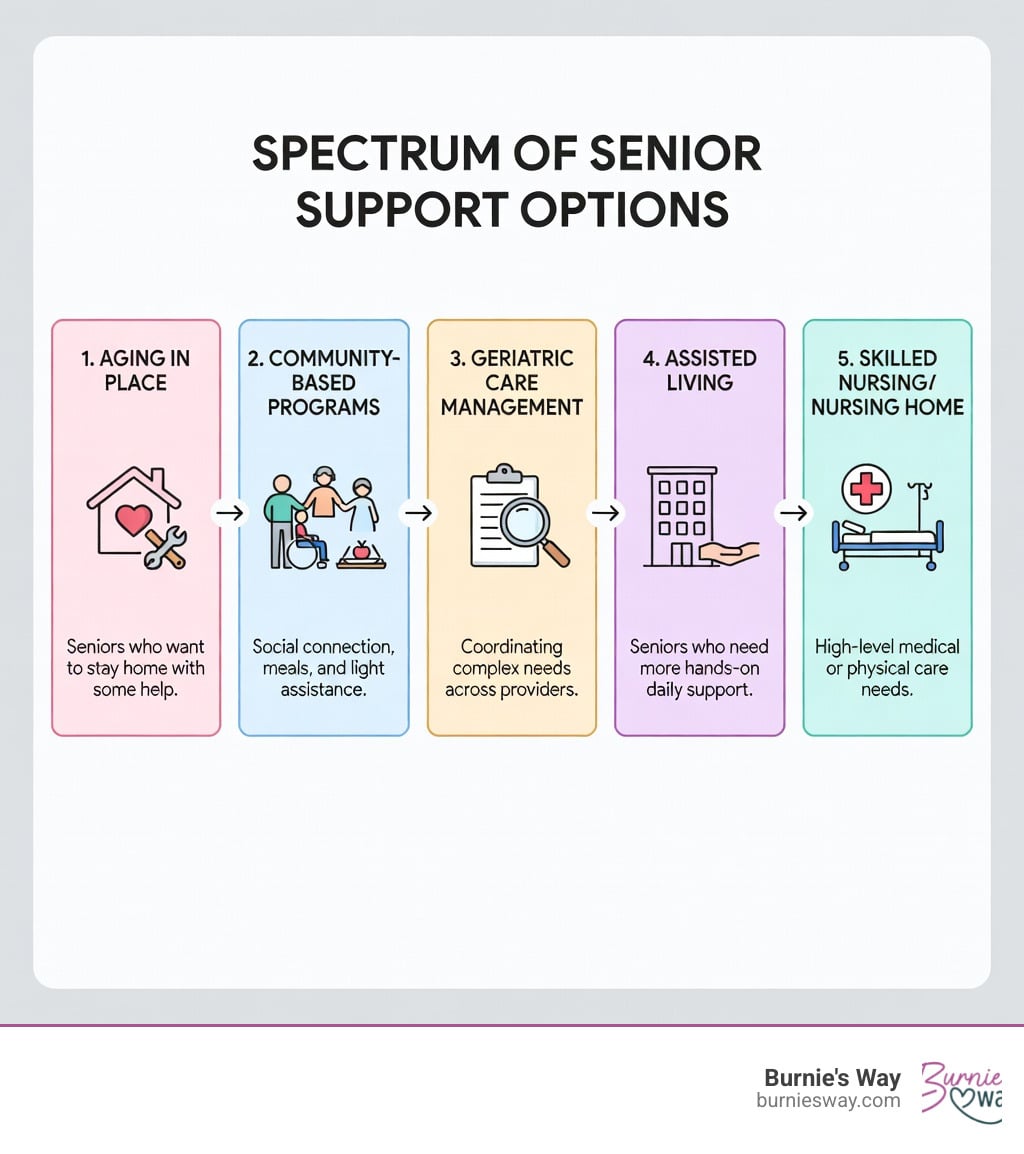
Here's a quick overview of the main options families consider:
| Type of Support | Best For |
|---|---|
| Aging in place with personal support | Seniors who want to stay home with some help |
| Community programs | Social connection, meals, and light assistance |
| Geriatric care management | Coordinating complex needs across providers |
| Assisted living | Seniors who need more hands-on daily support |
| Nursing home / skilled nursing | High-level medical or physical care needs |
| Financial & insurance planning | Covering the cost of any of the above |
Aging is rarely a straight line. One month, your parent is completely fine. The next, you notice the fridge is empty, the mail is piling up, or they've had a fall. That shift — when something feels off but nothing is official yet — is exactly when families start searching for answers.
And here's the hard truth: about 70% of people who turn 65 will need some form of long-term care during their lives. Yet most families don't start planning until a crisis hits.
The good news? There are more options today than ever before — from smart home technology to community volunteer networks to personalized concierge-style support that helps seniors stay independent and connected at home, on their own terms.
This guide walks you through every major category of senior care, so you can make confident decisions without the overwhelm.
Elder care solutions terms at a glance:
When we talk about elder care solutions, we aren't just talking about one type of service. It is a broad spectrum designed to meet people where they are. For some, it means a little help with the groceries; for others, it requires 24/7 medical supervision.
The most common path today is "aging in place." This simply means staying in the comfort of your own home for as long as possible rather than moving to a facility. It is often the most desirable option, with surveys showing that nearly 9 out of 10 seniors prefer to stay at home. However, making this work safely requires a solid plan.
If staying home isn't the right fit due to advanced medical needs or safety concerns, families often look toward assisted living or nursing homes. Assisted living offers a middle ground, providing a residential setting with help for tasks like bathing or medication management. Nursing homes, or skilled nursing facilities, provide the highest level of clinical care.
To get a deeper look at how these pieces fit together, you can explore Caregiver Resources & Long-Term Care provided by the government, or check out our guide on more info about home care solutions.
We often find that the best support comes from the community right outside your front door. Community-based programs are designed to keep seniors active, fed, and socially connected without the high price tag of private facilities.
Sometimes, the "caregiving" role falls on a family member who lives hundreds of miles away. This is where geriatric care management becomes a lifesaver. These professionals — often licensed nurses or social workers — act as "professional relatives."
They perform comprehensive needs assessments, evaluating everything from the safety of the home environment to the senior's emotional well-being. If a crisis hits, such as a sudden hospital discharge, they provide crisis intervention and help families navigate the complex medical system. They are also powerful advocates, ensuring that the senior's values and wishes are always respected by medical staff and insurers. For more on how these experts streamline the process, see more info about senior care coordination.
There is a certain magic in staying home. It’s where the memories are, where the garden is, and where you feel most like yourself. Aging in place preserves dignity and provides a sense of control that is often lost in institutional settings.
However, we have to be realistic about the "place" itself. A home that was perfect for a 40-year-old might be a fall hazard for an 80-year-old. This is where home modifications come in. Simple changes like installing grab bars in the bathroom, improving lighting in hallways, or adding a ramp to the entrance can make the difference between a safe home and a dangerous one.
The National Institute on Aging provides an excellent resource on Aging in Place: Growing Older at Home that covers these basics. If you are looking for specific ways to update a house, we’ve gathered more info about elderly home modifications to help you get started.
Technology has completely changed the landscape of elder care solutions. We are no longer limited to just a "help, I've fallen" button. Today’s smart homes can be equipped with motion sensors that turn on lights automatically when someone gets out of bed at night, reducing the risk of a trip.
Personal Emergency Response Systems (PERS) have also evolved. Many now include automatic fall detection, GPS tracking, and even vital sign monitoring that connects directly to a smartphone app for family members.

Beyond safety, technology helps with daily routines:
One of the greatest risks of aging at home isn't physical — it's emotional. Social isolation can lead to depression and even accelerate cognitive decline. We believe that staying independent shouldn't mean staying alone.
Companion services and community engagement are vital. This can be as simple as a scheduled weekly visit from a "Warm Connector" or participating in mentally stimulating activities like board games, crafting, or local walking clubs. Keeping the mind active and the heart connected is just as important as any physical safety measure. We have compiled more info about elderly social interaction and more info about cognitive stimulation activities to help families foster these vital connections.
When a senior needs help with "Activities of Daily Living" (ADLs), such as bathing, dressing, or meal preparation, personal support services fill the gap. These services allow seniors to maintain their routines while receiving the specific help they need.
Personal support isn't just about "care" in the clinical sense; it's about life management. This includes:
For those curious about the specific types of help available, we offer more info about daily life assistance and more info about personal care for the elderly.
Inviting someone into your home — or your parent's home — is a big step. It requires trust, but that trust should be earned through a rigorous vetting process. Whether you are using an agency or hiring an independent helper, we recommend several non-negotiable steps:
The Family Caregiver Alliance offers a comprehensive guide on Hiring In-Home Help that includes worksheets and interview questions to keep you organized.
No two seniors are exactly alike, so their support shouldn't be either. A "one-size-fits-all" approach rarely works in the long term. We advocate for custom care plans that are flexible enough to change as the senior's needs evolve.
A good plan starts with a conversation. What does a "good day" look like for your loved one? Is it a morning walk? A quiet afternoon reading? The support plan should wrap around these existing joys rather than replacing them. Collaboration between the senior, the family, and the support provider ensures that everyone is on the same page. You can find more info about custom care plans to see how we help families build these personalized roadmaps.
Let’s talk about the elephant in the room: the cost. Elder care solutions can be expensive, and the way they are funded is often confusing.
To help you visualize the landscape, here is a general comparison:
| Funding Source | Covers Home Support? | Coverage Limits |
|---|---|---|
| Medicare | Limited / Short-term | Only "skilled" medical needs |
| Medicaid | Yes (varies by state) | Must meet financial eligibility |
| Private Pay | Yes | Limited only by personal budget |
| LTC Insurance | Usually Yes | Depends on policy "daily benefit" |
Planning early is essential. We’ve put together more info about the cost of senior home care to help families in Virginia budget effectively.
If your loved one has a Medicare Advantage or Medigap plan, there may be hidden benefits you aren't using. Some plans offer "supplemental benefits" that cover things like transportation to doctor visits or even minor home modifications.
We highly recommend contacting Health Information Counseling through your local State Health Insurance Assistance Program (SHIP). These are free, unbiased counselors who can help you review your policy and ensure you are getting every bit of coverage you've paid for.
For those who don't qualify for Medicaid but still need financial help, there are other avenues to explore.
Check out more info about family caregiver grants to see if your family might be eligible for additional support.
Home care (or personal support) brings the help to you, allowing you to stay in your own residence. Assisted living requires moving into a community where housing, meals, and support are all bundled together. Home care is often more flexible and allows for more independence, while assisted living provides more built-in social opportunities and 24/7 staffing.
Generally, no. Medicare covers "skilled" care — like physical therapy or nursing care for a wound — but it does not cover "custodial" care, which is the type of help most seniors need for daily living (cooking, cleaning, bathing).
Look for "red flags": an empty or moldy fridge, unpaid bills, unkempt personal hygiene, or a sudden withdrawal from social activities. If you notice these signs, it's time to start the conversation about bringing in some extra help.
Choosing the right elder care solutions is about more than just safety; it's about quality of life. At Burnie's Way, we believe that every senior deserves to live with confidence, independence, and a sense of joy.
We don't provide medical care or nursing services. Instead, we act as a personal concierge and lifestyle coordinator for aging adults. Think of us as a virtual companion and personal assistant all wrapped into one. We help with the errands, the coordination, and the routines that make staying at home not just possible, but wonderful.
With 50 years of experience, our personalized approach gives families the peace of mind that their loved ones are staying connected and living the way they want to live. Whether it's coordinating a ride to a favorite park or managing a complex daily calendar, we are here to be your guide.
Ready to explore how we can help your family? Learn more about Our Services and let's start planning a brighter, more independent future together.
Sydney Giffen : Jan 30, 2026 6:11:36 PM
When Every Second Counts: Understanding Emergency Elderly Care Help

Sydney Giffen : May 22, 2026 10:45:33 PM
Why Every Family Needs a Senior Care Checklist A senior care checklist is a structured set of steps covering legal documents, medical records, home...

Sydney Giffen : Jan 9, 2026 4:41:24 PM
Why Understanding Your Options Matters Now Private elder care services are non-medical and specialized support options that help seniors live...