8 min read
Finding Trusted Senior Care That Actually Works
When a Parent Needs Help: Making Sense of Elder Care Solutions Elder care solutions cover a wide range of support options — from help around the...

Overnight elder care is professional support provided to aging adults during nighttime hours — typically from early evening through morning — to help them stay safe, comfortable, and independent at home.
If you're trying to figure out what nighttime options exist for your parent, here's a quick overview:
| Care Type | What It Means | Best For |
|---|---|---|
| Sleeping night care | A caregiver sleeps at the home, available for up to 2 brief assists | Seniors who rarely need help at night |
| Waking night care | A caregiver stays awake for ~10 hours, ready to assist frequently | Seniors with dementia, mobility issues, or frequent bathroom trips |
| Sitting service | A caregiver covers a fixed window so family can rest | Families who need a short-term break |
| Live-in care | A caregiver lives in the home full-time with an 8-hour rest break | Seniors who need round-the-clock presence |
| 24/7 rotating care | Multiple caregivers work shifts so someone is always awake | Seniors with the highest level of need |
Nights are often the hardest part of caring for an aging parent.
Maybe your mom has gotten up to use the restroom and fallen before anyone could help. Maybe your dad wanders the house confused after dark. Or maybe you're the one losing sleep — lying awake wondering if everything is okay down the hall.
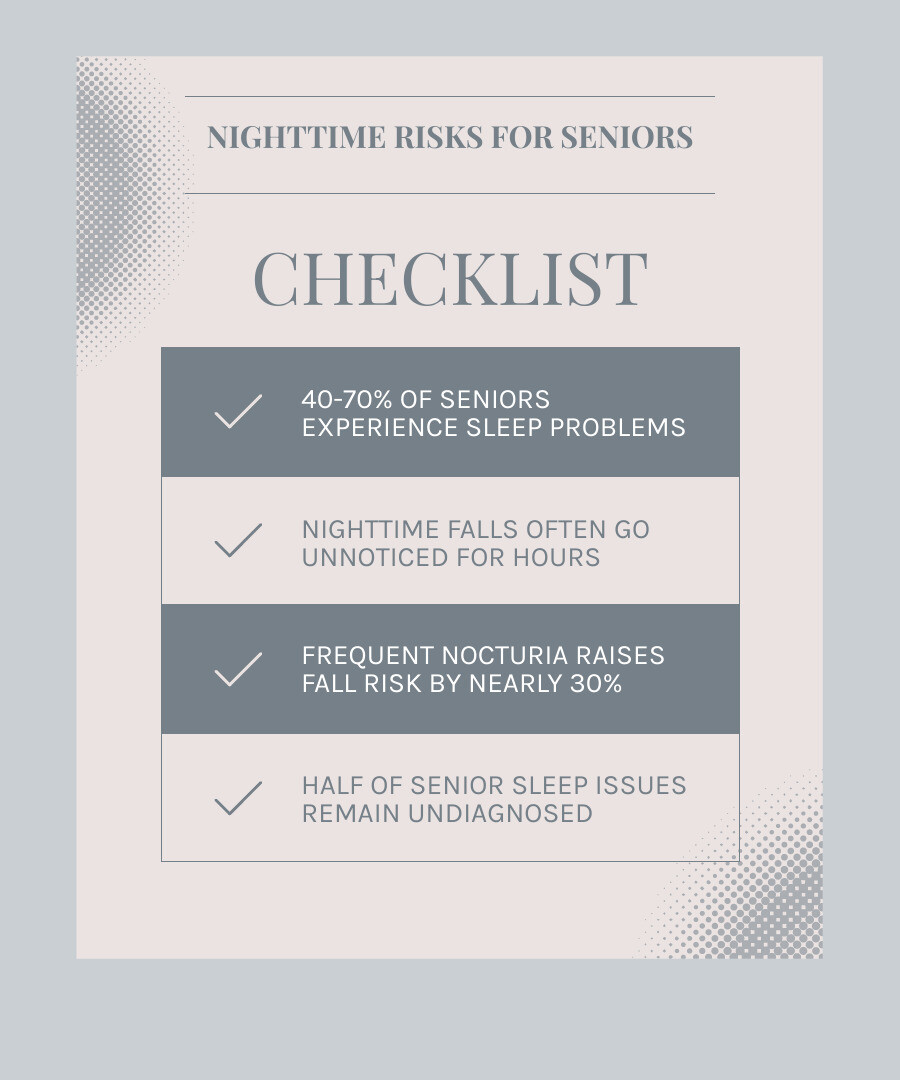
You're not alone. Between 40% and 70% of seniors experience sleep problems, and at least half of those cases go undiagnosed. And the risks are real: older adults who wake frequently to use the restroom are nearly 30% more likely to fall — a statistic made more alarming by the fact that nighttime falls often go unnoticed for hours.
This guide breaks down everything families need to know about overnight elder care — what it is, who needs it, what it costs, and how to find the right fit.

Basic overnight elder care vocab:
When the sun goes down, the risks for our aging loved ones often go up. For many families in Virginia and across the U.S., the decision to seek overnight elder care isn't about luxury; it's about fundamental safety. The nighttime hours present unique challenges that daytime routines simply don't cover.
One of the primary drivers for nighttime support is nocturia—the frequent need to use the restroom during the night. It sounds like a minor inconvenience, but one study by The University of Alabama at Birmingham found that older adults with nocturia are nearly 30% more likely to experience a fall. When you combine sleep-induced grogginess with decreased mobility and dim lighting, the hallway to the bathroom becomes a high-risk zone.
Beyond physical falls, sleep disturbances can wreak havoc on a senior's mental clarity. Disrupted circadian rhythms can lead to a cycle of exhaustion and confusion. At Burnie's Way, we focus on helping families find reliable home care solutions that address these specific nighttime vulnerabilities, ensuring that a professional is there to act as "eyes and ears" while the rest of the family gets the rest they need.
Recognizing the transition from "managing okay" to "needing help" can be subtle. Often, it isn't one major event but a series of small red flags that signal a need for in-home elderly help.

Sleep isn't just "downtime" for the brain; it’s essential maintenance. Unfortunately, research on senior sleep health shows that aging often brings a shift in sleep architecture. Seniors may experience "advanced sleep phase syndrome," where they get tired earlier in the evening and wake up in the very early morning hours.
When these shifts are combined with undiagnosed problems like sleep apnea, restless leg syndrome, or chronic pain, the result is chronic sleep deprivation. This exhaustion feeds into a cycle of anxiety and accelerated cognitive decline. A senior who hasn't slept well is more likely to be confused during the day, increasing the burden on family caregivers. Professional overnight elder care helps break this cycle by providing the reassurance needed for a senior to stay in bed and rest, or providing safe assistance when they must be up.
Not every senior needs the same level of nighttime eyes-on support. Understanding the different models helps you tailor the assistance to your budget and your loved one's specific needs.
Waking Night Care is the most intensive hourly option. In this model, the caregiver stays awake for the entire shift—usually about 10 hours. They are there to provide personal care for elderly at home, such as help with incontinence, repositioning to prevent pressure sores, or managing medication. This is ideal for those who wake frequently or have high medical needs.
Sleeping Night Care is a more cost-effective choice for seniors who generally sleep through the night but need the security of having someone in the house. The caregiver is provided a bed and expects to sleep, but is available for up to two "calls" or assists per night. If the senior begins needing help more than twice regularly, agencies typically recommend transitioning to waking care.
Sitting Services are often used as a form of respite. If a family caregiver handles the bulk of the care but is hitting a wall of exhaustion, a "night sitter" can step in for a few nights a week to allow the primary caregiver to catch up on sleep.
For families needing around-the-clock peace of mind, the choice often comes down to 24/7 shift care versus live-in-carer-for-elderly-person models.
Dementia adds a layer of complexity to nighttime safety. Those with Alzheimer’s often experience a reversal of sleep-wake cycles, becoming active at night and sleeping during the day. Specialized elderly inhome-care for dementia focuses on:
Discussing money can be stressful, but understanding the market rates in Virginia and the broader U.S. helps you plan effectively. Traditional agencies often charge a premium for overnight elder care. While daytime rates might hover between $30 and $40 per hour, overnight shifts—especially waking nights—can be surcharged to over $50 per hour due to the difficulty of staffing these hours.
According to Aging.com, the national average for overnight care can range from $16 to $27 per hour, but these figures vary wildly based on the level of care required and your specific location. In some areas, a flat "sleepover rate" might be offered for sleeping night care, whereas waking care is almost always billed at a higher hourly rate.
Several variables will dictate your final invoice. At Burnie's Way, we help families navigate these home care solutions by looking at the total picture of support.
Before—or alongside—hiring professional help, there are steps you can take to make the home safer. The Sleep Foundation offers recommendations for creating a nighttime routine that can reduce the frequency of mid-night wake-ups.
The core difference is the caregiver's state of alertness and the expected workload.
Ask yourself these three questions:
In Virginia, there are several avenues to explore:
At Burnie's Way, we believe that the night shouldn't be a time of fear for seniors or a time of exhaustion for their families. We operate as a personal concierge and lifestyle coordinator, helping you bridge the gap between complete independence and the support needed to stay home safely.
While we are not a medical care provider, we are experts in the "art of living well at home." We partner with families to coordinate the routines, safety measures, and personal support that make aging in place a reality. Whether you need help vetting a caregiver or setting up a home environment that promotes better sleep, our 50 years of experience is at your service.
Your peace of mind is worth it. Don't wait for a crisis or a fall to explore your options. Explore our services for comprehensive daily life management and let us help your family rest easy tonight.
8 min read
When a Parent Needs Help: Making Sense of Elder Care Solutions Elder care solutions cover a wide range of support options — from help around the...
12 min read
Why Understanding Eldercare Services Matters Now More Than Ever Eldercare services help older adults live safely and independently at home by...
6 min read
Understanding Non-Medical Home Care: What It Is and How It Helps Non medical home care is professional support that helps older adults live...