

The Science of Activity Planning for Seniors
Activity planning for seniors is one of the most impactful things you can do to support an aging parent's health, happiness, and independence at home.
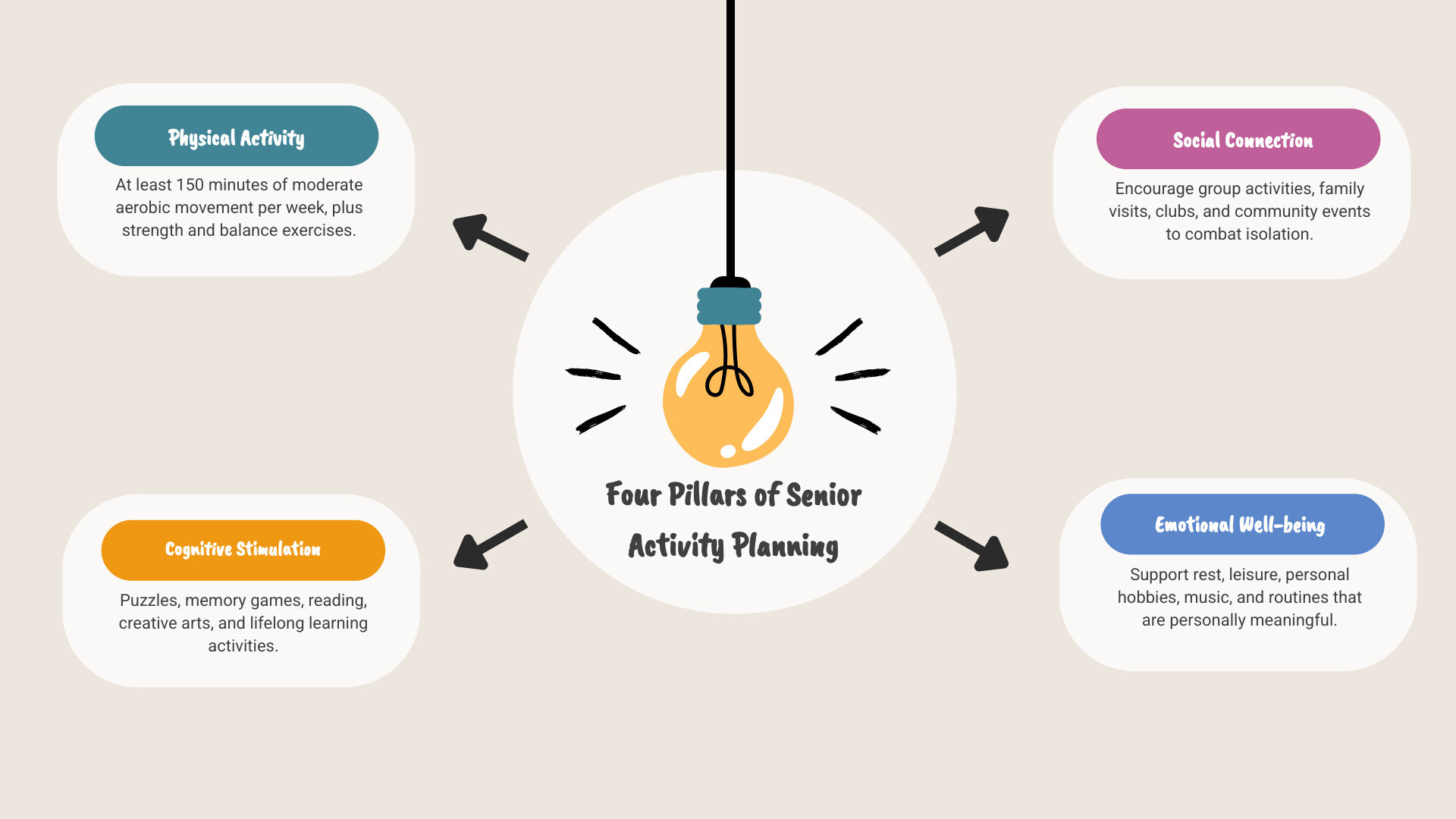
If you're looking for a quick starting point, here's what effective senior activity planning looks like:
- Physical activity - At least 150 minutes of moderate aerobic movement per week, plus strength and balance exercises
- Cognitive stimulation - Puzzles, memory games, reading, creative arts, and lifelong learning
- Social connection - Group activities, family visits, clubs, and community events
- Emotional well-being - Rest, leisure, hobbies, music, and personally meaningful routines
The goal isn't to fill every hour. It's to make each hour count.
For many families, the hardest part isn't knowing that activities matter — it's figuring out how to make them happen consistently. Your parent may have mobility limitations, chronic conditions, or simply resist the idea of "doing activities." You're juggling your own life while trying to make sure theirs stays full and connected.
The good news? You don't need a complicated system. You need a thoughtful approach that matches real interests to real abilities — and a little structure to make it stick.
This guide walks you through exactly that: from understanding what the research says about activity and aging, to building a weekly routine your parent will actually enjoy.
Activity planning for seniors terms simplified:

When we talk about activity planning for seniors, we aren't just looking for ways to "pass the time." We are looking at a scientifically-backed method to preserve independence and delay the onset of chronic health issues. As of April 2026, the data remains clear: movement is medicine.
According to the Older Adult Activity: An Overview | Physical Activity Basics - CDC, adults aged 65 and older need a specific "cocktail" of movement to stay healthy. This isn't just about a casual stroll; it’s about a balanced approach that targets different systems of the body.
CDC Recommended Guidelines
To maintain health and prevent falls, the CDC recommends that older adults aim for:
- Aerobic Activity: At least 150 minutes of moderate-intensity activity (like brisk walking) or 75 minutes of vigorous-intensity activity (like jogging) per week.
- Muscle Strengthening: Activities that work all major muscle groups at least two days a week.
- Balance Training: Exercises specifically designed to improve stability, which is vital for reducing fall risks.
The benefits of following these guidelines are immense. Regular physical activity has been shown to improve sleep, lower anxiety, and reduce blood pressure. Long-term, it decreases the risk of dementia, heart disease, type 2 diabetes, and several types of cancer. Even if a senior cannot meet these full recommendations due to chronic conditions, doing some activity is always better than none. The goal is to be as active as their individual abilities allow.
Assessing Interests and Abilities for Personalized Support
Effective activity planning for seniors must be "person-centered." This means we don't just pick activities we think they should do; we pick things they want to do. At Burnie's Way, we believe that the best routine is one that honors a person’s history, passions, and current energy levels.
Before building a schedule, we recommend a thorough assessment. This can be done through simple conversations or interest surveys. Consider these factors:
- Physical Capacity: Does your loved one have arthritis that makes fine motor tasks (like knitting) difficult? Are they at a high risk for falls?
- Cognitive Levels: Are they looking for complex challenges like bridge, or do they find comfort in simpler, repetitive tasks?
- Energy Patterns: Are they "morning people" who thrive on early walks, or do they need a slower start to the day?
For more on how to navigate these assessments, our Senior Lifestyle Management Guide and Daily Life Management Tips Guide offer deeper insights into coordinating a lifestyle that feels both safe and fulfilling.
Tailoring Activity Planning for Seniors with Limited Mobility
Limited mobility does not mean a limited life. There are thousands of ways to adapt engagement for those who use wheelchairs or have low stamina. Activity Connection: Activities for Seniors highlights that activities like chair yoga or seated Tai Chi can provide significant physical benefits without the risk of standing exercises.
In-room options are also vital for those who may be recovering from surgery or prefer a more private environment. Consider:
- Sensory Boxes: Filled with items of different textures, scents, and colors to spark memory and conversation.
- E-readers: Which allow for adjustable text sizes, making reading accessible for those with visual impairments.
- 1-to-1 Visits: Focused on reminiscing, looking through old photo albums, or listening to favorite music.
Cognitive Stimulation in Activity Planning for Seniors
Keeping the mind sharp is just as important as keeping the body moving. Cognitive activities can help delay the progression of memory loss and provide a sense of accomplishment. Our resources on Cognitive Stimulation Activities suggest moving beyond simple crosswords to more immersive experiences.
Consider "lifelong learning" opportunities, such as watching a documentary and discussing it, or starting a "memory wall" where seniors can pin photos and mementos that tell their life story. Creative arts—whether it’s painting, singing, or even simple crafts—provide an emotional outlet and keep neural pathways active.
Building a Balanced Weekly Routine
A great schedule provides structure without feeling like a chore. The secret is balance. You want to mix high-energy periods with restful ones to prevent burnout. A well-structured routine is especially comforting for seniors with cognitive decline, as it provides a sense of normalcy and reduces anxiety.
When we help families coordinate these routines, we often look at a "block" system:
- Morning Movement: Gentle stretching, a short walk, or chair exercises to get the blood flowing.
- Midday Tasks: Purposeful activities like gardening, light household "help" (like folding towels), or a hobby.
- Afternoon Stimulation: This is the prime time for social or cognitive engagement. Think book clubs, puzzles, or Participating in Activities You Enjoy As You Age.
- Evening Calming: Lowering the lights, listening to soft music, or a warm towel routine to prepare for sleep.
Don't forget to leverage community resources. In Virginia, organizations like Senior Centers | VirginiaNavigator offer fantastic group programs that can be integrated into a weekly plan. This holistic approach is what we call Holistic Senior Wellness—looking at the whole person, not just their physical needs.
Overcoming Barriers and Promoting Health Equity
Even the best-laid plans can hit roadblocks. Many seniors are reluctant to participate in new activities because of fear of failure, depression, or social anxiety. We’ve found that the best way to encourage a reluctant participant is to listen to their concerns first. Sometimes, they just need to be asked to "help" with an activity rather than being told to "join" one.
We must also address the reality of health equity. Not every senior has easy access to green spaces, expensive gym memberships, or reliable transportation. This is where Elderly Social Interaction becomes a community effort. Utilizing local resources like the Senior Centers | VirginiaNavigator can help bridge the gap, offering low-cost or free programs that reduce isolation for diverse populations.
In Virginia, specifically, there are numerous senior-friendly outings that are accessible and budget-friendly. From walking the trails at Riverwalk Park to visiting historic sites, these activities help ensure that all seniors, regardless of their background, can stay connected to the world around them.
Frequently Asked Questions about Senior Activities
What are the CDC-recommended activity levels for adults over 65?
According to the Older Adult Activity: An Overview | Physical Activity Basics - CDC, seniors need 150 minutes of moderate aerobic activity per week, muscle-strengthening at least two days a week, and regular balance exercises. If these goals seem daunting, start small—even five or ten minutes of movement has immediate health benefits.
How can technology enhance activity planning for seniors?
Technology is a powerful tool for Senior Life Management. Virtual museum tours can bring the Louvre or the Smithsonian into a living room. Video calls via FaceTime or Zoom help combat isolation by keeping family close. For those who enjoy gaming, consoles like the Nintendo Wii offer "virtual sports" like bowling or tennis that provide low-impact movement and fun.
What are the best activities for seniors with limited mobility?
Focus on "low-impact, high-engagement" options. The Best Virginia Activities for Seniors and Over 50s suggests adaptive gardening using raised beds, chair-based yoga, or audiobooks for those who find holding heavy books difficult. Tactile crafts like knitting or simple woodworking can also be highly rewarding for those with limited lower-body mobility.
Conclusion
At the end of the day, activity planning for seniors is about more than just checking boxes on a calendar. It is about creating a life that feels worth living—one filled with purpose, connection, and joy. Whether it's a 10-minute morning stretch or a monthly book club, these small moments of engagement add up to a significant increase in quality of life.
At Burnie's Way, we understand that managing these routines while balancing your own responsibilities can be overwhelming. We don't provide medical care, but we do act as a compassionate partner in lifestyle coordination. We help families navigate these choices, providing the personal support and "concierge-style" help that allows seniors to live safely and independently at home.
If you’re looking for a partner to help coordinate these meaningful routines and give your family peace of mind, we’re here to help. More info about our lifestyle coordination services is just a click away. Let's work together to make your loved one's golden years truly shine.