7 min read
Savvy Seniors: How to Save Money on Groceries
Why Smart Grocery Shopping Matters for Aging Adults Grocery shopping for elders can feel overwhelming when you're managing it from a distance or...
5 min read
Sydney Giffen
:
Updated on April 4, 2026
Senior lifestyle management is the practice of coordinating the everyday activities, personal support, and home-based routines that help aging adults live comfortably, safely, and independently — on their own terms.
If you're trying to understand what this looks like in practice, here's a quick overview:
What senior lifestyle management typically includes:
Caring for an aging parent is one of the most meaningful — and overwhelming — responsibilities an adult child can face. You want your mom or dad to be happy, safe, and living life on their terms. But coordinating all the moving pieces from a distance? That's a lot.
And you're not alone in feeling that way.
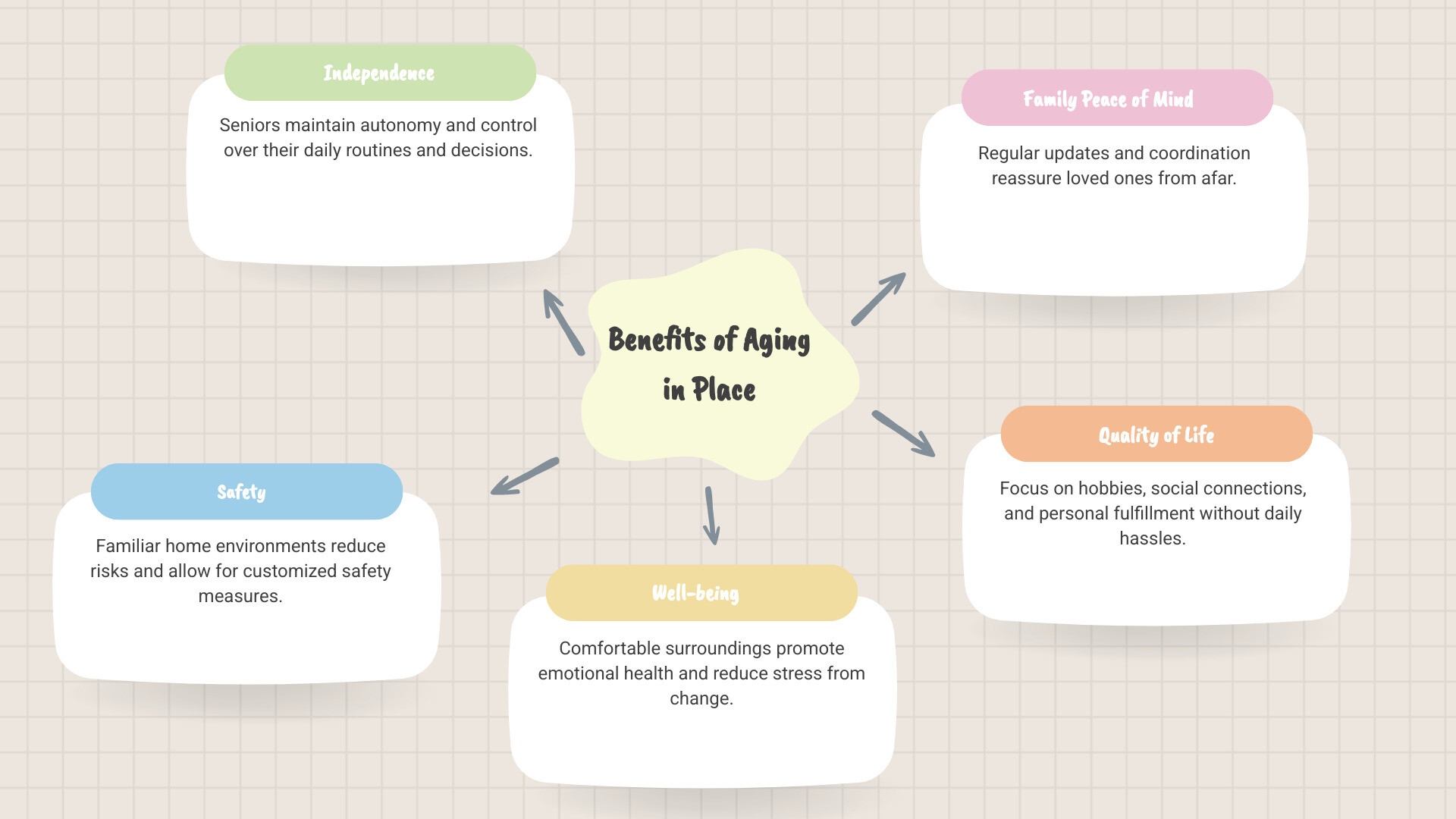
Research from organizations like AARP consistently shows that 90% of older adults want to stay in their own homes as they age. The challenge isn't the desire — it's the daily coordination that makes it possible.
That's exactly where senior lifestyle management comes in. It's not about medical care or clinical treatment. It's about making sure the everyday details of life are handled well, so seniors can focus on what actually matters: enjoying their days.
At Burnie's Way, we think of it like having a personal concierge and virtual companion rolled into one — someone who helps your loved one live confidently, stay connected, and feel supported without losing their independence.

Easy senior lifestyle management word list:

When we talk about "aging in place," we are talking about more than just staying in a house. We are talking about maintaining the rhythm of a life well-lived. Since 90% of older adults prefer to remain in their homes, the goal of senior lifestyle management is to bridge the gap between complete independence and the need for a little extra help.
Effective management starts with home environment coordination. This involves looking at the physical space to ensure it remains a sanctuary rather than a source of stress. It includes property oversight—managing those nagging home maintenance tasks like leaky faucets or lawn care—and lifestyle organization, which ensures the pantry is stocked and the mail is sorted.
By focusing on these logistical pillars, we help seniors avoid the "overwhelm" that often leads to premature moves into institutional settings. You can find more info about senior life management to see how these pieces fit together. For those taking the first steps, these daily life management tips offer practical starting points for organizing a senior's routine.
To truly support a vibrant lifestyle, management must go beyond basic chores. It requires a hospitality-first mindset. Think of it as "concierge services for the golden years." This isn't just about getting things done; it’s about how they are done—with respect, warmth, and excellence.
Key pillars of this support include:
| Feature | Personal Lifestyle Support (At Home) | Traditional Facility Management |
|---|---|---|
| Environment | Familiar, personal home | Institutional, communal setting |
| Schedule | Resident-led and flexible | Structured and predetermined |
| Focus | Individual preferences & autonomy | Operational efficiency & scale |
| Privacy | Maximum; full control of space | Shared spaces; staff-led access |
Technology is the "silent partner" in modern senior lifestyle management. It’s no longer just about emergency buttons; it’s about connectivity. Smart home tools, such as voice-activated lights or automated thermostats, allow seniors to manage their environment with ease.
Furthermore, virtual companionship and communication tools help bridge the geographical gap for families. Whether it's a video call to see a grandchild’s smile or a tablet-based app that tracks daily routines, technology ensures that "living alone" never has to mean "being alone."
Life is unpredictable, and even the best-laid plans need adjustment. This is where connecting with specialized professionals becomes invaluable. Whether you are dealing with a sudden change in health or a slow decline in independence, having a "quarterback" for the team makes all the difference.
Professional lifestyle coordinators act as a family liaison, providing remote oversight and advocacy. They help families navigate the fragmented world of senior resources, ensuring that every service—from home repair to social clubs—is working in harmony. This level of senior lifestyle coordination provides a safety net that catches small issues before they become crises. Developing comprehensive lifestyle plans ensures that every aspect of a senior's well-being is considered, from financial organization to emotional health.
Selecting the right partner is a deeply personal decision. We recommend looking for providers who embody HEART values:
A personalized approach is non-negotiable. Every senior has a different story; their support plan should reflect that.
Sometimes, the best way to maintain a high quality of life is to transition into a community designed for seniors. This might mean moving to independent living or assisted living. Senior lifestyle management plays a crucial role here by helping families navigate these diverse choices.
When evaluating communities, we often look at "hospitality excellence." This includes everything from the "curb appeal" (first impressions matter!) to the quality of the dining program. A well-managed community should feel like a boutique hotel, not a clinical ward. For families at this crossroads, elderly lifestyle planning can help determine which environment will best support their loved one's goals.
The physical act of moving is often the biggest barrier to a better lifestyle. Professional management includes:
The cost of senior lifestyle management varies based on the level of support needed. Most services operate on a private pay model, though some families utilize long-term care insurance or specialized savings. For those who have served our country, Veteran discounts or benefits may be available to help offset the costs of lifestyle coordination and support.
This is a common point of confusion! Home health care is clinical—it involves nurses, therapists, and medical treatments. Senior lifestyle management is non-clinical. We focus on personal assistance, social wellness, and the logistical coordination of daily life. We don't "treat" a patient; we "support" a member.
Absolutely. In fact, this is one of the primary reasons families seek us out. We provide remote oversight and regular family reports. With 24/7 on-call support and a dedicated point of contact, we act as your "eyes and ears," giving you peace of mind that your parents are safe, active, and happy even when you can't be there in person.
At Burnie's Way, we believe that aging should be a time of connection, not isolation. Our role as a personal concierge and virtual companion is to remove the "work" of daily life so that seniors can enjoy the "art" of living. Whether it’s through custom support plans or simply being a friendly voice on the phone, we are here to ensure independence is never lost.
If you’re ready to see how we can help your family, learn more about how we work or explore our lifestyle support services today. Let’s make the golden years truly shine.
7 min read
Why Smart Grocery Shopping Matters for Aging Adults Grocery shopping for elders can feel overwhelming when you're managing it from a distance or...

10 min read
Why Understanding Home Support Options Matters What are the home care services for the elderly person? Home care services for seniors fall into four...
7 min read
Why Emergency Senior Care Matters for Your Family Emergency senior care refers to immediate support services available when an older adult faces an...