6 min read

Touring Like a Pro: Your Assisted Living Assessment Checklist

Touring Like a Pro: Your Assisted Living Assessment Checklist

One of the Hardest Decisions You'll Ever Make — Made Easier

assisted living checklist

An assisted living checklist is a structured evaluation tool that helps families compare senior living communities across the areas that matter most — safety, staffing, costs, contracts, and quality of life.

Here's a quick overview of what a thorough assisted living checklist covers:

Category What to Evaluate
Licensing & Safety State license, inspection reports, grab bars, emergency systems
Staff & Care Caregiver ratios, 24/7 availability, training, background checks
Living Spaces Room sizes, private bathrooms, kitchenettes, pet policies
Costs & Contracts Monthly fees, add-ons, rate increases, discharge policies
Dining & Activities Dietary accommodations, daily menus, activity calendars
Resident Well-Being Staff interactions, resident grooming, social engagement

Choosing where a parent will live is not a quick decision. It's emotional, complex, and high-stakes. And according to data from A Place for Mom, roughly half of all families end up touring between four and six communities before landing on the right one.

That's a lot of visits — and without a clear framework, they can blur together fast.

Was that the one with the nice dining room? Or the one where no one greeted us at the door?

A solid checklist keeps you grounded. It turns an overwhelming process into a systematic one, so you can compare communities fairly and make a decision you feel confident about.

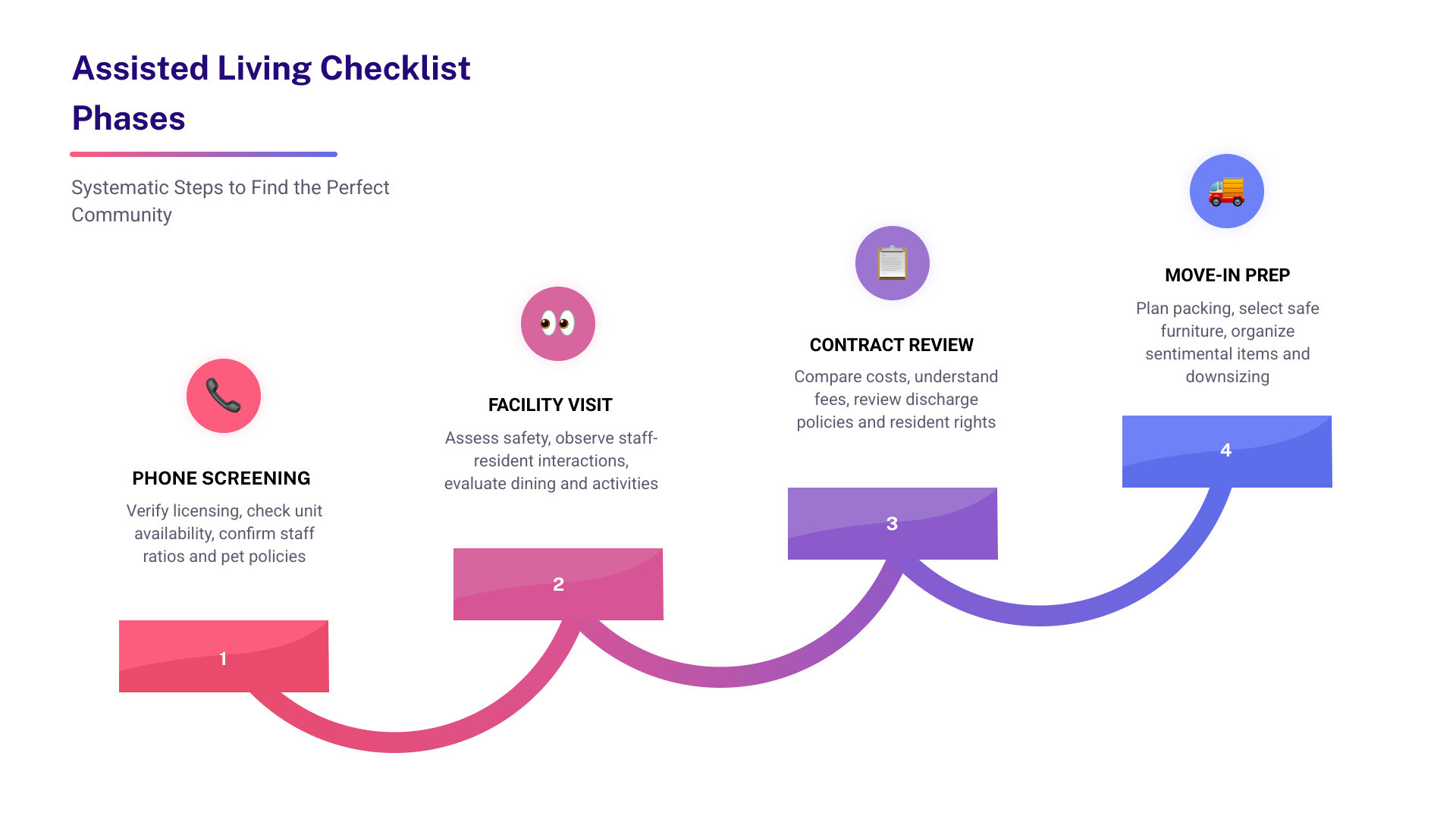
Assisted living checklist phases: phone screening, facility visit, contract review, move-in prep - assisted living checklist

Why You Need a Comprehensive Assisted Living Checklist

When we step into a senior living community, it’s easy to be swayed by the "curb appeal." A grand piano in the lobby or a fresh coat of paint can mask underlying issues that affect daily life. This is why an assisted living checklist is more than just a piece of paper; it is your shield against making a decision based purely on aesthetics.

Using a systematic approach allows for an objective comparison. By the time you reach your fourth tour, the details of the first one will likely be fuzzy. Did the first place have emergency pull cords in the bathroom? Was the staff-to-resident ratio better at the second facility? A checklist ensures you are comparing "apples to apples" rather than relying on a feeling.

This process is about protecting your loved one’s quality of life and ensuring the facility meets high safety standards. For a broader look at how to navigate these years, our Senior Care Planning Guide 2026 provides a roadmap for the entire journey. You can also find expert-vetted criteria in the U.S. News Assisted Living Checklist.

A daughter taking notes during a facility tour to ensure an objective comparison - assisted living checklist

The Importance of an Assisted Living Checklist for Families

The decision to move is often triggered by a crisis—a fall, a missed medication, or increasing isolation. In these high-stress moments, we tend to rush. However, referral statistics show that families who take the time to visit 4 to 6 communities are significantly more likely to find a "best fit" where the resident remains satisfied long-term.

A checklist helps you look past the marketing. You aren't just looking for a room; you are looking for a community fit. This includes everything from the social "vibe" to the specific level of support provided. You can find more structured questions to guide your search at SeniorAdvisor.

Essential Questions for Your Assisted Living Checklist

Before you get into the nitty-gritty of the tour, you need to understand the physical layout. Here are some foundational questions to include:

  • Unit Types: Are there studios, one-bedroom apartments, or shared suites?
  • Privacy: Are bathrooms private or shared? Do rooms have lockable doors?
  • Kitchenettes: Is there a sink, refrigerator, and microwave for light snacks?
  • Special Care: Does the facility offer specialized memory care units for those with Alzheimer’s?

For more advice on managing the logistics of this transition, check out our Daily Life Management Tips Guide.

Phase 1: Initial Inquiries and Phone Screenings

Your assessment begins before you even leave your house. A quick phone screening can save you hours of wasted time if a facility doesn't meet your basic requirements.

Start by verifying their state licensure. In Virginia and across the U.S., facilities must be licensed to provide assisted living services. Ask if they have had recent violations and if you can see their latest inspection report. You should also confirm unit availability—there's no point in touring a facility with a two-year waiting list if you need to move next month.

Other vital phone questions include:

  • Pet Policies: Are residents allowed to bring their furry companions?
  • Staffing: What is the caregiver-to-resident ratio during the day versus at night?
  • Billing: Do they accept Medicaid or veterans' benefits?

You can download a printable version of these initial questions from this comprehensive tour checklist.

Evaluating Safety and Cleanliness on Your Assisted Living Checklist

While on the phone, ask about their safety protocols. Once you arrive in person, your nose and eyes will tell the rest of the story. Odor control is a major indicator of cleanliness; a facility shouldn't smell like urine, but it also shouldn't be overpowered by heavy chemical scents used to mask smells.

Look for physical safety features like:

  • Lighting: Are hallways and stairs well-lit to prevent trips?
  • Emergency Systems: Are there pull cords in the bathrooms and pendants for residents?
  • Grab Bars: Are these installed in showers and near toilets?

Safety doesn't stop at the facility door. If your loved one is currently at home, our Fall Prevention Home Tips Guide offers immediate steps to make their current environment safer.

Phase 2: The In-Person Visit and Atmosphere Assessment

This is where the "vibe check" happens. When we tour, we look for more than just clean floors; we look for life. Are residents out of their rooms, or is the hallway a ghost town? Are they engaged in social activities, or are they sitting alone in wheelchairs in front of a TV?

The atmosphere is often dictated by the activities calendar. A robust schedule should include more than just bingo; look for exercise classes, outings, and resident-led clubs. Our Senior Lifestyle Management Guide explains how these social connections are vital for longevity.

Seniors socializing in a common area during a facility tour - assisted living checklist

Observing Staff and Resident Engagement

The most telling part of any tour is how the staff interacts with the residents. Do they use the residents' names? Is their communication respectful and warm, or do they seem rushed and overwhelmed?

Watch for:

  • Resident Grooming: Are residents clean, well-shaven, and dressed in appropriate clothing?
  • Professionalism: Is the staff dressed neatly and acting professionally?
  • Inclusion: During the tour, does the guide talk to your parent, or do they only talk about them to you?

For a deeper dive into evaluating these interactions, the Loudoun Seniors checklist is an excellent resource for Virginia families.

Phase 3: Reviewing Contracts, Costs, and Care Levels

The financial side of assisted living can be a maze of "add-on" fees. It is essential to understand exactly what the base rent covers. Some facilities use "all-inclusive" pricing, while others use "a la carte" or "tiered" pricing based on the level of care needed.

Comparison of all-inclusive vs. a la carte pricing structures - assisted living checklist infographic

Key financial questions for your assisted living checklist:

  • Entrance Fees: Is there a large upfront "community fee"?
  • Rate Increases: How often are rates raised, and how much notice is given?
  • Discharge Policies: Under what conditions would a resident be asked to leave (e.g., if their medical needs exceed the facility’s license)?

Understanding these costs is critical for long-term planning. You can compare these expenses to other options in our guide on the Cost of Senior Home Care.

Understanding Resident Rights and Financial Contingencies

Before signing any contract, ask for a copy of the "Resident Bill of Rights." This should be clearly posted in the facility. It covers the resident's right to privacy, their right to choose their own doctor, and their right to participate in their own care planning.

You must also plan for the "what ifs." What happens if a resident runs out of money? Does the facility have a policy for transitioning to Medicaid, or will they be asked to leave? The AHCA/NCAL Consumer Checklist provides a detailed list of legal and financial questions to ask.

Moving Day: Packing and Downsizing Strategies

Moving from a family home to an assisted living apartment is a major transition. Space is almost always limited, which means downsizing is a necessity. We recommend tackling this one room at a time, starting months in advance if possible.

Focus on bringing items that make the new space feel like home:

  • Furniture: A favorite recliner or a small bedside table.
  • Photos: Create a gallery wall or a digital photo frame to preserve memories without the clutter.
  • Bedding: Bringing familiar sheets and blankets can help with sleep in a new environment.

For a full list of what to pack, see the CarePatrol Complete Checklist.

Items to Avoid for Safety and Space

In an assisted living environment, safety trumps style. Some items are simply too dangerous or take up too much room.

  • Throw Rugs: These are the #1 trip hazard for seniors.
  • Oversized Furniture: A giant dining table for 12 won't fit in a one-bedroom apartment.
  • Excessive Clutter: Too many knick-knacks make it harder for staff to clean and easier for residents to knock things over.
  • Candles: Most facilities prohibit open flames for fire safety.

The Woodland HRC checklist offers great tips on what to leave behind to ensure a safe, navigable living space.

Frequently Asked Questions about Assisted Living

What happens if a resident runs out of money?

This varies by facility. Some communities are "private pay only," meaning if funds run out, the resident must move. Others have a specific number of "Medicaid beds" or allow residents to transition to Medicaid after they have paid privately for a certain number of years. Always get this policy in writing during the contract phase.

How many facilities should I tour before deciding?

Research shows that touring 4 to 6 communities provides the best perspective. It allows you to see the full spectrum of what is available in your price range and helps you identify "red flags" that you might miss if you only visit one or two places.

Are residents allowed to bring their own furniture?

Yes, most assisted living facilities encourage residents to bring their own furniture to help them feel at home. However, you must ensure the pieces fit comfortably without obstructing walkways or creating safety hazards.

Conclusion

Choosing the right community is a journey that requires patience, a sharp eye, and a comprehensive assisted living checklist. By breaking the process down into phases—from that first phone call to the final contract review—you can move forward with the confidence that you are making the best choice for your loved one’s future.

At Burnie's Way, we understand that "home" is a powerful word. Our mission is to provide the personal support and lifestyle coordination that helps seniors stay independent and connected, whether they are in their long-time family home or transitioning to a new community. We act as a virtual companion and personal assistant, ensuring that every detail of daily life is managed with heart and competence.

If you’re feeling overwhelmed by the options, we’re here to help you navigate the choices. Learn more about our lifestyle management services and how we can support your family during this transition.

A Practical Guide to Daily Life Assistance Options

A Practical Guide to Daily Life Assistance Options

Why Daily Life Assistance Matters for Independence and Peace of Mind Daily life assistance helps people of all ages maintain their independence at...


Read More
Peace of Mind: Planning for Life's Final Chapter

Peace of Mind: Planning for Life's Final Chapter

Why End-of-Life Planning Matters More Than You Think End-of-life planning is the process of making decisions and organizing your affairs for when you...

Read More
Your Home, Your Haven: Comprehensive Help for Seniors Living Independently

Your Home, Your Haven: Comprehensive Help for Seniors Living Independently

Why So Many Families Are Searching for Help for Seniors Living at Home Help for seniors living at home is one of the most urgent things families look...

Read More