8 min read

From Confusion to Clarity: Crafting Personalized Senior Care Plans

From Confusion to Clarity: Crafting Personalized Senior Care Plans

Why Senior Care Planning Matters Now More Than Ever

senior couple at home - senior care planning

Senior care planning is the process of preparing for an aging loved one's future needs—from daily routines and home safety to legal documents and family coordination. It helps families stay organized, reduces stress, and ensures your parent can live comfortably at home with the right support in place.

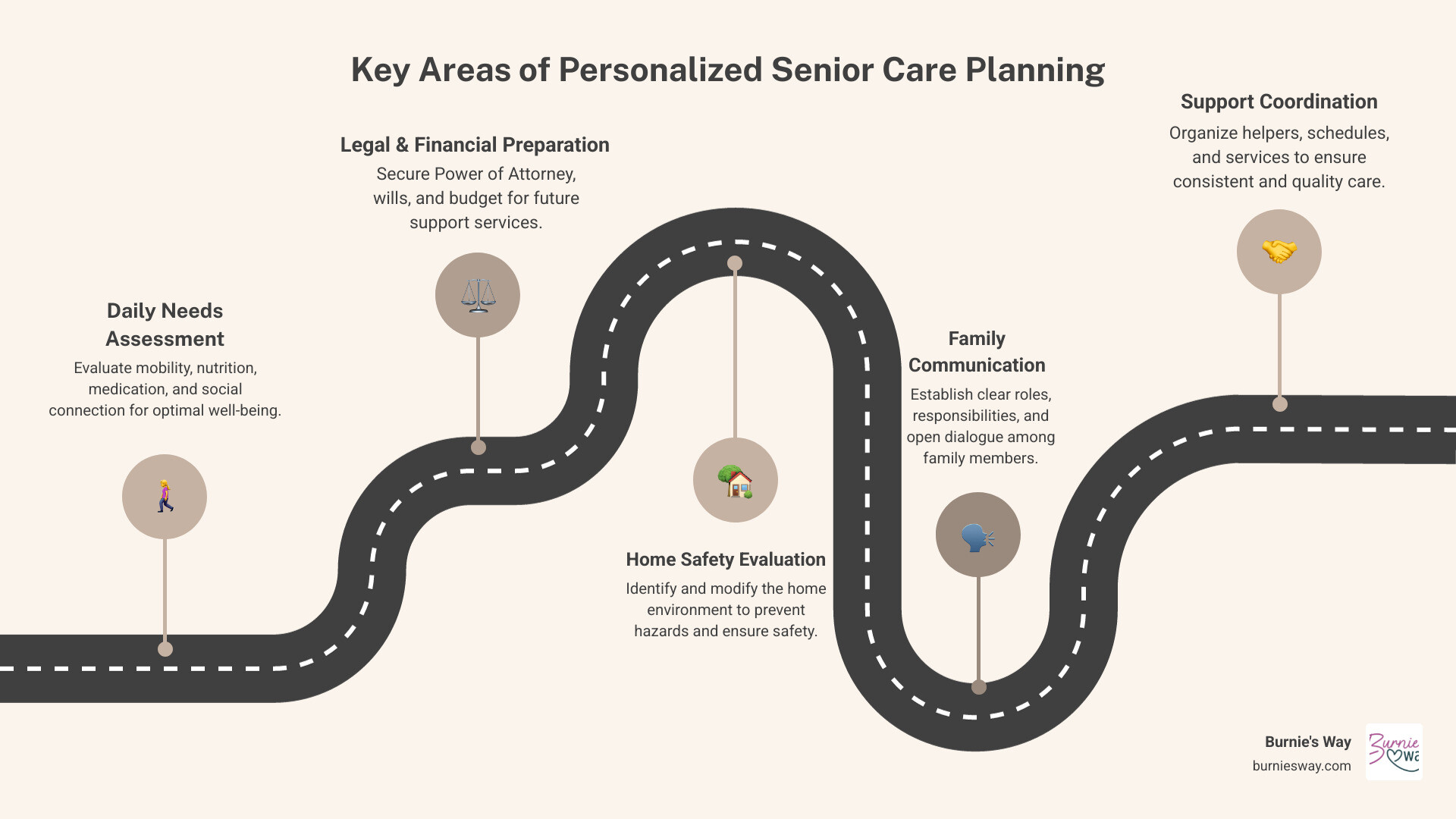
Key components of senior care planning include:

  1. Assessing daily needs - mobility, nutrition, medication, social connection
  2. Legal and financial preparation - Power of Attorney, wills, budgeting for support
  3. Home safety evaluation - modifications, technology, emergency backups
  4. Family communication - roles, responsibilities, and honest conversations
  5. Support coordination - organizing helpers, schedules, and services

After nearly two decades supporting families through care transitions, one thing is clear: the families who feel most confident aren't the ones who had the easiest situations—they're the ones who started planning before urgency forced their hand.

You're likely reading this because you're worried. Maybe your parent missed a medication dose. Maybe you noticed the house isn't as tidy as it used to be. Or perhaps you're just exhausted from coordinating everything alone while juggling work and your own family.

Here's what most people don't realize: planning for aging isn't about taking away independence—it's about protecting it. Research consistently shows that seniors who age at home with proper support experience better health outcomes, maintain cognitive function longer, and report higher quality of life than those who relocate to institutional settings.

But here's the challenge: creating an effective plan requires more than just good intentions. You need to understand your parent's values, assess their real needs (not just what they admit to), steer legal and financial complexities, and coordinate multiple helpers—all while managing family dynamics and your own stress.

This guide breaks down the planning process into clear, actionable steps. Whether you're just starting to notice changes or you're already feeling overwhelmed, you'll learn how to create a personalized strategy that keeps your parent safe, independent, and living the way they want.

infographic showing the five key areas of senior life planning: daily needs assessment, legal and financial documents, home safety modifications, family communication strategy, and support coordination with timeline and checklist for each area - senior care planning infographic roadmap-5-steps

Learn more about senior care planning:

The Importance of Proactive Senior Life Planning

When we talk about senior care planning, we are really talking about "Advance Care Planning." This is the roadmap that ensures your loved one's wishes are respected, even if they reach a point where they can no longer communicate them. It is a gift of clarity for the family and a shield for the senior.

In our experience, the biggest roadblock is the "someday" trap. We tell ourselves we’ll have the talk "someday" when things get serious. But as many families in Virginia have finded, "someday" often arrives in the form of a 2:00 AM phone call from a hospital. Proactive planning allows us to make decisions with a clear head rather than a panicked heart.

Scientific research on personalized planning has shown that having a structured approach significantly impacts quality of life and positive health outcomes. It’s not just about logistics; it’s about ensuring the person you care for continues to receive support that aligns with their identity.

Understanding Personal Values and Wishes

A strategy is only as good as its foundation. Before we look at grab bars or bank accounts, we must understand the "why" behind the senior's choices. We need to ask the tough questions that go beyond "Are you okay?"

To truly understand their values, we suggest initiating conversations around these themes:

  • What makes life worth living? Is it the ability to sit on the porch and watch the birds? Is it being able to host Sunday dinner?
  • What kind of daily living would you accept? Some people prioritize safety above all else, while others are willing to accept certain risks to maintain total autonomy.
  • What trade-offs are you willing to make? For example, would they accept having a helper in the house three days a week if it meant they didn't have to move to a facility?
  • What does "suffering" mean to you? This helps inform future healthcare decisions and end-of-life wishes.

Resources like Advance Care Planning Ontario – For Individuals & Families (though based in Canada, their framework for value-based discussions is universally excellent) provide fantastic prompts for these deep-dive conversations.

Benefits of Early Planning

The families we work with often report an immediate "weight lifted" once a strategy is on paper. The benefits are manifold:

  • Anxiety Reduction: Much of caregiver burnout comes from the "mental load"—the constant worrying about what might happen. A plan provides a "what-if" manual.
  • Family Confidence: When siblings disagree, the plan serves as the ultimate tie-breaker. It’s no longer about "what I think Mom wants," but "what Mom said she wants."
  • Smoother Transitions: Whether it’s starting a new errands service or modifying a bathroom, transitions are less jarring when they are part of a pre-discussed timeline.

For more insights, explore our guide on elderly care planning.

Assessing Daily Needs and Home Comfort

senior enjoying a safe, well-organized home - senior care planning

Once we understand the values, we move to the practicalities. We like to think of the primary family member as a "General Contractor." You don't have to lay every brick yourself, but you do need to know where the holes in the foundation are.

Identifying Gaps in Support

We often see a gap between what a senior can do and what they should do to thrive. We assess these through Activities of Daily Living (ADLs) and Instrumental Activities of Daily Living (IADLs).

  • Household Tasks: Is the laundry piling up? Are there expired items in the fridge?
  • Transportation: In many parts of Virginia, driving is the only way to get to the grocery store or the doctor. If driving is becoming unsafe, how will they stay connected?
  • Social Connection: Loneliness is as dangerous to health as smoking 15 cigarettes a day. Is your loved one seeing friends, or are they becoming isolated?
  • Intellectual Stimulation: Are they still engaging in hobbies? If a senior loved to read but their vision is failing, we need to pivot to audiobooks or large-print technology.

Evaluating the Home Environment

Aging in place is the goal for most, but the home must be a partner in that goal, not an obstacle. A home safety evaluation is critical. We look for:

  • Lighting: Is it bright enough to prevent stumbles in the hallway at night?
  • Trip Hazards: Area rugs are the enemy! We recommend securing or removing them.
  • Bathroom Safety: Grab bars in the shower and near the toilet are non-negotiable for long-term independence.
  • Mobility: Can they steer the stairs? Would a ramp at the entrance make life easier?

For a deeper dive into making the home a sanctuary for aging, see our resources on adapting to aging.

You can have the best intentions in the world, but without the legal authority to act, your hands may be tied during a crisis. In Virginia, having these documents in order is a prerequisite for a peaceful aging experience.

Every adult, regardless of age, should have these four documents:

  1. Power of Attorney (POA) for Property/Finances: This grants a trusted person the authority to manage bank accounts, pay bills, and handle real estate if the senior cannot.
  2. Power of Attorney for Personal Care (Advance Directive): This names a "Substitute Decision Maker" for healthcare decisions. For more on this, see Community Legal Education Ontario: Power of Attorney for Personal Care.
  3. A Will: This ensures assets are distributed according to their wishes.
  4. Living Will / DNR (Do Not Resuscitate): This specifically outlines preferences for life-sustaining treatments.

Money is often the hardest topic to broach, but it’s essential for senior care planning. You need to know what the budget is before you can coordinate support.

Consider these funding sources:

  • Private Pay: Personal savings and pensions.
  • Long-Term Care Insurance: If they have a policy, understand the "triggers" for when it begins to pay out.
  • Veterans Affairs (VA) Benefits: Especially relevant in Virginia, the "Aid and Attendance" benefit can provide significant monthly support for veterans and their spouses who need help with daily activities.
  • Government Programs: While Medicare does not typically pay for long-term personal support, Medicaid may have waivers for home-based assistance for those who qualify.
Support Option Estimated Monthly Cost (US Avg) Impact on Independence
Personal Support Coordination $500 - $1,500 High - Senior stays in own home
Hiring Private Assistants $2,000 - $4,500 High - Custom to specific needs
Assisted Living Facility $4,000 - $7,000+ Moderate - Loss of home environment
Skilled Nursing Facility $8,000 - $12,000+ Low - High level of clinical care

Implementing Your Strategy and Emergency Backups

A strategy on paper is just a list of wishes until it’s implemented. This is where the "coordination" aspect of senior care planning comes into play.

Steps to a Comprehensive Senior Life Planning Strategy

  1. Identify the Needs: Use the ADL/IADL checklist we discussed earlier.
  2. Draft the Plan: Document who is responsible for what. "Who is taking Mom to the cardiologist on Tuesday?" "Who is checking the fridge on Fridays?"
  3. Conduct a Family Meeting: Invite the senior, siblings, and any professional advisors. The goal is to ensure everyone is on the same page and that the senior feels heard, not "managed."
  4. Use Technology: Shared digital calendars, medication reminder apps, and daily communication logs can minimize confusion.

Check out our guide to comprehensive planning for more details.

Preparing for Unexpected Emergencies

Even the best-laid plans need a "Plan B." What happens if the primary family helper gets the flu? Or if there’s a power outage during a Virginia winter?

  • Emergency Contacts: A list should be posted on the fridge and saved in everyone’s phones.
  • Short-Term Support: Identify a local concierge or errands service that can step in on short notice.
  • File of Life: Keep a folder with a list of medications, allergies, and doctors near the front door for EMTs.
  • Backup Power: For seniors using oxygen or medical equipment, a backup generator or battery is essential.

For a deeper look, watch this Guide to Planning for An Unexpected Emergency.

Managing Family Dynamics and Communication

Planning for a parent's aging often brings out old sibling rivalries or deep-seated fears. It is rarely just about the logistics; it’s about the emotions.

Initiating the Conversation

Don't wait for a crisis to start talking. Normalize the conversation by framing it as a life stage, much like planning for a child's college or your own retirement.

  • Use "I" statements: "I want to make sure we can support you in staying in this house as long as possible."
  • Focus on autonomy: Instead of saying "You need help," ask "What would make your day-to-day life easier?"
  • Listen more than you talk: A senior's resistance to help is often just a fear of losing control.

Our resources on senior care coordination offer more tips on navigating these delicate waters.

Choosing the Right Support Team

When you decide to bring in outside help—whether it’s a personal assistant, a lawn service, or a concierge—consistency is the most important factor. Seniors thrive on routine. Look for:

  • Transparency: Clear pricing and clear roles.
  • Training: Do the helpers understand the nuances of aging?
  • Lifestyle Coordination: Do they just "do the task," or do they help the senior stay engaged with life?

Frequently Asked Questions about Senior Life Planning

When is the best time to start the planning process?

The ideal time is now. Specifically, we recommend starting when your loved one is still healthy and active. This allows them to lead the conversation and make choices based on preference rather than necessity. As the saying goes, "The best time to plant a tree was 20 years ago. The second best time is today."

How can I get paid for providing support to a family member?

In the United States, several programs may allow this. If your loved one is a veteran, the VA's "Veteran Directed Care" program may provide a budget for them to hire their own helpers, including family. Some Medicaid waiver programs (like the CCC Plus Waiver in Virginia) also allow for family members to be compensated for certain types of personal support.

What is the difference between an advance directive and a DNR?

An Advance Directive is a broad legal document where you name a healthcare proxy and outline your general wishes for medical care. A DNR (Do Not Resuscitate) is a specific medical order signed by a doctor stating that if your heart stops or you stop breathing, medical professionals should not perform CPR. One is a planning tool; the other is a specific instruction for emergency responders.

Conclusion

Senior care planning doesn't have to be a source of confusion. By taking a proactive, value-based approach, you can transform a daunting challenge into a clear path forward. It’s about more than just "getting by"—it’s about ensuring that the golden years are spent with dignity, connection, and joy.

At Burnie's Way, we understand that you want the best for your loved ones, but you shouldn't have to do it alone. We act as a personal concierge and lifestyle coordinator, helping seniors in Virginia live safely and independently at home. Think of us as your "boots on the ground"—the virtual companion and personal assistant that gives your family peace of mind and your parent the support they need to live life on their own terms.

Ready to move from confusion to clarity? Learn more about our services and how we can help you craft a strategy that brings peace back to your family.

Beyond the Basics: A Comprehensive Guide to Eldercare Services

12 min read

Beyond the Basics: A Comprehensive Guide to Eldercare Services

Why Understanding Eldercare Services Matters Now More Than Ever Eldercare services help older adults live safely and independently at home by...

Read More
Navigating Long-Term Care: Everything You Need to Know

12 min read

Navigating Long-Term Care: Everything You Need to Know

Understanding Long-Term Care: What It Means for You and Your Family Long term care is a range of services and supports designed to help people meet...

Read More
How to Find Qualified Elder Care Specialists in Less Than an Hour a Day

10 min read

How to Find Qualified Elder Care Specialists in Less Than an Hour a Day

Why Elder Care Specialists Matter for Families Today Elder care specialists (also known as Aging Life Care Professionals or Geriatric Care Managers)...

Read More