

When Caregiving Gets Overwhelming: What Family Respite Care Really Means
Family respite care is short-term, temporary relief for primary caregivers — giving them a scheduled break while their loved one receives safe, attentive support from someone else. It can last a few hours or a few weeks, and it can happen at home, at a day center, or in a short-term residential setting.
Here's the quick version:
- What it is: Temporary care for a loved one so the primary caregiver can rest, recharge, or handle other responsibilities
- Who it helps: Family caregivers of aging adults, children with disabilities, or anyone with ongoing care needs
- Where it happens: In the home, at adult day programs, or in overnight/residential settings
- How long it lasts: A few hours up to several weeks, depending on need
- How to access it: Through private agencies, nonprofit programs, government-funded programs like Medicaid waivers, or community organizations
Caring for an aging parent or a family member with complex needs is one of the most demanding roles a person can take on. It rarely lets up. There are no sick days, no clocking out, and no weekends off.
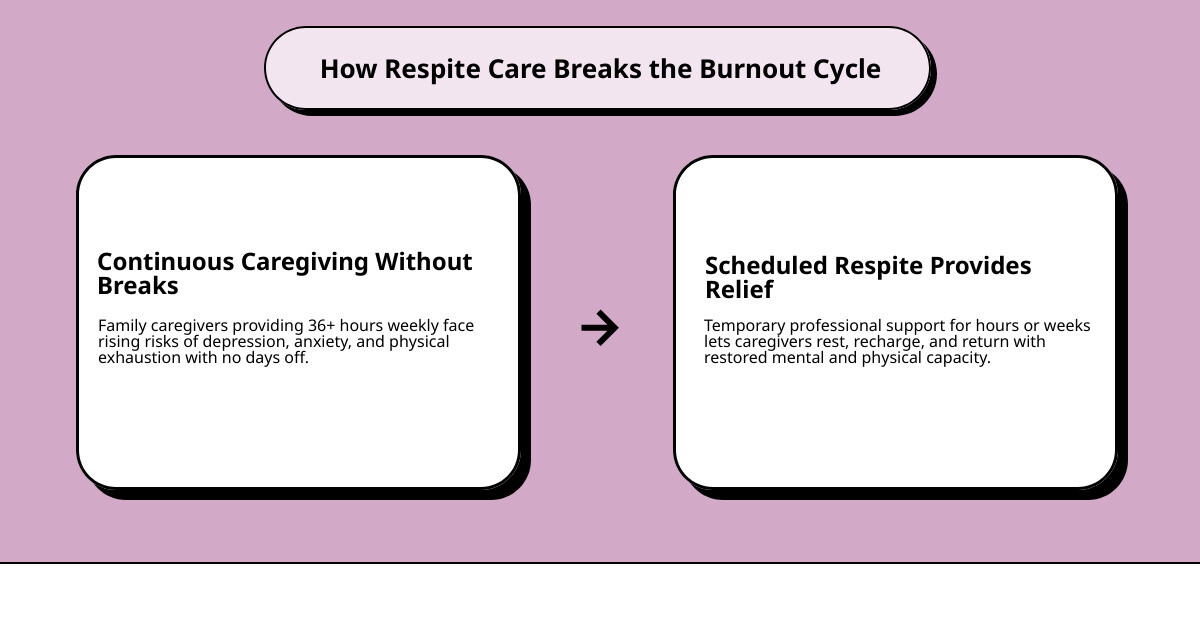
Over time, that relentless pressure takes a real toll. Research from the National Family Caregivers Association shows that family caregivers providing more than 36 hours of care per week are significantly more likely to experience depression and anxiety. That's not a minor side effect — it's a health crisis hiding in plain sight.
Respite care exists precisely to interrupt that cycle. It gives caregivers permission — and practical support — to step back before they break down.
Whether you're caring for an aging parent, a child with special needs, or a spouse managing a chronic illness, this guide will walk you through everything you need to know: what respite care looks like, who qualifies, what it costs, and how to find the right fit for your family.
Family respite care glossary:
Understanding Family Respite Care and How It Works

At its heart, family respite care is about creating space. It is a structured, planned interval of relief that allows a primary caregiver to hand over their responsibilities to a trusted companion or professional. This break can range from a four-hour weekly window to run errands, to a two-week block to recover from surgery or take a family vacation.
Without these regular breaks, caregivers face a steep climb. The physical exhaustion of managing daily routines, combined with the emotional weight of watching a loved one deal with cognitive or physical decline, frequently leads to severe caregiver burnout. Burnout isn't just "feeling tired"—it is a state of complete physical, mental, and emotional depletion. When a caregiver reaches this point, their risk of developing clinical depression rises sharply, and their own physical health can begin to deteriorate.
Understanding how to recognize these warning signs is the first step toward reclaiming your well-being. For more practical strategies on managing this emotional toll, explore our guide on Caregiver Stress Relief.
According to the National Institute on Aging guide on respite care, respite services can be customized to fit your family's exact situation. It is not a one-size-fits-all program; rather, it is a flexible support system designed to keep the primary caregiving relationship sustainable over the long haul.
Who Benefits Most from Family Respite Care?
While anyone in a continuous caregiving role can benefit, certain families find respite services particularly life-changing:
- Families of Children and Adults with Special Needs: Caring for a child or young adult with developmental disabilities or complex medical conditions is a lifelong commitment. Respite care gives parents a chance to rest while ensuring their child is in a safe, nurturing environment.
- Caregivers of Seniors and Elderly Adults: As our parents age, managing their safety, nutrition, and daily routines can become a full-time job. Respite care allows adult children to balance their own careers and families without neglecting their aging parents.
- Individuals with Chronic or Progressive Illnesses: Conditions like ALS, multiple sclerosis, or advanced cancer require intensive, round-the-clock supervision. Respite care provides a fresh face and professional support to handle these demanding routines.
To learn more about setting up a sustainable support network, read our comprehensive Family Caregiver Support Guide.
Preventing Burnout and Restoring Family Well-being
When a family caregiver is constantly running on empty, the entire household feels the strain. Relationships can become tense, and siblings or spouses may feel neglected as all family energy is funneled toward one individual.
Respite care acts as a pressure valve for the whole family. By bringing in temporary support, primary caregivers can:
- Attend their own medical appointments and prioritize their physical health.
- Spend dedicated, quality time with spouses, other children, or siblings who may need their undivided attention.
- Invest in basic self-care, whether that means going to a fitness class, enjoying a quiet dinner, or simply getting a full night of uninterrupted sleep.
For actionable ideas on how to weave restorative habits back into your busy schedule, check out our tips for Caregiver Stress Relief.
The Main Types of Respite Support Available

Respite care is highly adaptable and can be delivered in several different settings depending on your loved one’s comfort level and your family's schedule.
To help you visualize your options, here is a quick comparison of the three primary delivery models:
| Respite Type | Where It Occurs | Best For | Typical Duration |
|---|---|---|---|
| In-Home Respite | In the client's home | Maintaining familiar routines and comfort | A few hours to a full day |
| Center-Based Respite | Adult day centers or community hubs | Socialization, group activities, peer interaction | Daytime hours (e.g., 9 AM - 3 PM) |
| Overnight / Residential | Specialized care facilities or respite homes | Caregiver travel, medical recovery, or deep rest | Multiple days to a few weeks |
Each of these models serves a unique purpose. For a deeper look into setting up these services, take a look at our resources on Home Respite Services.
In-Home and Companion Care
For many families, in-home support is the most natural place to start. It allows your loved one to remain in their comfortable, familiar environment while a trained companion steps in to help.
In-home companions can assist with:
- Daily Routines: Helping with light meal preparation, reminding them to take medications, or guiding them through morning and evening routines.
- Social Interaction: Playing board games, reading aloud, sharing stories, or accompanying them on short walks around the neighborhood.
- Supervision: Providing a watchful eye to prevent falls or wandering, giving you total peace of mind while you are away.
If you are looking for temporary, flexible help to cover a busy week or a short trip, learn more about our Short-Term Senior Care options.
Overnight and Short-Term Residential Stays
Sometimes, a few hours during the afternoon isn't enough. If you need to travel for work, attend an out-of-town family event, or recover from an illness yourself, overnight or short-term residential respite is the ideal solution.
Under this model, your loved one temporarily moves into a licensed residential facility or senior community. These stays are highly structured, offering round-the-clock supervision, prepared meals, and organized social events. It is also an excellent option for emergency situations—such as a sudden caregiver hospitalization—where immediate, reliable care is required. To prepare for unexpected situations, read our guide on Emergency Aged Care Respite.
Navigating the Costs and Funding of Respite Services
One of the most common hurdles families face when exploring family respite care is the cost. Because professional respite services are highly personalized, rates can vary widely based on your location, the level of care required, and the type of setting you choose.
Generally, professional in-home companion services charge hourly rates, while overnight residential stays charge a flat daily or weekly fee. Because most private health insurance plans do not cover non-medical respite care, many families pay for these services out-of-pocket. However, with careful planning and the right resources, you can find financial assistance to offset these costs.
For a complete breakdown of long-term financial planning for these services, consult our Long-Term Respite Complete Guide.
Government Programs and Grants
If you live in Virginia, there are several public programs designed to help families cover the costs of respite care:
- Medicaid Waivers: Virginia's Medicaid program offers Home and Community-Based Services (HCBS) waivers. These waivers are designed to help individuals with developmental disabilities or significant physical limitations live safely at home rather than in an institution, and they frequently include dedicated funding for respite care. For more information, visit Respite Services for Individuals with Disabilities.
- The Lifespan Respite Voucher Program: Administered by the Virginia Department for Aging and Rehabilitative Services (DARS), this program provides reimbursement vouchers to eligible caregivers to help pay for temporary respite care. You can learn more about eligibility and apply through the Lifespan Respite Voucher - DARS page.
- Veterans Benefits: If your loved one is a veteran or the survivor of a veteran, they may qualify for clinical and non-clinical respite support. The VA offers up to 30 days of respite care per calendar year for eligible veterans. Details can be found via the Respite Care - VA Caregiver Support Program - Veterans Affairs page.
- Federal Caregiver Support: The federal government also funds local programs through the Lifespan Respite Care Program, which works to improve the quality and availability of respite services nationwide.
To explore additional funding avenues, read our resource on Family Caregiver Grants.
Medicare and Voucher Options
It is important to understand the limitations of Medicare when it comes to respite care. Original Medicare generally does not pay for long-term or non-medical respite care.
However, there is a major exception: Hospice Care. If your loved one is currently receiving Medicare-covered hospice care, Medicare will cover up to five consecutive days of inpatient respite care at a time in an approved hospital or skilled nursing facility, allowing the primary caregiver to take a much-needed rest.
For a detailed look at how to navigate these rules, check out our guide on Respite Care Through Medicare.
Finding and Selecting Reputable Respite Services
Inviting someone new into your home or transitioning your loved one to a temporary facility requires a high degree of trust. Finding a reputable provider takes some research, but taking the time to screen options carefully ensures your loved one's safety and comfort.
A great place to start your search is the Find a Respite Provider - ARCH National Respite Network tool, which helps connect families with local respite programs and state-sponsored voucher resources.
How to Choose the Right Family Respite Care Provider
When interviewing potential respite care agencies or independent companions, keep the following best practices in mind:
- Verify Background Checks: Always ensure the provider conducts thorough criminal background checks, reference checks, and professional screenings on all their employees.
- Ask About Specific Training: If your loved one has specific physical limitations, behavioral needs, or cognitive decline, ask if the staff has received specialized training to handle those situations calmly and safely.
- Review Care Standards and Policies: Ask how the provider handles daily routines, emergency situations, and communication. Do they keep a detailed log of daily activities, meals, and medication reminders?
- Create a Written Safety Plan: Before the first session, work with the provider to establish a clear safety plan. This should include emergency contact numbers, a list of current medications, primary care physician details, and clear guidelines on what to do in an unexpected situation.
Frequently Asked Questions about Respite Care
To help you make an informed decision, we have gathered answers to some of the most common questions families ask when exploring Respite Care.
How far in advance do I need to book respite care?
For routine, scheduled breaks (such as a weekly four-hour companion visit), you can usually set up a recurring schedule within a week or two. For overnight stays, holiday weekends, or vacation coverage, we highly recommend booking at least four to six weeks in advance to guarantee availability. If you experience a sudden emergency, many local agencies do maintain standby staff for rapid-response situations, but advanced planning is always the safest route.
Does Medicare cover non-medical respite care?
No. Original Medicare does not cover non-medical respite services, companion care, or general daily life assistance. Medicare only covers respite care as part of its hospice benefit for individuals receiving end-of-life care. For standard day-to-day respite, families must rely on private funds, long-term care insurance, or state-specific programs like Virginia's Medicaid waivers or DARS vouchers.
Can respite care be used for individuals with dementia?
Yes, absolutely. In fact, caregivers of individuals with Alzheimer's and other forms of dementia are among those who need respite the most. When arranging care for someone with cognitive decline, consistency is incredibly important. Look for providers who are trained in dementia-friendly communication, who know how to maintain familiar daily routines, and who can gently ease into the home through shorter, introductory visits before the first full respite shift.
Conclusion
At Burnie's Way, we believe that caring for an aging loved one should never mean sacrificing your own health, happiness, or peace of mind. While we are not a medical caregiving or clinical healthcare provider, we specialize in helping families navigate these complex choices while providing the compassionate, non-medical companion support that keeps daily life running smoothly.
Think of us as your personal lifestyle concierge and virtual companion. Backed by 50 years of experience, our personalized approach is designed to help your loved one live comfortably and confidently at home while giving you the freedom to rest, recharge, and enjoy being a family member again.
Whether you need help coordinating daily routines, arranging home services, or simply want a friendly, trusted companion to share a cup of coffee and a conversation with your parent, we are here to walk alongside you.
Ready to bring balance back to your home? Explore Burnie's Way services today and discover how we can support your family's journey.