

When Caregiving Becomes Too Much: Your Guide to Respite Options for Family Caregivers
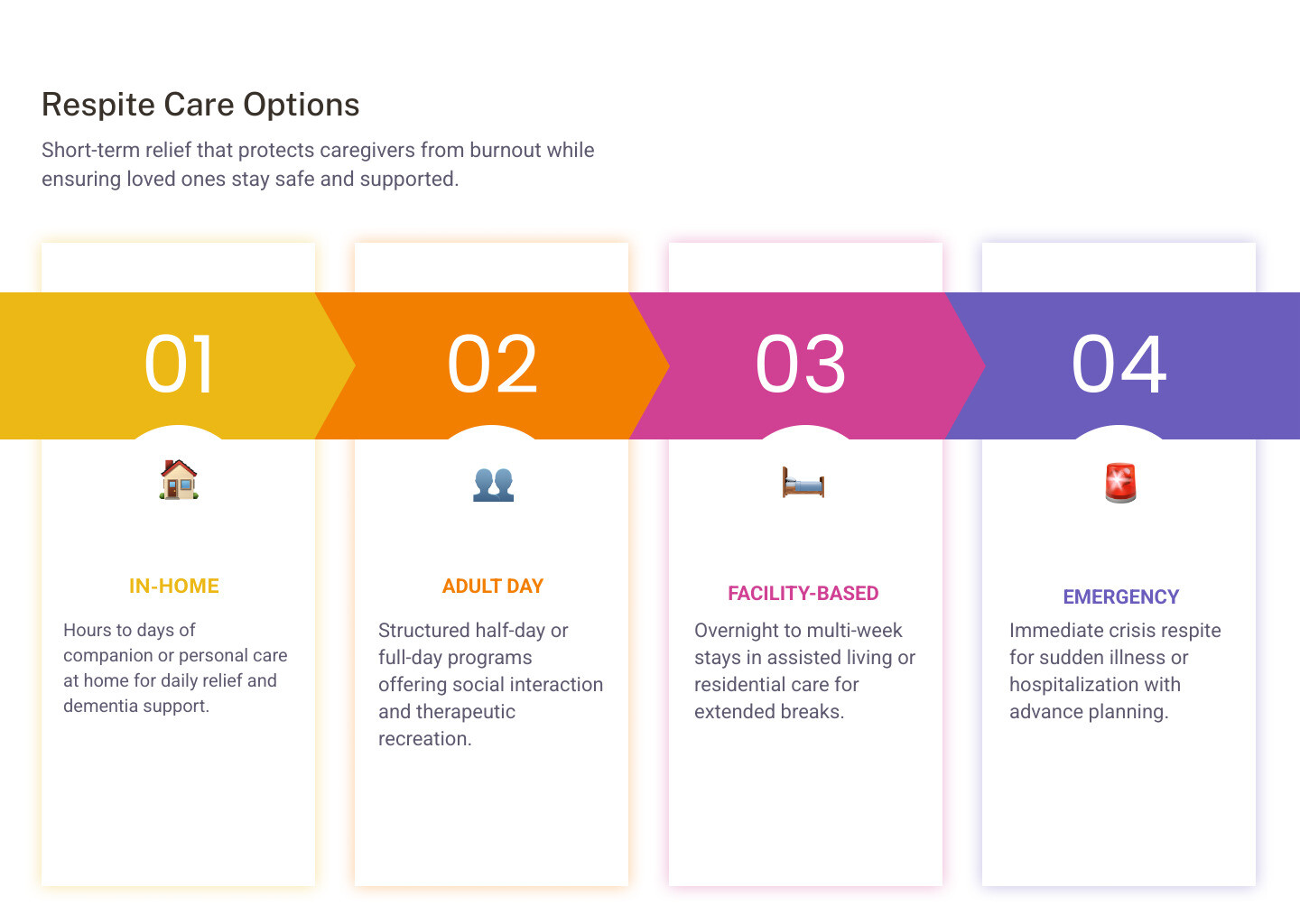
The best respite options for family caregivers include in-home professional care, adult day programs, overnight facility-based stays, and emergency crisis respite. Here's a quick overview:
| Respite Type | Best For | Duration |
|---|---|---|
| In-home respite | Daily relief, dementia care | Hours to days |
| Adult day programs | Structured social care | Half-day or full-day |
| Facility-based respite | Extended breaks, travel | Overnight to weeks |
| Emergency/crisis respite | Sudden illness, hospitalization | Immediate, short-term |
Caring for an aging parent is one of the most meaningful things you can do. It's also one of the hardest.
Most family caregivers don't start out exhausted. It builds slowly — skipped meals, cancelled plans, nights without real sleep. Then one day you realize you can't remember the last time you took a full breath.
The numbers back this up. Over 60% of caregivers experience burnout symptoms. And roughly 20% develop clinical depression — and that's considered a conservative estimate.
Here's the thing: taking a break isn't failing your loved one. It's how you keep showing up for them.
Respite care exists specifically for this. It gives family caregivers short-term relief — from a few hours to several weeks — while ensuring your loved one continues to receive safe, attentive care. It can happen at home, at a community program, or at a care facility. And there are more options, funding sources, and local programs available than most families ever realize.
This guide walks you through all of it — what respite care is, what types exist, how to pay for it, and how to find quality providers near you.
Respite options for family caregivers glossary:
Understanding Respite Options for Family Caregivers

To navigate caregiving without losing yourself, you first need to understand what respite care is—and what it isn't. Too often, family members view respite as a luxury or a sign of giving up. In reality, it is a vital pillar of sustainable caregiving. Utilizing respite options for family caregivers allows you to step away, rest, and return with renewed energy.
By proactively scheduling breaks, you can access much-needed Caregiver Stress Relief and practice meaningful Caregiver Self-Care.
Defining Respite Care vs. Long-Term Care
The main difference between respite care and traditional long-term care lies in its duration and intent.
- Respite Care: This is short-term, temporary relief designed to give the primary family caregiver a break. It can be scheduled for planned intervals (such as four hours every Tuesday), utilized on an as-needed basis, or arranged during a crisis. It can take place in the home, at an adult day center, or in a residential facility.
- Long-Term Care: This is an ongoing, permanent arrangement for individuals who can no longer perform daily activities independently. It is a continuous care model rather than a temporary pause.
Whether you need a few hours to attend a doctor's appointment in Short Pump or a week-long block to travel out of Richmond, respite care adapts to your schedule. For a deep dive into structuring these breaks, see our Family Respite Care Guide 2026.
The Impact of Respite on Caregiver Burnout
Caregiving is physically demanding and emotionally taxing. When you care for a loved one without a break, the risk of caregiver burnout skyrockets. Burnout isn't just "feeling tired"—it is a state of physical, emotional, and mental exhaustion that can lead to clinical depression, high blood pressure, and weakened immune function.
According to the Family Caregiver Alliance, roughly 20% of caregivers experience depression. By integrating regular respite care into your routine, you protect your own health, which in turn improves the quality of care your loved one receives. You simply cannot pour from an empty cup. To assess your current stress levels and build a sustainable routine, check out our Caregiver Self-Care Checklist Guide 2026.
Types of Respite Care Available

Respite care is not a one-size-fits-all service. Depending on your budget, your schedule, and your loved one's physical and cognitive needs, you can choose from several different care settings. Exploring these diverse Respite Care pathways ensures you find the right fit for your family.
In-Home Respite Options for Family Caregivers
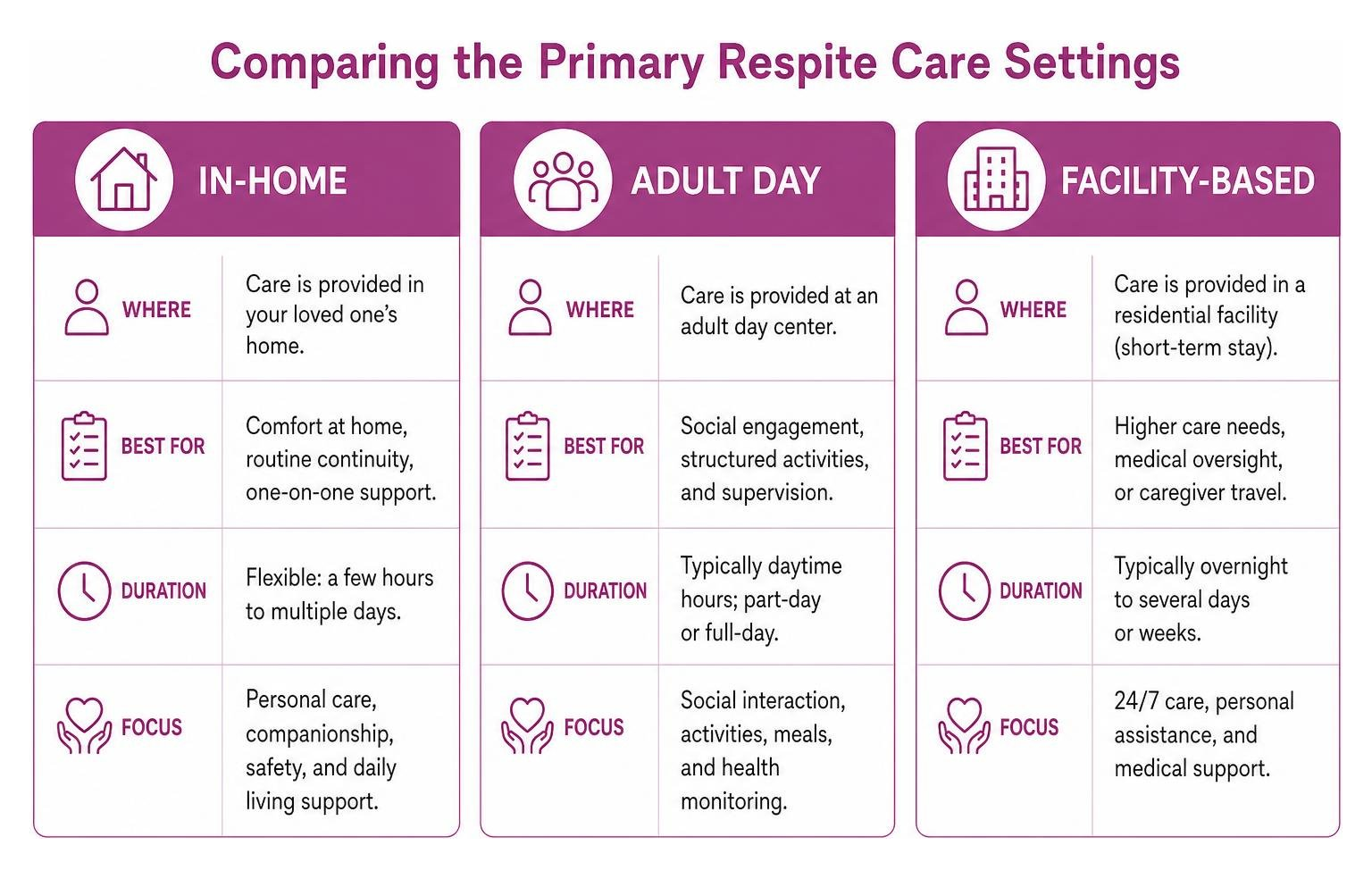
In-home respite is one of the most popular choices because it allows your loved one to remain in comfortable, familiar surroundings. Professional respite caregivers can come to your home in Henrico, Midlothian, or Chesterfield to provide:
- Companion Care: Social interaction, reading, playing games, and basic supervision.
- Personal Care: Assistance with activities of daily living (ADLs) like bathing, dressing, grooming, and mobility.
- Homemaker Services: Light housekeeping, meal preparation, and running errands.
Note on medical tasks: Standard respite caregivers are generally non-medical and cannot administer medications or perform clinical tasks unless they are licensed nurses or certified home health aides. For more on setting up these services, read about Home Respite Services.
Safety Connection: If you bring a new caregiver into your home, ensuring the physical environment is safe is paramount. At Burnie's Way, we do not provide direct home care services, but we specialize in helping families in the Richmond area secure their homes. We install grab bars, stair lifts, and ramps so that both your loved one and their temporary caregiver can navigate the home safely and avoid falls.
Adult Day Programs and Community-Based Care
Adult day programs offer structured, community-based care during weekday business hours. These programs are fantastic for seniors who benefit from social interaction, therapeutic recreation, and structured activities.
Many of these centers specialize in dementia care or stroke recovery, providing a secure environment with professional staff who understand cognitive and physical limitations. This is an excellent option for working caregivers or those who need a consistent block of time during the day. If you are supporting a loved one through recovery, you may also find our guide on Support for Caregivers of Stroke Victims helpful.
Overnight and Facility-Based Respite
When you need to travel for work, attend an out-of-town family event, or simply get a few nights of uninterrupted sleep, overnight or facility-based respite is the ideal choice.
Many assisted living communities, memory care facilities, and nursing homes in the Richmond area offer short-term residential stays. Your loved one will have access to 24/7 professional care, meals, social activities, and secure housing. These stays can range from a few days to several weeks. To understand how to plan and pay for these longer transitions, refer to our Long-Term Respite Complete Guide.
Emergency and Crisis Respite Planning
Life is unpredictable. If you suddenly fall ill, require unexpected surgery, or face a family emergency, you need an emergency respite plan in place.
Waiting until a crisis hits to look for care can lead to extreme stress and limited options.
- Identify Providers in Advance: Research local home care agencies or residential facilities in Glen Allen or Bon Air that offer rapid-response care (often within 24 to 48 hours).
- Pre-Certify with Programs: Submit medical records and enrollment paperwork to local programs ahead of time so they can accept your loved one immediately in an emergency.
- Create a Care Binder: Keep a detailed binder containing medical history, daily routines, behavioral triggers, and medication schedules where a substitute caregiver can easily find it.
For detailed steps on setting up emergency support, read our article on Emergency Aged Care Respite.
Funding and Accessing Respite Care
One of the biggest hurdles for families is figuring out how to cover the cost of respite care. Fortunately, several public and private funding sources exist to help offset these expenses. Understanding these financial streams is a core part of your Family Caregiver Support Guide.
Government Programs and Medicaid Waivers
For families with limited income and assets, government assistance can be a lifesaver.
- Virginia Medicaid Waivers: The Commonwealth of Virginia offers the Commonwealth Coordinated Care Plus (CCC Plus) Waiver. This Home and Community-Based Services (HCBS) waiver is designed for individuals who meet a nursing facility level of care but wish to remain in their homes. It includes coverage for personal care and respite care hours.
- The Family Caregiver Support Program (Title III-E): Administered locally by Area Agencies on Aging (such as Senior Connections in the Richmond area), this federally funded program provides support, training, and limited respite care vouchers to family caregivers.
- Virginia DARS: The Virginia Department for Aging and Rehabilitative Services provides resources, support, and guidance on navigating state-funded programs. You can explore their offerings directly on the Caregiver Support - DARS portal.
For a broader look at financial assistance, read our guides on Family Caregiver Grants and the Care-Giver Grants Complete Guide.
Medicare and Veterans Benefits
- Medicare: Original Medicare generally does not cover non-medical, in-home respite care or adult day programs. However, if your loved one is enrolled in hospice care, Medicare will cover up to five consecutive days of inpatient respite care at an approved facility so the primary caregiver can rest. Some Medicare Advantage plans have also begun offering limited companion care or home safety benefits. Learn more about these rules in our guide on Respite Care Through Medicare.
- Veterans Benefits: If your loved one is a veteran, the VA offers robust support. Under the VA Caregiver Support Program, eligible veterans can receive up to 30 days of respite care per calendar year. This can be provided in-home, at an adult day health center, or at a VA Community Living Center. Veterans may also qualify for the Program of Comprehensive Assistance for Family Caregivers (PCAFC), which provides a monthly stipend. Explore these options via the Respite Care - VA Caregiver Support Program website.
State-Specific Respite Programs
While some states like California utilize programs like IHSS and CalAIM, Virginia caregivers rely primarily on the CCC Plus Waiver, local Area Agencies on Aging, and the Lifespan Respite Voucher Program. The Virginia Lifespan Respite Voucher Program provides reimbursement vouchers to primary caregivers who need temporary relief from their caregiving duties, helping to bridge the gap for families who do not qualify for Medicaid but still need financial help.
Selecting and Planning for Quality Respite Care
Entrusting the care of your loved one to someone else can bring up feelings of anxiety or guilt. To gain peace of mind, you must carefully vet any potential provider.
How to Evaluate Respite Options for Family Caregivers
Whether you are hiring an independent caregiver or working with an agency, use this checklist to evaluate your options:
- Background Checks: Ensure the provider conducts comprehensive criminal background checks and registries checks.
- Training and Credentials: Ask about the staff’s training in CPR, first aid, and specialized conditions like Alzheimer's or Parkinson's.
- References: Request and contact references from other families who have used their services.
- Care Fit: Discuss how the caregiver handles behavioral challenges, wandering, or specific physical transfer needs.
For an exhaustive framework on vetting and preparing for care, refer to the Respite Care Resource Guide .
Frequently Asked Questions about Respite Care
What is the difference between respite care and regular home care?
Respite care is specifically scheduled to provide the primary family caregiver with a temporary break. It is structured around your need for rest, travel, or personal appointments. Regular home care is an ongoing, consistent service designed around the care recipient's daily routine to manage chronic conditions over the long term.
Does Medicare or insurance cover the cost of respite care?
Original Medicare only covers respite care as part of its hospice benefit (up to five consecutive days). Most private health insurance plans do not cover respite care. However, many long-term care insurance policies will reimburse families for respite services, and Virginia's Medicaid CCC Plus Waiver covers respite for eligible individuals.
How do I find local respite care providers in the Richmond, VA area?
You can start by contacting Senior Connections (the Area Agency on Aging for the Richmond metropolitan area) or calling the Virginia Senior HelpLine.
Additionally, before you bring any caregiver into the home, we highly recommend getting a home safety assessment. Burnie's Way offers Free In-Home Senior Safety Assessments in Richmond, Henrico, Chesterfield, Midlothian, Glen Allen, and surrounding areas. We evaluate the physical environment to identify trip hazards and recommend modifications that keep both your loved one and their respite caregivers safe.
Conclusion
Taking care of yourself isn't selfish—it's a clinical necessity. Utilizing respite options for family caregivers is the single best way to prevent burnout and ensure you can continue supporting your loved one for the long haul.
As you plan for respite care, don't forget to prepare the home environment. A safe home prevents falls and gives you peace of mind while you are away. At Burnie's Way, we partner with Richmond families to perform free safety assessments and install high-quality, aging-in-place modifications—from grab bars in Bon Air to stair lifts in Short Pump.
Let us help you make your home a safer place for everyone. Explore our home modification services today at https://burniesway.com/our-services.