13 min read
Family Caregiver Support 101
Understanding the Role of a Family Caregiver Family caregiver support includes a wide range of resources, programs, and services designed to help...

Local senior care is a broad term — and when you're suddenly trying to figure out how to keep a parent safe and comfortable at home, it can feel overwhelming fast.
Here's a quick overview of the most common options families look into:
| Type of Support | What It Covers |
|---|---|
| Home health care | Skilled nursing, therapy, wound care (short-term, often Medicare-covered) |
| Personal/companion care | Help with daily routines, errands, light housekeeping, companionship |
| Meal delivery | Nutrition support at home (e.g., Meals on Wheels) |
| Transportation | Rides to appointments, errands, social activities |
| Adult day care | Structured daytime programs outside the home |
| Respite care | Temporary relief for family caregivers |
| Memory & mobility support | Specialized coordination for dementia, Parkinson's, or fall risk |
The good news? There are more options than most families realize — from government-backed tools to local nonprofits to private services.
The hard part is knowing where to start, who to trust, and how to coordinate it all when you're already stretched thin.
That's exactly what this guide is here to help with. We'll walk you through the types of neighborhood support available, how to find and compare providers near you, what things cost, and how to take your first steps — without getting lost in the system.
One thing worth knowing early on: not every kind of help fits neatly into "medical care." Some of the most meaningful support for aging adults — staying connected, keeping routines, managing daily life with confidence — is personal and practical, not clinical. That's a gap worth paying attention to.

Local senior care basics:
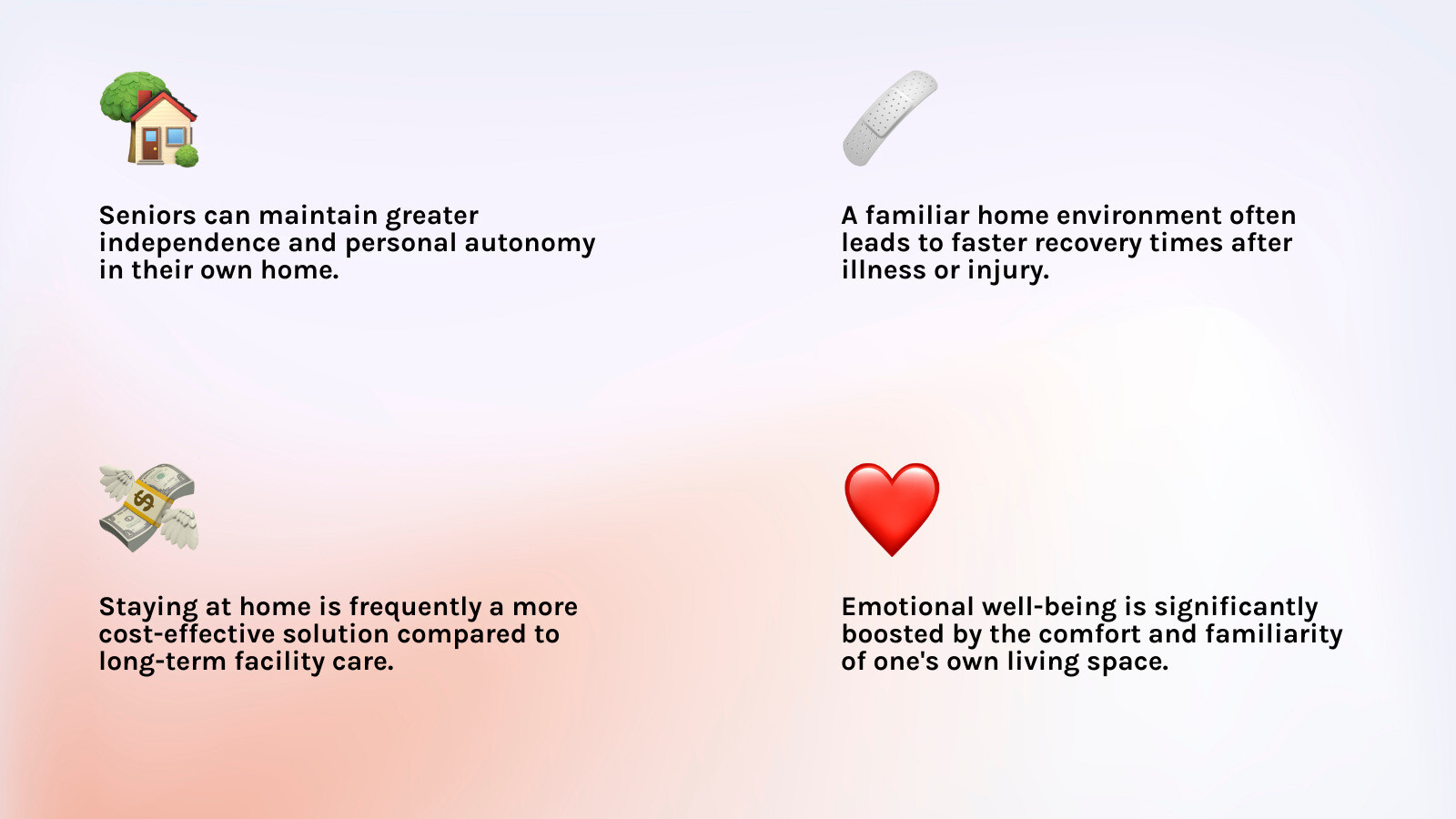
When we talk about local senior care, we are looking at a spectrum of services designed to help older adults remain in the place they love most: their home. Research shows that seniors who "age in place" often experience better emotional health, faster recovery from injuries, and a higher sense of dignity compared to those in institutional settings.
Understanding which service fits your situation is the first step. Generally, these services are divided into medical home health and non-medical personal support.
| Support Type | Primary Focus | Best For |
|---|---|---|
| Home Health | Medical recovery and clinical tasks | Post-surgery, wound care, or physical therapy |
| Companion Support | Lifestyle, social, and daily task help | Combating loneliness, errands, and routine management |
Choosing the right path starts with understanding personal care needs. Does your loved one need a nurse to change a bandage, or do they need a friendly face to help with the grocery shopping and keep them company during lunch? For many, Elderly In-Home Care provides that essential middle ground.
Beyond individual providers, neighborhood support includes community-based options. Meal delivery services ensure nutrition is maintained, while local transportation programs help seniors get to the library or the doctor without the stress of driving. For family caregivers who are doing the heavy lifting themselves, temporary respite support is vital. It allows you to take a weekend off or handle your own errands while knowing your loved one is safe and supported.
Loneliness is one of the biggest health risks for seniors living alone. This is where companion support shines. It isn't just about "watching" someone; it’s about social engagement. Reliable Home Care focuses on the "human" side of aging—having someone to talk to, share a hobby with, or walk through the neighborhood.
These Home Care Solutions often include:
Staying healthy at home requires more than just a safe environment; it requires good fuel and movement. Programs like Meals on Wheels America provide more than just food; they provide a daily wellness check. Many local senior centers also offer congregate meals, where seniors can eat together and socialize.
In addition to nutrition, Elder Care Support often involves wellness and fitness programs tailored for older adults. From chair yoga at a community center to "friendly visitor" services where volunteers stop by for a chat, these local resources are the threads that keep a senior woven into the fabric of their community.
Finding local senior care used to mean flipping through a massive phone book and hoping for the best. Today, we have sophisticated tools to help us make informed choices.
The first place we recommend starting is the Eldercare Locator. This is a free public service of the Administration for Community Living. By calling 1-800-677-1116 or visiting the Eldercare Locator website, you can be connected to your local Area Agency on Aging (AAA). These agencies are goldmines of information regarding local programs, transportation, and support services specific to your zip code.
If you are looking for more data-driven comparisons, you can visit the data catalog on Data.cms.gov. This allows you to download and explore provider data to see how different agencies in your area perform. Effective Senior Care Coordination often involves balancing these government resources with private personal support to create a complete safety net.
The federal government provides several "Compare" tools that are incredibly helpful for vetting medical-grade services.
While these tools are excellent for clinical services, they may not cover Private Elder Care Services that focus on lifestyle and companionship. For those, you'll want to look at more personal vetting methods.
Once you have a list of potential providers, it’s time to do some detective work. We always suggest checking the Better Business Bureau (BBB) to see if there are any outstanding complaints.
When interviewing a provider, ask the following:
At Burnie's Way, we believe the "how" is just as important as the "what." You can learn more about our philosophy on our How We Work page, which emphasizes building trust and long-term relationships rather than just "filling a shift."
Not all local senior care is "one size fits all." As we age, specific challenges like Alzheimer’s, dementia, or mobility issues require a more tailored approach.
Coordinating specialized support for memory challenges is about more than just safety; it’s about engagement. Connecting with local dementia resources—like support groups or specialized day programs—can help slow cognitive decline and provide much-needed social stimulation. Specialized Home Care Solutions can also assist with Parkinson’s coordination, ensuring that routines are strictly followed to manage symptoms effectively.
Mobility is another critical area. A professional home safety evaluation can identify risks you might miss, like a loose rug or a poorly placed chair. Home modifications, such as installing grab bars in the bathroom or improving lighting in hallways, can prevent falls—the leading cause of injury for seniors.
Finally, don't forget veterans' benefits. Many veterans are eligible for "Aid and Attendance" benefits, which can help cover the cost of personal support at home. This is a frequently overlooked resource that can make high-quality support much more affordable for those who served.
Let’s talk about the elephant in the room: cost. Many families assume Medicare covers everything. Unfortunately, that's a myth.
Medicare generally covers "home health" only if it is short-term, medically necessary, and provided by a Medicare-certified agency. It does not typically cover long-term personal or companion support. For that, families often look to Private Pay Home Care Rates or long-term care insurance.
To get a sense of what you might pay, the Genworth Cost of Care survey provides an excellent breakdown of costs by state and city. In Virginia, for example, costs can vary significantly depending on whether you are in a major metro area or a more rural setting. Understanding the Cost of Senior Home Care early on helps you plan your budget without surprises.
If private pay isn't an option, there are other avenues to explore:
Ready to take action? Here is a simple roadmap to get you started with local senior care without feeling like you're drowning in paperwork.
Home health is clinical and medical (nurses, therapists). Personal care is non-medical (companionship, errands, light housekeeping). Home health is usually covered by insurance for short periods; personal care is often private pay or covered by long-term care insurance.
Generally, no. Medicare is designed for "acute" care—fixing a specific medical problem. It does not cover the "custodial" care most seniors need to live independently at home long-term.
Start with the Eldercare Locator (1-800-677-1116) to find your Area Agency on Aging. Then, use Medicare’s "Care Compare" tool for medical providers and check the BBB and local reviews for personal support services.
Aging in place isn't just about staying in a house; it’s about maintaining a lifestyle. It’s about being able to wake up in your own bed, drink from your favorite mug, and stay connected to the neighbors you've known for years.
At Burnie's Way, we see ourselves as a personal concierge for this stage of life. We aren't here to provide medical treatment; we are here to provide the lifestyle coordination, companionship, and daily assistant-style help that makes staying at home possible. With 50 years of experience, we focus on the emotional well-being and independence of our members, giving families the peace of mind that everything is being handled with heart.
If you’re ready to see how a personalized approach can change your family's experience with local senior care, we invite you to explore Our Services. Let’s work together to make sure your loved one isn't just "getting by" at home, but truly thriving.
13 min read
Understanding the Role of a Family Caregiver Family caregiver support includes a wide range of resources, programs, and services designed to help...
7 min read
Why Emergency Senior Care Matters for Your Family Emergency senior care refers to immediate support services available when an older adult faces an...
12 min read
Understanding Long-Term Care: What It Means for You and Your Family Long term care is a range of services and supports designed to help people meet...