
Steps for Creating and Maintaining a Care Plan That Actually Works

Why Caregiver Care Plan Examples for Elderly Matter More Than You Think
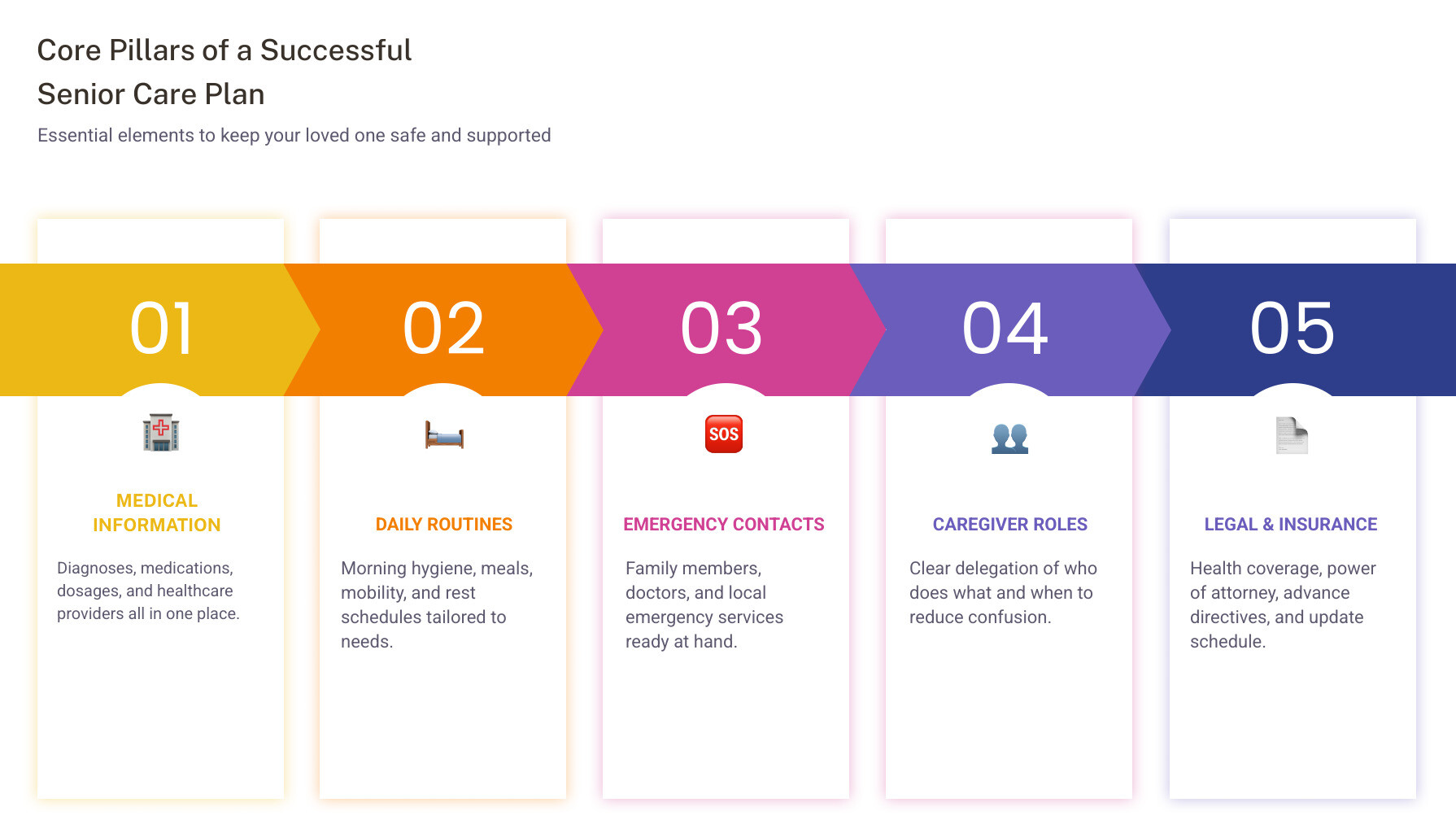
A caregiver care plan for elderly loved ones is a written document that captures everything a caregiver needs to know — medical history, daily routines, medications, emergency contacts, and provider details — all in one place. Here's what a strong care plan covers at a glance:
| Care Plan Component | What It Includes |
|---|---|
| Medical information | Diagnoses, medications, dosages, healthcare providers |
| Daily routines | Morning hygiene, meals, mobility, rest |
| Emergency contacts | Family members, doctors, local emergency services |
| Caregiver roles | Who does what, and when |
| Legal and insurance details | Health coverage, power of attorney, advance directives |
| Update schedule | Annual review, or after any health change |
If you're caring for an aging parent in the Richmond, VA area, you already know how quickly things can feel overwhelming. There are medications to track, doctor appointments to coordinate, family members to keep in the loop, and daily needs that shift as your parent's health changes. Without a clear structure, things fall through the cracks — and that's when hospitalizations, caregiver burnout, and family conflict tend to happen.
The good news? A simple, well-organized care plan can change all of that. Millions of U.S. adults are currently providing unpaid care for someone aged 50 or older, and research consistently shows that structured care planning reduces emergency room visits, improves medical management, and helps caregivers feel more in control of an otherwise chaotic situation.
I'm Sydney Giffen, and in this guide I'll walk you through exactly how to build and maintain a care plan that actually works for your family.
What is an Elderly Care Plan and Why Does Your Family Need One?
At its core, a care plan is a living, breathing document that outlines how to meet the daily, medical, and emotional needs of an aging adult. It is not a rigid set of rules, but rather a flexible roadmap designed to preserve your loved one's independence and dignity while ensuring they receive consistent, safe care.
For families navigating Elderly Care Planning, having a centralized plan is the single best way to protect a senior's quality of life. Without it, care transitions—such as moving from a rehabilitation center back to a home in Midlothian, or handing off responsibilities to a sibling for the weekend—can be incredibly rocky. A care plan ensures that whoever is stepping in knows exactly what needs to be done, when, and how.
Beyond the clinical benefits, a structured care plan is a vital tool for Caregiver Self-Care. Caregiving is physically, mentally, and emotionally demanding. When you are trying to hold all the details in your head—such as when the next cardiologist appointment is or which foods trigger your mom’s indigestion—you are on a fast track to burnout.
By utilizing a structured Senior Care Planning Guide 2026, you offload that mental burden. You establish clear boundaries, delegate tasks to other family members, and create a predictable routine that reduces anxiety for both you and your elderly parent.
Essential Components of a Caregiver Care Plan Examples for Elderly

A comprehensive care plan must bridge the gap between clinical medical management and daily lifestyle routines. If a plan only focuses on doctor appointments, the senior’s physical and emotional well-being will suffer. If it only focuses on daily chores, critical medical needs might be missed.
To help you visualize how to structure this, let's look at a breakdown of the two primary categories that must be included in your caregiver care plan examples for elderly parents:
| Medical Management Tasks | Daily Living Assistance Tasks |
|---|---|
| Tracking diagnoses (e.g., heart disease, diabetes) | Assistance with Activities of Daily Living (ADLs) |
| Organizing medication schedules and dosages | Meal preparation and nutritional tracking |
| Coordinating with specialists and primary care doctors | Light housekeeping and laundry |
| Monitoring clinical indicators (e.g., skin integrity, bowel movements) | Facilitating safe physical exercises and mobility |
| Managing health insurance and Medicare paperwork | Scheduling social activities and cognitive stimulation |
When setting up these sections, it is helpful to refer to a structured Caregiver ADL Checklist Complete Guide to ensure you are not missing crucial daily routines. For example, documenting exactly how much Assistance with Daily Activities your loved one needs—such as whether they can brush their teeth independently but need help getting into the shower—helps maintain their self-esteem and prevents unnecessary decline.
Every robust Personalized Care Plan Guide 2026 should also feature a dedicated emergency contact sheet. This sheet should be printed and placed on the refrigerator or in a highly visible central location. It must include:
- The senior's full name, date of birth, and blood type.
- Contact details for their primary care physician and key specialists.
- A current list of medications, allergies, and chronic conditions.
- Preferred local hospitals (such as VCU Health in Richmond or Johnston-Willis in Chesterfield).
- Signed legal documents, including Power of Attorney (POA) and Advance Medical Directives.
Step-by-Step Guide to Creating a Personalized Care Plan
Creating a care plan should never be a solo endeavor. The most successful care plans are collaborative, built with input from the senior (whenever possible), family members, and healthcare professionals.
To start, schedule a dedicated family meeting. If you are caring for a parent in Henrico or Glen Allen, gather everyone involved—siblings, spouses, and close friends—either in person or via a video call.
Use this step-by-step process to build your personalized plan:
- Start the Conversation Early: Don't wait for a medical crisis or a bad fall to discuss care needs. Approach the conversation with empathy, focusing on how a plan can help your parent maintain their independence at home.
- Gather Clinical Insights: Schedule a dedicated doctor's appointment to discuss chronic condition management. Under Medicare, specific care planning appointments are covered, especially for individuals experiencing cognitive decline.
- Assess the Home Environment: A care plan is only as good as the environment in which it is executed. Walk through the home to identify mobility barriers or safety hazards.
- Delegate Responsibilities: Clearly outline who is responsible for which tasks. One sibling might handle financial and administrative errands, while another manages daily meal prep or driving to local appointments.
- Document and Centralize: Write everything down. Keep a digital copy in a shared folder and a physical binder in the home.
By focusing on Personalized Elder Care, you ensure that your parent's unique history, preferences, and personality are woven into their daily schedule. Refer to a trusted Family Caregiver Support Guide or our Elderly Parents Care Guide 2026 to help guide your family through these emotional but necessary conversations.
Designing Daily Routines and Caregiver Care Plan Examples for Elderly with Dementia
When caring for a loved one with Alzheimer's disease or other forms of dementia, personalization is not just a preference—it is a medical necessity. No two individuals experience cognitive decline in the exact same way, and routines must be carefully adapted to manage anxiety, confusion, and behavioral changes.
When building a dementia-specific care plan, keep these strategies in mind:
- Prioritize Predictability Over Strict Timelines: Instead of forcing your loved one to wake up at exactly 7:00 AM, allow them to wake up naturally, but keep the sequence of events identical. For example, waking up is always followed by a warm washcloth, then a quiet breakfast, then light music.
- Identify and Document Behavioral Triggers: If your parent becomes agitated in the late afternoon—a common phenomenon known as sundowning—document this in the care plan. Outline specific, comforting interventions, such as dimming the lights, playing their favorite classical music, or offering a familiar, warm snack.
- Focus on Dignity and Independence: Avoid stepping in too quickly. If they can still button their shirt with some patience, build extra time into the morning routine to let them do so.
For detailed strategies on managing these complex daily interactions, consult our Seniors at Home Care Guide 2026 and check out the Daily Living Assistance Complete Guide for step-by-step behavioral support techniques.
Coordinating with Richmond Healthcare Providers and Family Members
Managing care for an aging parent in the Richmond area often means coordinating with several healthcare networks, such as VCU Health, Bon Secours, or HCA Virginia. To keep everyone on the same page, your care plan must serve as the single source of truth.
When taking your loved one to medical appointments, bring a copy of the care plan with you. Use it to record updates from the physician, adjust medication logs immediately, and ask specific questions about upcoming treatments.
Equally important is clear role delegation among your family support network. Using a Family Care Assistance Guide 2026 can help you divide responsibilities fairly, preventing resentment and ensuring that no single caregiver bears the entire load.
For practical tips on managing these relationships and keeping communication channels open, read through our Daily Life Management Tips Guide.
Maintaining, Updating, and Implementing Your Care Plan Over Time
A care plan is not a "one-and-done" project. As your loved one's health, mobility, and cognitive abilities change, their care plan must evolve alongside them.
We recommend conducting a formal review of the care plan at least once a year. However, you should update it immediately if any of the following events occur:
- A hospital stay or emergency room visit.
- A change in prescription medications or dosages.
- A noticeable decline in physical mobility or cognitive function.
- A transition in the caregiving team (e.g., a new family member stepping in to help).
As you manage these transitions, utilizing Comprehensive Care Plans will help ensure that no detail is lost. For a holistic view of how to navigate these long-term care challenges, explore our Elder Care Solutions Complete Guide.
If you prefer a collaborative, highly customizable approach to managing your care plan digitally, you can also explore this community-driven, Open-source care plan framework to help organize your notes and files.
Utilizing Templates and Caregiver Care Plan Examples for Elderly in Richmond VA
Having a template to guide you makes the care planning process much less intimidating. When looking for caregiver care plan examples for elderly relatives, you want to focus on practical, real-world scenarios.
For example, a care plan for a senior living in Short Pump might focus heavily on maintaining safe mobility on stairs, while a plan for a loved one in a historic home in Bon Air might require specific instructions on navigating narrow doorways or uneven flooring.
To help you get started, we recommend downloading a structured Caregiver Checklist and reviewing our Age Assistance Complete Guide 2026. These tools will help you systematically assess your loved one's physical environment, daily routines, and medical needs.
Frequently Asked Questions about Elderly Care Plans
What is the single most important element of an elderly care plan?
While medical history and emergency contacts are vital, the single most important element is person-centric care. A care plan must respect the senior's individual preferences, life history, and dignity. Knowing that a senior prefers a shower in the evening rather than the morning, or that they find comfort in a specific genre of music, is what transforms a clinical document into a plan that actually works. For more on this, see our Senior Lifestyle Management Guide.
How often should a caregiver update a senior's care plan?
You should review and update the care plan annually at a minimum. However, it must be updated immediately following any significant health event, such as a hospital discharge, a change in diagnoses, or a modification to their daily medication regimen.
Can a care plan help prevent caregiver burnout?
Yes, absolutely. A care plan prevents burnout by clearly delegating responsibilities among family members and professional partners. It eliminates the exhausting "mental load" of trying to remember every medical detail and daily task. By establishing a clear routine and identifying when to bring in respite care, you protect your own physical and mental health. Learn more about prioritizing your well-being in our Caregiver Self-Care Checklist Guide 2026.
Conclusion
Creating a caregiver care plan is one of the most loving and practical steps you can take to support an aging parent. It brings order to daily routines, ensures medical needs are met consistently, and provides your family with invaluable peace of mind.
However, even the most detailed care plan can fail if the home environment itself is unsafe. At Burnie's Way, we believe that true independence starts with a safe home. We are not a home care agency; instead, we partner with families throughout the Richmond, VA area—including Glen Allen, Midlothian, Chesterfield, and Henrico—to make aging in place a safe reality.
We offer Free In-Home Senior Safety Assessments to identify hidden fall risks and mobility barriers in your loved one's home. From there, we specialize in professional aging-in-place modifications, including:
- Custom bathroom safety renovations and roll-in showers.
- Secure grab bar installations.
- Professional stair lift and wheelchair ramp installations.
- Fall-prevention lighting and flooring upgrades.
Let us help you build a safer environment for your loved one's care plan to succeed. Learn more about our services by visiting our Custom Care Plans page, or contact us today to schedule your free home safety assessment.