

The Real Cost of Elder Care — and Where the Money Can Come From
Grants for elder care are one of the most underused financial tools available to families supporting aging parents — yet most people don't know where to start looking.
Here's a quick overview of the main funding sources available right now:
| Funding Type | Who It's For | Examples |
|---|---|---|
| Federal grants | States, nonprofits, caregivers | NFCSP, ACL Lifespan Respite Grants |
| Foundation grants | Nonprofits, researchers, individuals | John A. Hartford Foundation, AARP Foundation |
| State programs | Seniors and caregivers by location | New MexiCare, EPIC (New York), NJ nonprofit grants |
| Dementia-specific grants | Family caregivers of Alzheimer's patients | HFC/Home Instead Respite Grants |
| Home repair grants | Low-income rural seniors | USDA grants up to $10,000; loans up to $40,000 |
| Government assistance | Medicare beneficiaries | Extra Help (worth ~$5,100/year), Cash & Counseling |
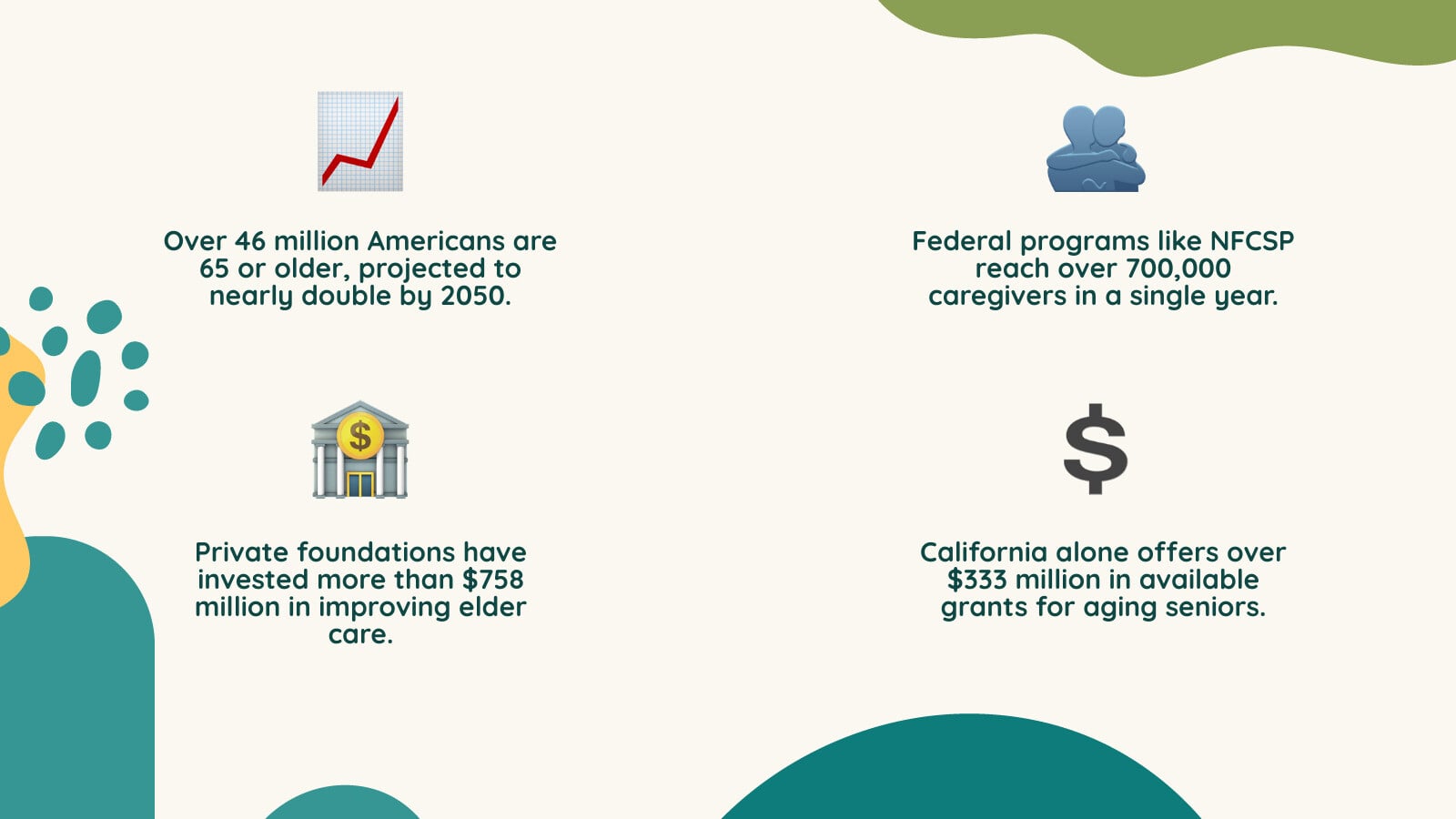
Right now, more than 46 million Americans are age 65 or older. By 2050, that number is expected to nearly double to 90 million. The demand for elder care funding is growing fast — but so is the number of programs designed to help.
The challenge isn't that funding doesn't exist. It's that the landscape is fragmented and hard to navigate.
Federal programs like the National Family Caregiver Support Program (NFCSP) have already reached over 700,000 caregivers in a single year. Private foundations like the John A. Hartford Foundation have invested more than $758 million in improving care for older adults. And at the state level, places like California have over $333 million in available grants for aging seniors.
If you're an adult child trying to help a parent stay safely at home — while managing your own job, family, and life — wading through all of this alone is overwhelming. This guide breaks it all down so you can find the right funding, faster.
Navigating Federal Grants for Elder Care
When we look at the backbone of senior support in the United States, the federal government plays a massive role through the Administration on Aging | ACL Administration for Community Living. Most of these funds flow through the Older Americans Act (OAA), which was signed into law way back in 1965 to ensure that as we age, we don't lose our dignity or independence.
For many of us, the most important federal resource is the National Family Caregiver Support Program | ACL Administration for Community Living. This program recognizes that family members—the "informal" caregivers—are the true heroes of the long-term care system. Without you, the system would simply collapse. If you are currently looking for assistance caring for elderly parents, understanding how these federal dollars reach your community is the first step toward relief.
How the NFCSP Supports Families
The impact of the National Family Caregiver Support Program (NFCSP) is staggering. In a single fiscal year, over 700,000 caregivers received direct services. One of the most vital offerings is respite care. In fact, nearly 6 million hours of temporary relief were provided to over 604,000 caregivers.
Why does this matter? Because caregiving is a marathon, not a sprint. The data shows that 74% of caregivers who used these services reported they were able to provide care at home longer than they would have been able to otherwise. Furthermore, 88% said the program helped them become better caregivers, and 62% admitted that without this support, their loved one would likely be living in a nursing home right now.
The NFCSP provides five core types of services through local agencies:
- Information: Helping you find out what is available in your area.
- Access Assistance: Providing over 1.3 million contacts to link caregivers to services.
- Counseling and Training: Support groups and training to help you manage the stress and physical demands of care.
- Respite Care: Giving you a much-needed break.
- Supplemental Services: Limited funds for things like home modifications or emergency supplies.
Federal Assistance for Native American Elders
We also want to highlight the specific support available for Native American, Alaskan Native, and Native Hawaiian elders. Under Title VI of the Older Americans Act, grants are provided directly to tribal organizations. These grants for elder care focus on nutrition (like home-delivered meals) and supportive services that honor cultural traditions while promoting health.
It is important to note that while the Indian Health Service (IHS) provides medical care, their funds generally cannot be used for "custodial care" like assisted living. This is where Title VI grants step in to fill the gap, ensuring that tribal elders can age within their own communities.
State-Specific Financial Assistance and Support Programs
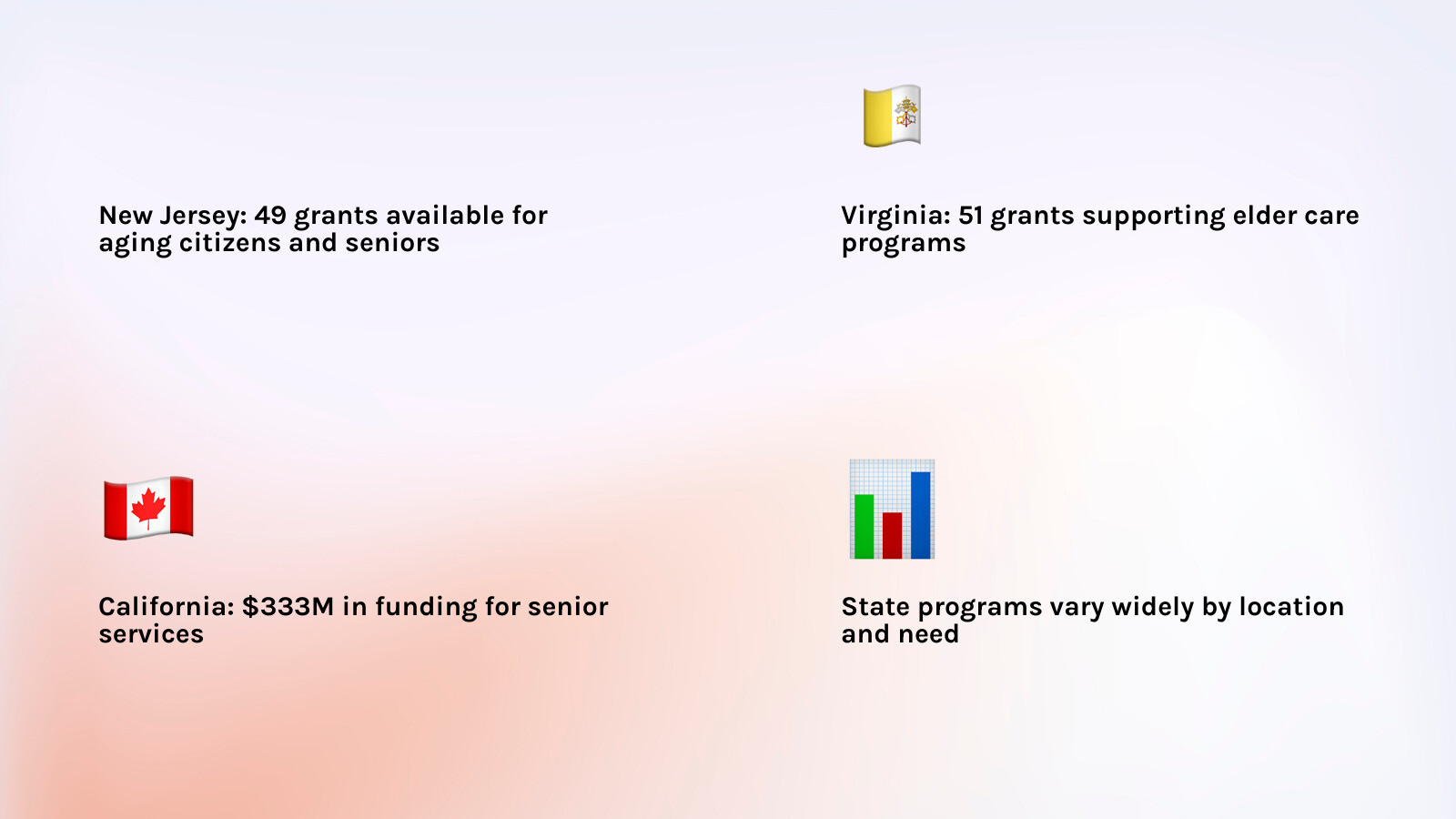
While federal money sets the stage, state-level programs often provide the most direct financial relief. Each state manages its own "Aging Network," and the amount of help available can vary wildly depending on where you live.
If you are trying to understand the full scope of what is possible, our eldercare services complete guide can help you navigate these localized options.
New Jersey and New York Regional Support
For those in the Northeast, there are significant resources. New Jersey, for instance, has approximately 49 specific grants available for aging citizens and seniors. These range from small community grants of $1,000 for student-led service projects to larger $20,000 grants for community benefit programs.
In New York, the Elderly Pharmaceutical Insurance Coverage (EPIC) program is a lifesaver, helping more than 325,000 seniors afford their medications. Additionally, many regional nonprofits receive grants specifically to assist the "sick, poor, and elderly," often providing small emergency funds or localized support that doesn't appear on major national databases.
Innovative State Models: New MexiCare and Beyond
Some states are getting creative with how they distribute grants for elder care. The New MexiCare program is a fantastic example. It provides financial assistance and training directly to informal caregivers—friends or family members—to help them keep their loved ones at home. To qualify in 2026, individuals generally need a monthly income below $3,387 and resources under $20,322.
Other states use "Cash & Counseling" models, which allow seniors to receive a monthly budget to hire their own help—sometimes even paying a family member to provide the support. This type of flexibility is a game-changer for families. For more tips on managing these roles, check out our family caregiver support guide.
Private Philanthropy: Foundations Funding Senior Initiatives
Beyond the government, private foundations are the heavy hitters in aging. These organizations don't just give money; they fund research and pilot programs that eventually become the standard of care for everyone.
The John A. Hartford Foundation is perhaps the most well-known, having invested over $758 million into improving the care of older adults. Their focus is on creating "Age-Friendly Health Systems" and supporting family caregivers through systemic change.
Top Foundations Offering Grants for Elder Care
If you are looking for specific organizational funding, several foundations stand out:
- AARP Foundation: They focus on seniors living in poverty. They don't usually take unsolicited requests, but they fund programs in 22 high-poverty states (including Virginia and Florida) that help seniors with income, benefits, and disaster relief.
- The AARP Purpose Prize: This is a unique $100,000 award given to individuals over age 50 who are using their "encore careers" to solve social problems, including challenges related to aging.
- Retirement Research Foundation (RRF): They fund projects that improve the quality of life for older people, specifically focusing on advocacy and social engagement.
- The Eisner Foundation: This group is famous for funding "intergenerational" programs—bringing seniors and youth together to solve community problems.
Dementia-Specific Respite Grants
Dementia care is one of the most taxing forms of support, both emotionally and financially. Recognizing this, specialized grants for elder care have emerged specifically for Alzheimer’s families.
HFC (formerly Hilarity for Charity) partners with professional home care networks to award respite grants. These aren't cash grants, but rather "hours of care."
- The Recharge Grant: Provides 50 hours of professional respite care over three months.
- The Extended Relief Grant: Offers 25 hours per week for six months.
To qualify, the senior must have a professional diagnosis and live at home. This kind of "time-off" is invaluable for caregivers who are on the verge of burnout.
Specialized Funding for Home Safety and Dementia Support
One of the biggest hurdles to staying independent is the home itself. If a house has stairs, a narrow bathroom, or a leaking roof, it becomes a safety hazard. Fortunately, there are specific grants for elder care focused entirely on home safety and "aging in place."
Understanding the cost of senior home care involves looking at these one-time capital expenses as well as daily support.
Targeted Grants for Elder Care and Home Safety
The USDA (United States Department of Agriculture) offers a very specific program for seniors living in rural areas. The Section 504 Home Repair program provides grants of up to $10,000 to seniors aged 62 and older to remove health and safety hazards from their homes. If the senior can afford to pay some of it back, they can also access loans up to $40,000 at a tiny 1% interest rate.
Additionally, the AARP Foundation provides disaster relief grants for seniors who have lost their homes or independence due to natural disasters. These funds help with immediate needs like food and water, but also long-term recovery like legal aid and home repair.
Nutrition and Transportation Initiatives
Independence isn't just about a safe house; it's about being able to eat and get around.
- Nutrition: OAA funds support "Meals on Wheels" and congregate dining sites where seniors can get a hot meal and some social interaction.
- Transportation: Many local grants fund "Senior Vans" or volunteer driver programs that help elders get to doctor appointments or grocery stores.
- Senior Medicare Patrol (SMP): This is a federally funded program that recruits and trains senior volunteers to help their peers prevent, detect, and report healthcare fraud. It’s a great way for active seniors to stay engaged while protecting their community.
Application Roadmap: Securing Funding for Aging Services
Applying for grants for elder care can feel like a full-time job, but having a roadmap makes it manageable. Most organizations will need to use tools like the Eldercare Locator (1-800-677-1116) to find which local agencies actually hold the money.
If you are a nonprofit or a researcher, you’ll likely spend time on the AGID Program Data Portal, which tracks how federal funds are being spent and where the gaps are.
Tips for a Successful Grant Proposal
Whether you are applying for a small community grant or a large foundation award, the "secret sauce" is usually the same:
- Measurable Impact: Don't just say you want to help seniors. Say, "This grant will provide 500 home-delivered meals to 50 homebound elders."
- Focus on the 4Ms: Many major funders (like Hartford) look for the "4Ms" framework: What Matters, Medication, Mentation (mind/mood), and Mobility.
- Sustainability: Funders love to see that their money is a "seed" that will grow. How will the project continue after the grant money is gone?
- Collaboration: Can you partner with a local university, a church, or a business? Partnerships make your application much stronger.
Navigating Deadlines and Rolling Opportunities
Timing is everything. Many foundation grants have "cycles," with deadlines often clustering in the spring and summer. However, many government programs (like the USDA home repair grants) and emergency assistance funds operate on a rolling basis. This means you can apply at any time.
If you find a grant that requires a Letter of Intent (LOI), take it seriously. This is your "elevator pitch" to the funder. If they like your LOI, they will invite you to submit a full proposal.
Frequently Asked Questions about Grants for Elder Care
Who is eligible for the National Family Caregiver Support Program?
Generally, you are eligible if you are an adult family member (or another informal caregiver) providing care to someone aged 60 or older, or someone of any age with Alzheimer’s or a related dementia. It also covers older relatives (aged 55+) who are the primary caregivers for children or for adults with disabilities.
Are there grants available for home repairs for low-income seniors?
Yes! The USDA Section 504 program is the most prominent, offering up to $10,000 as a grant for those 62+ in rural areas. Many local cities also have "Community Development Block Grants" (CDBG) that offer similar help for urban residents.
How can I find elder care grants specifically for my state?
The best starting point is the Eldercare Locator, which connects you to your local Area Agency on Aging (AAA). You can also search databases like GrantWatch, filtering specifically for "Aging and Seniors" and your specific state.
Conclusion
At Burnie's Way, we believe that aging should be a time of connection and comfort, not a financial crisis. While we are not a healthcare provider or a caregiving agency, we act as a personal concierge and lifestyle coordinator for seniors who want to stay independent.
Think of us as your virtual companion and personal assistant. We help coordinate the daily routines, errands, and social connections that make life easier. While you navigate Family Caregiver Grants and federal funding, we are here to provide the personal support and peace of mind that ensures everything is okay at home.
Finding the right grants for elder care takes patience, but the resources are out there. By combining government support, private philanthropy, and a personalized support system like Burnie's Way, you can create a sustainable, joyful environment for the seniors in your life.