
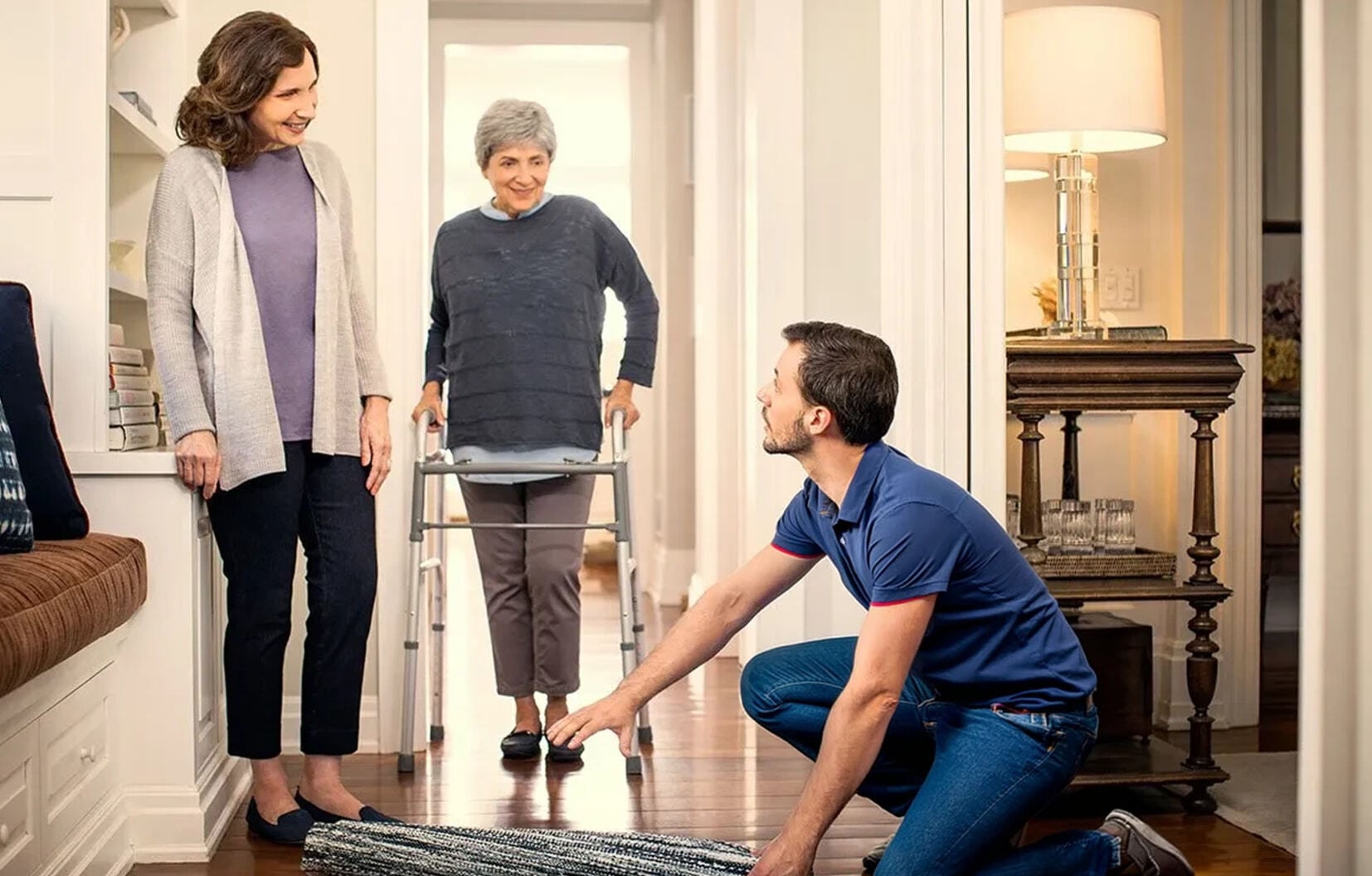
When a Parent Needs Help at Home: What Virginia Families Should Know
In-home senior care in Virginia covers a wide range of support options — from government-funded programs to private agencies — helping older adults stay safe, comfortable, and independent at home.
Here's a quick overview of what's available:
| Type of Support | Examples | Who Provides It |
|---|---|---|
| Government programs | In-home services, meal delivery, transportation | Area Agencies on Aging, local DSS |
| Medical home health | Skilled nursing, therapy, wound care | Licensed home health agencies |
| Non-medical personal care | Bathing, dressing, housekeeping, companionship | Private agencies or independent caregivers |
| Lifestyle & personal support | Errands, coordination, social connection | Personal concierge services like Burnie's Way |
| Specialized condition care | Dementia, Parkinson's, stroke recovery | Trained agency caregivers |
If your parent is struggling with daily tasks, recovering from a hospital stay, or you simply worry about them living alone — you're not alone. This is one of the most stressful situations adult children face.
The good news: Virginia has one of the stronger networks of senior support in the country, coordinated through the Department for Aging and Rehabilitative Services (DARS) and a statewide network of Area Agencies on Aging.
The challenge? Figuring out which option fits your parent's needs, budget, and situation — and who you can actually trust.
This guide breaks it all down clearly.
Key in home senior care Virginia vocabulary:
Key Options for In-Home Senior Care Virginia Families
When exploring how to keep a loved one safe and comfortable in their own home, it helps to understand the foundational options available in the Commonwealth. Navigating these choices can feel overwhelming, but Virginia provides structured pathways to help you coordinate the right level of assistance.

Government-Backed Support and Community Resources
If you are looking for in-home elderly help or starting your search for elderly inhome care, Virginia's public resources are an excellent place to begin. The state coordinates services through the Division for Aging Services, partnering with local Area Agencies on Aging (AAAs) and local Departments of Social Services (LDSS).
Through the DARS Home and Community Based Services network, older adults can access a variety of programs designed to prevent premature institutionalization. These include:
- Virginia Easy Access and SeniorNavigator: Online portals that act as directory goldmines, helping families search for local resources, support groups, and eldercare professionals.
- VICAP (Virginia Insurance Counseling and Assistance Program): Offers free, unbiased counseling to help seniors navigate the complexities of Medicare, supplemental insurance, and long-term options.
- Senior Cool Care: A targeted program that helps low-income older adults stay cool and safe during Virginia's hot summer months by providing fans or air conditioning units.
- Nutrition and Meals: Both home-delivered meals (like Meals on Wheels) and group dining options to promote social engagement and physical health.
For more comprehensive directories of community-based help, you can explore the federal guide on Services for Older Adults Living at Home | National Institute on Aging.
Specialized Support for Chronic Conditions
When a senior is living with a progressive or complex chronic condition, general companionship may not be enough. Specialized in-home care agencies in Virginia offer targeted programs to support specific diagnoses:
- Dementia and Alzheimer's Support: Caregivers trained in specialized approaches (such as Teepa Snow's Positive Approach to Care) focus on managing behavioral changes, preventing wandering, and preserving dignity.
- Parkinson's and ALS Care: Focuses on mobility support, fall prevention, transfers, and adapting to progressive physical limitations.
- Stroke Recovery: In-home aides assist with daily rehabilitation exercises, speech practice support, and managing activities of daily living (ADLs) during recovery.
- End-of-Life Care: Working alongside licensed hospice providers, personal care assistants offer comfort care, emotional support, and respite for family members.
For families seeking broader state-level guidance on disability resources, the Virginia Department for Aging and Rehabilitative Services provides coordination services and long-term case management.
Medical vs. Non-Medical In-Home Care
One of the most common points of confusion for families is the distinction between medical home health care and non-medical home care. Choosing the wrong type can result in uncovered insurance claims or gaps in daily support.
| Feature | Medical Home Health Care | Non-Medical Home Care / Personal Care |
|---|---|---|
| Primary Focus | Clinical treatment, rehabilitation, and recovery | Daily living support, companionship, and safety |
| Common Services | Wound care, physical therapy, IV therapy, injections | Bathing, dressing, meal prep, light housekeeping |
| Provider Credentials | RNs, LPNs, Physical/Occupational Therapists | Certified Nursing Aides (CNAs), Personal Care Aides (PCAs) |
| Physician Order | Required | Not required |
| Duration | Short-term (typically 30–90 days post-hospitalization) | Ongoing (from a few hours a week to 24/7 care) |
| Medicare Coverage | Covered if medically necessary and homebound | Not covered by traditional Medicare |
To ensure your loved one receives the appropriate help, it is vital to assess whether their primary challenges are medical or functional. Families often utilize non-medical home care to manage daily life while relying on clinical home health for medical recovery.
Clinical Home Health Services
Clinical home health is prescribed by a physician and delivered by licensed professionals. These services are designed to help a senior recover from an injury, surgery, or acute illness. Common clinical tasks include wound care, monitoring serious medical conditions, administering complex medication regimens, and providing physical, occupational, or speech therapy.
If your loved one is a veteran, you may also explore specialized clinical programs through the federal Home and Community Based Services - Geriatrics and Extended Care resources.
Personal Care and Companion Services
Non-medical personal care focuses on assisting seniors with assistance with daily activities. This includes essential personal care tasks such as bathing, grooming, toilet assistance, and dressing.
Additionally, companion services address social isolation and home management. Companions help with meal preparation, light housekeeping, grocery shopping, transportation to medical appointments, and offering meaningful social interaction. Secure, high-quality personal care for elderly at home allows seniors to maintain their routines in familiar surroundings without the stress of moving to an institutional facility.
Navigating Costs and Funding Options
The cost of securing reliable help is often the most significant concern for Virginia families. Understanding the financial landscape, including cost of senior home care and private pay home care rates, is crucial for long-term planning.
Budgeting for In-Home Senior Care Virginia Services
In Virginia, non-medical in-home care is typically billed hourly. Rates vary significantly depending on your geographic location. For example, in Northern Virginia (including Fairfax, Arlington, and Loudoun counties), hourly rates for a licensed Personal Care Aide (PCA) generally range from $35 to $45+ per hour, often with minimum shift requirements (e.g., 2 to 4 hours). In contrast, rates in Southwest Virginia or the Shenandoah Valley may be slightly lower.
To offset these costs, families utilize several private funding sources:
- Long-Term Care Insurance: Depending on the policy, this can cover personal care services after an elimination period is met.
- Veterans Benefits: The VA Aid and Attendance benefit provides monthly pension increases for eligible veterans and surviving spouses who require assistance with ADLs.
- Private Pay: Many families pool personal resources, retirement savings, or home equity to cover private rates.
Medicaid Waivers and Medicare Limitations
A common misconception is that traditional Medicare will pay for ongoing personal care. Historically, this has not been the case. In fact, looking back to the year 2000, about 12,800 home health agencies served approximately 8,600,000 clients across the United States. While Medicare paid an estimated 85% to 90% of the total cost of home health agency services (amounting to $8.7 billion in 2000), these funds were strictly dedicated to clinical, medical-necessity home health. Traditional Medicare does not cover custodial or personal care if that is the only care required.
For low-income seniors, Virginia Medicaid offers the Commonwealth Coordinated Care Plus (CCC Plus) Waiver. This program is designed to provide community-based support to individuals who meet the nursing facility level of care but prefer to remain at home. Eligibility is based on both functional assessments (conducted by local social services or health departments) and strict financial asset and income limits.
Finding and Evaluating Providers
Selecting the right partner to support your aging parent is a deeply personal decision. It requires balancing safety, reliability, and emotional compatibility.

How to Choose the Best In-Home Senior Care Virginia Agencies
When evaluating professional agencies, look for those that prioritize accountability and rigorous screening:
- Licensing and Insurance: Ensure the agency is licensed by the Virginia Department of Health (VDH), bonded, and carries comprehensive liability insurance.
- Screening Protocols: Ask if they perform Virginia's state-mandated barrier-crime background checks, reference verifications, and drug screenings.
- Caregiver Training: Inquire about ongoing training requirements, especially for specialized needs like dementia or fall prevention.
For families in Northern Virginia, Fairfax County provides a unique community option through the In-Home Care - Older Adults | Family Services program, which includes a vetted Home Care Registry of private, non-agency providers who have undergone county background checks and screening.
Agency Providers vs. Private Caregivers
Families often debate whether to hire an agency or employ an independent caregiver directly. While independent caregivers listed on registries can sometimes offer lower hourly rates, hiring them makes the family the "employer." This means you assume responsibility for withholding payroll taxes, securing worker's compensation insurance, and managing back-up care if the caregiver falls ill.
Using a licensed agency removes these administrative burdens, as the agency handles employment taxes, liability insurance, background checks, and caregiver scheduling. Selecting a reputable agency is often the most secure path to finding reliable home care and sustainable home care solutions for your loved one.
Frequently Asked Questions about In-Home Care
Does Virginia Medicaid cover in-home senior care?
Yes, primarily through the CCC Plus Waiver. To qualify, the senior must meet the medical and functional criteria for nursing home placement but choose to receive care at home, and their income and assets must fall below the state's Medicaid limits.
What is the difference between a caregiver and a home health aide?
A companion or personal caregiver focuses on non-medical daily help (bathing, cooking, companionship). A home health aide (HHA) provides basic clinical support under the direct supervision of a registered nurse or therapist, often as part of a temporary Medicare-covered home health program.
How quickly can in-home care services begin in Virginia?
For private-pay agencies, care can often begin within 24 to 48 hours following an initial in-home assessment. For state-funded programs or Medicaid waivers, the enrollment and assessment process can take several weeks to months due to administrative evaluations.
Conclusion: A Different Way to Support Independence
As you explore choosing home care or setting up private elder care services, traditional, hands-on caregiving is only one piece of the puzzle. Many aging seniors do not yet require physical, hands-on personal care, but they do need help managing the complexities of daily life, staying socially active, and keeping their homes running smoothly.
This is where Burnie's Way offers a fresh perspective. We are not a caregiving or healthcare agency. Instead, we act as a personal concierge and lifestyle coordinator for aging adults who want to live comfortably, confidently, and independently in their own Virginia homes.
With 50 years of experience, we provide a warm, personalized approach to daily life management. Think of us as a virtual companion, events coordinator, and personal assistant all in one. We help coordinate trusted services, manage errands, set up technology, and provide the consistent, heart-forward connection that gives families ultimate peace of mind.
Whether you are just beginning to research options or are ready to put a supportive daily routine in place, we are here to walk with you.
Discover how we help seniors thrive by exploring our services, learning how we work, or reaching out to us directly through our contact page. Let's work together to help your loved one live life to the fullest.