7 min read
Local Senior Care: A Guide to Neighborhood Support
When a Parent Needs Help at Home: Where to Start Local senior care is a broad term — and when you're suddenly trying to figure out how to keep a...
6 min read
Sydney Giffen
:
April 17, 2026
Helping elderly in the community is one of the most impactful things you can do — and it doesn't require a medical degree or a big budget.
Here are the most effective ways to help:
Think about this: about 60% of us will need help with daily tasks like getting dressed, making meals, or getting to appointments at some point in our lives. Yet the systems meant to support older adults are often stretched thin — especially in rural areas, where over 10% of counties have no nursing home at all.
For families trying to keep an aging parent safe and independent at home, the challenge can feel overwhelming. Where do you even start?
The good news is that community support — from neighbors, volunteers, local organizations, and smart resources — can make an enormous difference. Small, consistent actions add up fast.

Easy helping elderly in the community word list:
When we talk about "aging in place," we aren't just using a buzzword. It refers to the ability of an older adult to live in their own home and community safely, independently, and comfortably, regardless of age, income, or ability level. For most of us, our home is our sanctuary. It’s where our memories live, where we feel most like ourselves, and where we have the most control over our daily routines.
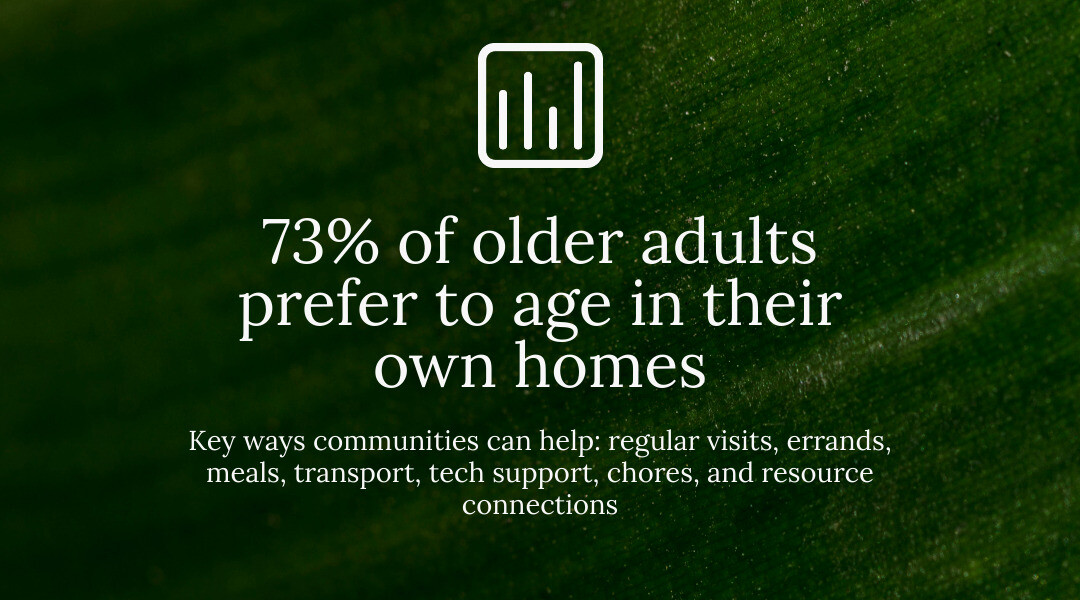
Research shows that a staggering 73% of rural adults want to remain in their homes as they age. However, wanting to stay and being able to stay are two different things. About 40% of these individuals report that they will eventually need modifications to their homes to make that dream a reality.
In the United States, and particularly in regions like Virginia, we face unique hurdles. Rural communities are often "service deserts," where accessible housing, transportation, and specialized healthcare are limited. When a community lacks these supports, older adults may be forced into residential facilities prematurely, not because they want to go, but because they have no other choice.
This is why Adapting to Aging is a collective effort. By helping elderly in the community, we aren't just doing a "good deed"—we are preserving the dignity and independence of our neighbors. We are ensuring that the people who built our communities can continue to enjoy them.
You don’t need to be a professional to make a massive impact. In fact, some of the most vital support comes from simple, neighborly gestures. We often see that the smallest acts of kindness are the ones that keep a senior's spirit high and their home running smoothly.
Did you know that up to 24% of older adults admit to feeling lonely and isolated? Loneliness isn't just a sad feeling; it’s a health risk. It has been linked to higher rates of depression, cognitive decline, and even physical illness.
One of the best ways we can help is through "befriending." This doesn't have to be a formal program. It can be as simple as stopping by for a "cuppa" and a chat.
Many seniors are fully capable of living at home but struggle with a few specific "stumbling blocks" that make daily life difficult.
For those looking for more structured advice, our Daily Life Management Tips Guide offers even more ways to streamline these daily tasks.
Sometimes, the best way to help is to be a bridge to professional resources. There is a vast network of support available, but it can be a maze to navigate.
If you are helping elderly in the community, you should become familiar with these key tools:
We live in an incredible era for assistive technology. These devices aren't meant to replace human connection, but they certainly make independent living safer.
When we talk about Elderly Home Modifications, we often focus on:
At Burnie's Way, we believe in being proactive. Planning for aging in place is most effective when done before a crisis hits. This includes understanding the financial landscape.
While we focus on personal support and lifestyle coordination, many families also need to consider the costs of medical care or home health services.
| Type of Support | Typical Cost Structure | Potential Payment Options |
|---|---|---|
| Community Volunteerism | Free | N/A |
| In-Home Support (Non-Medical) | Hourly / Flat Fee | Private Pay, some Long-Term Care Insurance |
| Home Health Care (Medical) | Hourly / Per Visit | Medicare (short-term), Medicaid, Private Insurance |
| Adult Day Care | Daily Rate | Private Pay, Medicaid Waivers |
| Assisted Living | Monthly Rent + Care Fees | Private Pay, VA Benefits, Long-Term Care Insurance |
Understanding the Cost of Senior Home Care is essential for long-term success. It’s also important to know when it might be time to transition to a different living arrangement. If a senior can no longer manage basic safety even with significant community help, exploring assisted living or memory care might be the most compassionate choice. Our guide on Elderly Care Planning can help you walk through these tough conversations with grace.
It means staying in your own home and community as you grow older, rather than moving to a specialized care facility. It’s about maintaining independence and staying connected to the people and places you love.
The best place to start is the Eldercare Locator or your local Area Agency on Aging. You can also check with local senior centers, food banks, or faith-based groups. Many organizations, like AmeriCorps Seniors, have specific programs for those looking to help.
Key resources include Meals on Wheels for nutrition, local transit programs for transportation, Area Agencies on Aging for care coordination, and Centers for Independent Living for skills training and advocacy.
Helping elderly in the community is about more than just checking off a list of chores. It’s about building a culture of respect, connection, and peace of mind. Every time you stop to chat with a neighbor, help an older friend with their phone, or deliver a meal, you are strengthening the social fabric that supports us all.
At Burnie's Way, we understand that life is better when we feel supported. We aren't a healthcare provider or a medical agency; think of us as your personal concierge for aging gracefully. We act as a virtual companion and lifestyle coordinator, helping you or your loved one manage the "business of life" so you can focus on the "joy of living."
Whether it’s coordinating trusted services, setting up routines that make life easier, or just providing that heart-forward connection that makes every day a little brighter, we are here to help you live exactly the way you want.
Ready to see how we can help you or your family find more confidence and ease? More info about our lifestyle support services
7 min read
When a Parent Needs Help at Home: Where to Start Local senior care is a broad term — and when you're suddenly trying to figure out how to keep a...
13 min read
Understanding the Role of a Family Caregiver Family caregiver support includes a wide range of resources, programs, and services designed to help...
7 min read
Why Emergency Senior Care Matters for Your Family Emergency senior care refers to immediate support services available when an older adult faces an...