
Splash of Comfort: Gentle Bathing Solutions for Elderly Loved Ones

Why Bathing Assistance for Seniors Matters More Than You Think
Bathing assistance for seniors is the hands-on or guided support that helps older adults bathe safely, comfortably, and with dignity — whether in a shower, tub, or bed.
Here's a quick look at what it typically involves:
- Safety support — helping with getting in and out of the shower or tub
- Washing — hair, body, and hard-to-reach areas
- Skin care — drying thoroughly and applying moisturizer
- Dressing — helping before and after bathing
- Equipment use — grab bars, shower chairs, and non-slip mats
Bathrooms are one of the most hazardous rooms in any home for older adults. Each year, 3 million older adults are treated for fall-related injuries — and many of those incidents happen during bathing.
Beyond physical safety, bathing touches something deeply personal. It involves privacy, dignity, and independence — things that matter enormously to aging adults and to the family members who love them.
If you're an adult child trying to figure out how to help a parent stay clean, safe, and comfortable at home, you're not alone. This guide walks you through everything — from bathroom modifications to step-by-step techniques — so you can feel confident and prepared.
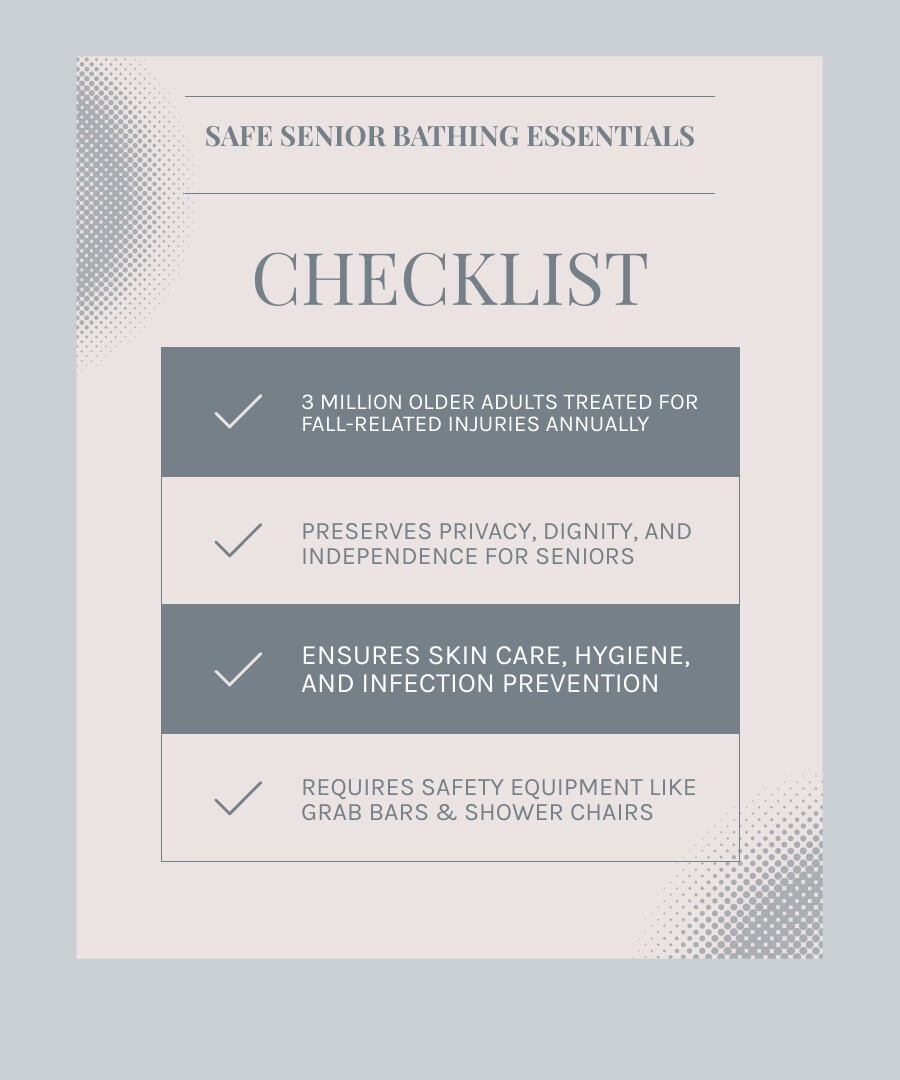
Bathing assistance for seniors terminology:
The Vital Role of Bathing Assistance for Seniors
As we move through April 2026, we are seeing a shift in how families approach aging. It’s no longer just about survival; it’s about thriving with confidence. One of the most significant hurdles to that confidence is the fear of the bathroom. For many, the bathroom represents a loss of control, but with the right bathing assistance for seniors, it can return to being a place of refreshment.

The benefits of proper hygiene extend far beyond just "smelling nice." For an older adult, regular bathing is a frontline defense for elderly personal hygiene. It helps prevent skin infections, urinary tract infections (UTIs), and painful skin breakdowns. When we assist a loved one, we aren't just washing them; we are performing a vital health check. We can spot new rashes, pressure sores, or unusual bruising that might otherwise go unnoticed.
Furthermore, the psychological boost of feeling clean is immeasurable. It supports self-esteem and fights off the feelings of depression that can sometimes accompany social isolation. When you are taking care of old people, you quickly realize that a fresh shave or a clean head of hair can change their entire outlook on the day.
However, the risk is real. With 3 million older adults treated for fall injuries annually, the bathroom is "Ground Zero" for accidents. This is why understanding what is personal care for the elderly is so important—it’s a blend of safety, physical help, and emotional support.
Essential Safety Equipment and Bathroom Modifications
Before we even turn on the faucet, we must ensure the "environment of care" is up to the task. You don't need a full remodel to make a bathroom safer, but a few key additions are non-negotiable for anyone providing bathing assistance for seniors.

The Safety "Must-Haves"
- Grab Bars: These should be installed professionally. Do not rely on towel racks, which are not designed to hold a person's weight. Place them vertically at the entrance and horizontally near the shower seat.
- Shower Chairs or Benches: Standing in a slippery shower is exhausting and dangerous. A sturdy chair allows the senior to sit comfortably while you or a helper assists with the washing.
- Non-Slip Mats: Place these both inside and outside the tub. Suction-cup mats inside the shower provide traction, while heavy-duty rubber mats outside prevent slips on wet tiles.
- Handheld Showerheads: This is perhaps the most underrated tool. It allows the water to be brought to the person rather than forcing them to move under a fixed stream. It also makes rinsing hair much easier while seated.
Temperature Control
One of the most dangerous hidden hazards is scalding. As we age, our skin becomes thinner and our sensitivity to temperature decreases. We recommend setting your home’s water heater to a maximum of 120°F (49°C). This simple adjustment prevents accidental burns. Always test the water on the inside of your wrist—just like you would for a baby—before the senior enters the bath. For more on setting up a safe space, check out our guide on personal care for elderly at home.
For additional professional insights on equipment, the Bathing Assistance for Elderly: Caregivers Guide is an excellent external resource to cross-reference.
Step-by-Step Guide to Safe and Dignified Support
Providing bathing assistance for seniors is an intimate task. It requires a balance of being a "pro" and being a loving family member. The goal is to make the experience as routine and "matter-of-fact" as possible to reduce any potential embarrassment.
Preparing for Bathing Assistance for Seniors
Preparation is the key to a stress-free bath. Never leave a senior unattended in the bathroom to go grab a forgotten towel.
- Gather Supplies: Have your soap (fragrance-free is best), no-tear shampoo, washcloths, at least two large towels, and a robe ready.
- Warm the Room: Seniors chill easily. Close windows, turn up the heat, and ensure the room is cozy.
- Check the Water: Use those anti-scald valves and double-check the temperature.
- Set the Mood: If they enjoy music or a specific scent, use it! This helps transition the task into a "spa-like" experience.
Techniques for Dignified Bathing Assistance for Seniors
When the bath begins, follow a consistent routine. This is especially helpful for those following a daily living assistance complete guide.
- Maintain Privacy: Use the "towel-drape" method. Keep the senior covered with a dry towel or bath blanket, only exposing the specific limb or area you are currently washing.
- The Order of Operations: Start with the cleanest areas and move to the "dirtiest." Generally, this means: Face -> Arms/Torso -> Legs -> Feet -> Back -> Private Areas.
- Hair Care: Use a handheld sprayer. Ask them to hold a dry washcloth over their eyes to prevent soap stings.
- Skin Inspection: As you wash, look for redness or "hot spots," especially on the heels, elbows, and tailbone.
- Gentle Drying: Don't rub the skin; pat it dry. Friction can cause skin tears in older adults. Pay special attention to skin folds and between the toes to prevent fungal infections.
- Moisturize: Apply a gentle, unscented lotion immediately after drying to lock in moisture, but avoid putting lotion between the toes as it can lead to maceration.
Specialized Techniques for Bed Baths and Cognitive Support
Not every senior can make it to the bathroom. For those who are bedridden or recovering from surgery, a bed bath is a perfect solution. It’s also a great alternative for seniors with a severe fear of the shower.
Giving a Safe Bed Bath
To give a bed bath, you’ll need two basins of water (one for soapy water, one for rinsing).
- Place a waterproof pad under the person to keep the linens dry.
- Work in small sections, washing, rinsing, and drying one area before moving to the next.
- If the person has some mobility, encourage them to wash their own face or "private parts" if they are able. This maintains a sense of agency.
- For hair, you can use no-rinse shampoo caps which are warmed in the microwave and provide a surprisingly refreshing experience.
For those requiring more clinical oversight, the Private Care Services - Visiting Nurse Association offers specialized medical perspectives on bed-bound hygiene.
Addressing Resistance to Bathing Assistance for Seniors
Resistance is common, particularly in those with dementia. It often stems from a fear of falling, the sensation of water hitting the skin (which can feel like needles), or the sheer confusion of the process.
- Use Verbal Cueing: Explain every step before you do it. "I am going to wash your left arm now with this warm cloth."
- Don't Argue: If they say "I had a bath yesterday" (even if they didn't), don't get into a power struggle. Try again in an hour or try a "sponge bath" at the sink instead.
- The "Spa" Strategy: Instead of saying "It's time for your bath," try "Let's go get you cleaned up and ready for that nice lunch we planned."
- Routine is King: Try to bathe at the same time on the same days. If they were a "morning shower" person their whole life, don't try to switch them to night baths now.
Helping with these tasks is a core part of assistance with daily activities, and patience is your most valuable tool.
Frequently Asked Questions
Bathing can be a complex topic for many families. Here is a quick comparison and some of the most common questions we hear.
| Feature | Shower/Tub Assistance | Bed Bath (Sponge Bath) |
|---|---|---|
| Mobility Required | Moderate to High | Low to None |
| Equipment Needed | Shower chair, Grab bars | Basins, Waterproof pads |
| Time Commitment | 30-45 Minutes | 20-30 Minutes |
| Best For | Routine hygiene & relaxation | Illness recovery or limited mobility |
| Skin Check Ease | Excellent | Good |
How often should a senior bathe?
While we might be used to daily showers, most seniors only need to bathe two to three times a week. Their skin produces less oil, and over-bathing can lead to itchy, cracked skin. However, "spot cleaning" (face, underarms, and private areas) should still happen daily.
What should I do if my loved one refuses to bathe?
First, try to identify the "why." Are they cold? Are they embarrassed? Are they afraid of slipping? Address the root cause. Sometimes, having a non-family member (like a professional companion) help can remove the "embarrassment" factor that exists between a parent and child. If resistance continues, focus on daily life assistance through sponge baths or even high-quality cleansing wipes until they feel more comfortable.
What are the most important bathroom safety features?
If you can only do three things: install grab bars, use a shower chair, and put down non-slip mats. These three items alone significantly reduce the risk of a life-changing fall.
Conclusion
At Burnie's Way, we believe that every senior deserves to live with a "splash of comfort." While we are not a medical or caregiving agency, we are experts in lifestyle coordination and personal support. We understand that managing these daily routines can be overwhelming for families.
Our role is to act as your personal concierge—helping you coordinate the right help, find the best equipment, and ensure that your loved one’s home remains a sanctuary of independence. Whether it's setting up a safer routine or connecting you with the right resources in Virginia and across the United States, we are here to provide the peace of mind you deserve.
Bathing doesn't have to be a source of stress. With the right tools, a gentle approach, and a focus on dignity, it can be a simple, safe part of a beautiful life at home.